
Fri, 09 May, 2025
Tian Macleod Ji, AP
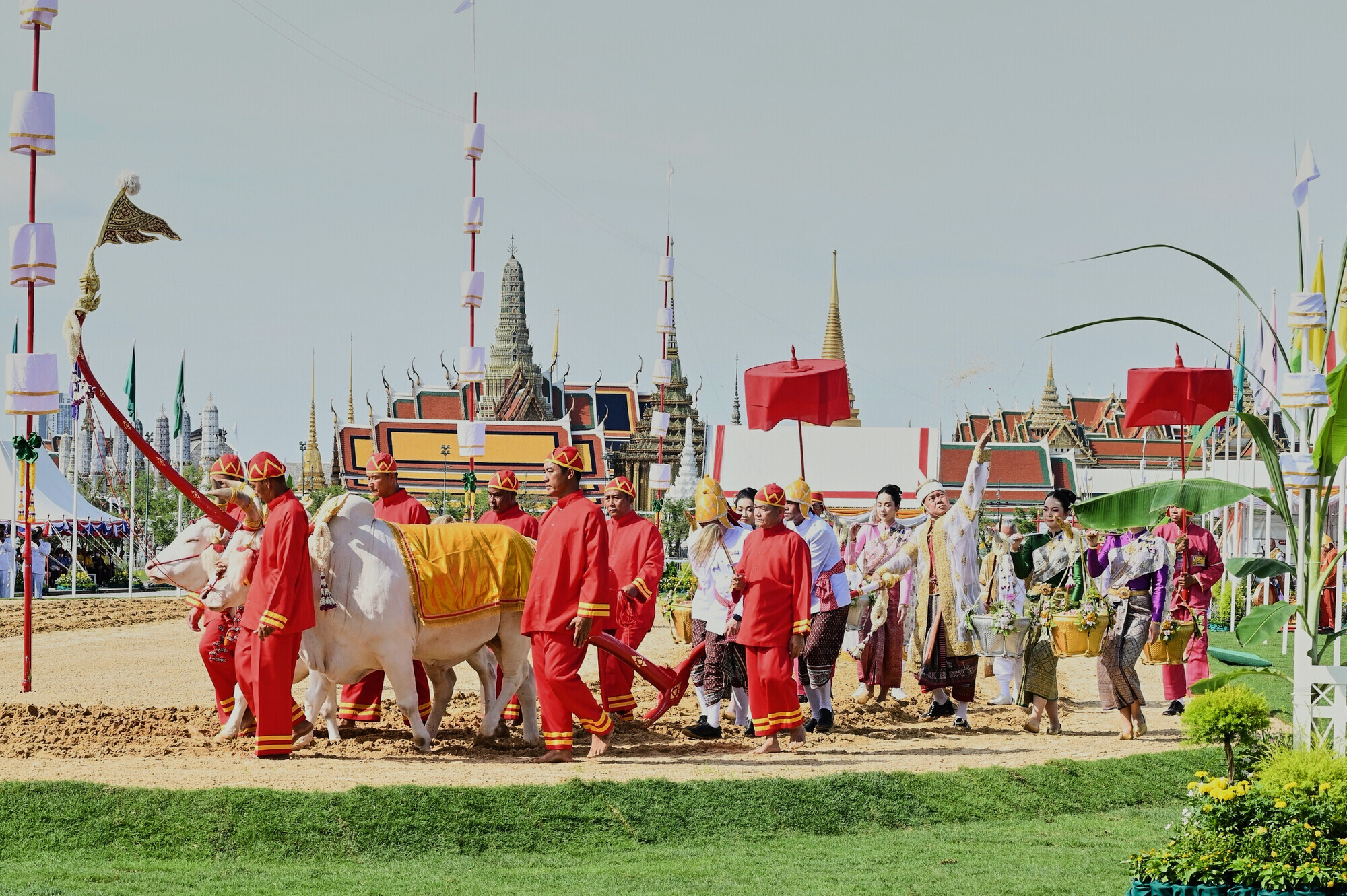
Thailand’s King Maha Vajiralongkorn has presided over an elaborate annual ceremony that marks the start of the rice-planting season and honours the nation’s farmers.
The Royal Ploughing Ceremony is held to read auguries that predict the farming conditions for the year ahead.
As is usually the case, good times were predicted, even though Thailand’s economy is sluggish.
The King and Queen Suthida were sheltered from the bright sun by ornate umbrellas at the ceremony’s traditional venue, Sanam Luang, or “Royal Ground”, a large field near the Grand Palace in the capital Bangkok.
According to Thai historians, the ritual goes back some 700 years.
Then, as now, the cultivation of rice was central to the country’s culture and economy, and the ceremony is meant to give encouragement to farmers as the new planting season begins.
The ceremony was led by the highest-ranking civil servant in the agriculture ministry, serving as the Lord of the Ploughing Ceremony.
In a colourful traditional costume, he chose from a selection of cloths, and the one he picked was interpreted to signify satisfactory rainfall and an abundant harvest.
In the ceremony’s second stage, he anointed the heads of two “sacred” oxen, who then pulled a plough around a section of the field several times, as he scattered seeds at the front of a small procession with more traditionally garbed participants
The two oxen, called “Por” and “Piang” – which together mean “sufficiency” – then chose from a selection of food offered by Brahmin priests.
The foods chosen were water, grass and liquor, which symbolise adequate water supplies, abundance of food supplies and what was interpreted as good international trade, respectively.
After the departure of the king and queen, onlookers sprinted onto the field to collect the scattered seeds as souvenirs or to add to their own rice stores at home for a meritorious mix
Source: Irishexaminer