
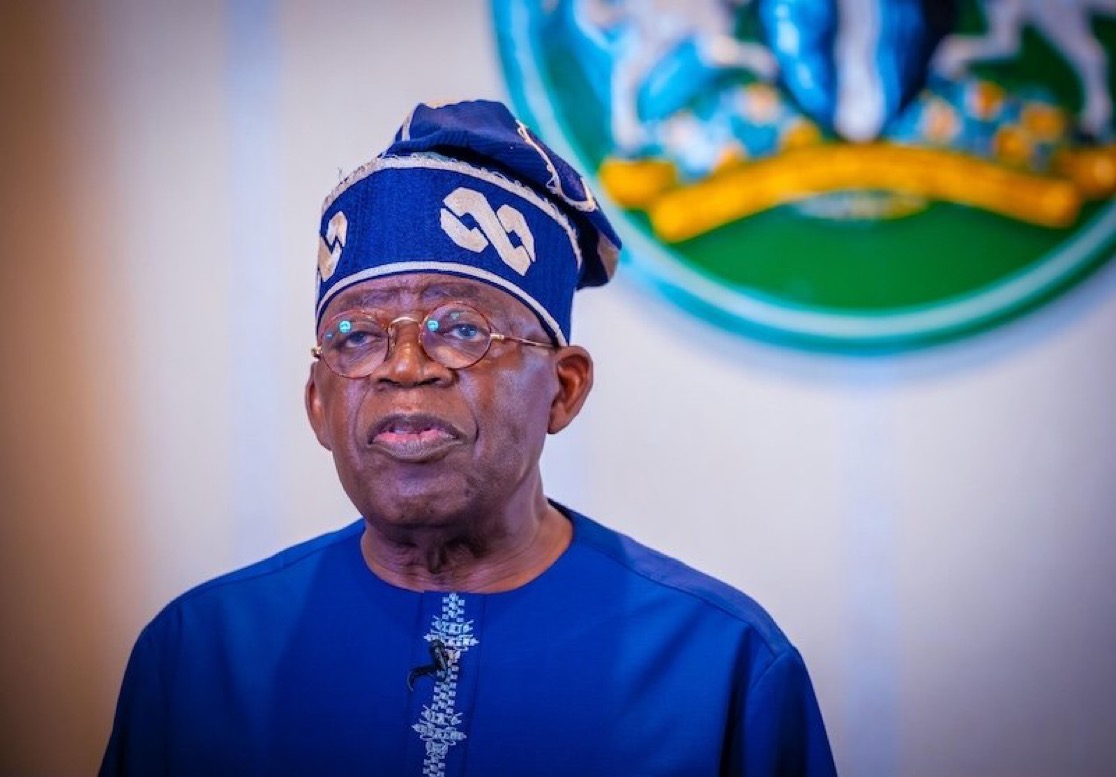
President Bola Ahmed Tinubu has defended his administration’s investment in compressed natural gas (CNG) and electric transportation, citing reported reductions in transport fares across several states and promising to expand affordable public transport services to more communities.
In a message addressed to Nigerians who shared their experiences with the initiative, Tinubu highlighted the savings reported by commuters travelling between Masaka and Berger in the Federal Capital Territory, as well as passengers travelling between Enugu and Nsukka. He said one commuter now pays ₦500 instead of ₦1,500 for the Masaka-to-Berger journey, while two others, Ada and Abigail, reportedly pay ₦1,600 instead of ₦4,000 for the Enugu-to-Nsukka trip.
The President also cited the experience of Kabir, a taxi driver who said ₦10,000 worth of CNG allows him to make three additional return trips compared with colleagues using petrol. Tinubu further pointed to Borno State, where he said some commuters pay as little as ₦50 per trip on CNG-powered and electric vehicles.
According to the President, these experiences demonstrate how lower operating costs can translate into cheaper transport fares and help households retain more money for food, bills and other essential expenses.
Tinubu acknowledged that the removal of the petrol subsidy in May 2023 placed financial pressure on many Nigerians but maintained that the government had a responsibility to provide alternatives capable of reducing transportation costs.
Responding to requests for more buses, the President said the Federal Government was working with state governments through the Nigeria Governors’ Forum and private investors to expand services under the National Affordable CNG Transportation Programme.
He listed recent deployments, saying Ekiti State had received 15 buses, Lagos 20, while Akwa Ibom had 50 buses ready for service. He also said Katsina had introduced 30 CNG hybrid buses and 200 electric tricycles, while Kano had received 30 CNG buses and five electric buses. Edo State is expected to be part of another rollout.
Tinubu added that Kaduna’s fleet of 100 CNG buses had transported more than three million passengers. In an earlier update published by the Presidency, he said more than 120,000 vehicles had been converted to CNG, supported by over 400 certified conversion centres and more than 90 refuelling stations nationwide.
The President said the administration was also expanding refuelling infrastructure to make CNG more accessible to transport operators and encourage the wider adoption of cheaper alternatives to petrol.
Addressing the impact of rising petrol prices, Tinubu listed additional measures intended to ease the burden on households and businesses. He said the government had waived more than ₦3.3 trillion in fuel taxes and duties, while NNPC Retail was foregoing its retail profit margin for 30 days to sell petrol at cost, with public transport operators among the intended beneficiaries.
The Presidency separately confirmed the 30-day arrangement, explaining that NNPC Retail would sell petrol without adding its usual retail margin as part of efforts to cushion consumers against global oil-price shocks. The government has also announced plans to pursue a wholesale petrol supply cost ceiling of ₦1,350 per litre, subject to review.
Tinubu maintained that the measures were intended to provide immediate relief while the government continued to expand affordable transportation alternatives, insisting that support for Nigerians must be balanced with long-term economic sustainability.
He also argued that anyone seeking to lead Nigeria should explain the cost of their promises, how they intend to implement them and whether the proposals can be sustained without shifting the financial burden to future generations.
The President concluded by acknowledging that more work remained to be done, particularly in communities where affordable transport services were still limited. He said the administration would continue collaborating with state governments to expand access to CNG and electric transportation across the country.
While the government has highlighted reported savings and new vehicle deployments, the extent to which these benefits reach commuters will depend on the availability of services, the routes covered and whether transport operators consistently pass lower operating costs on to passengers through reduced fares.