
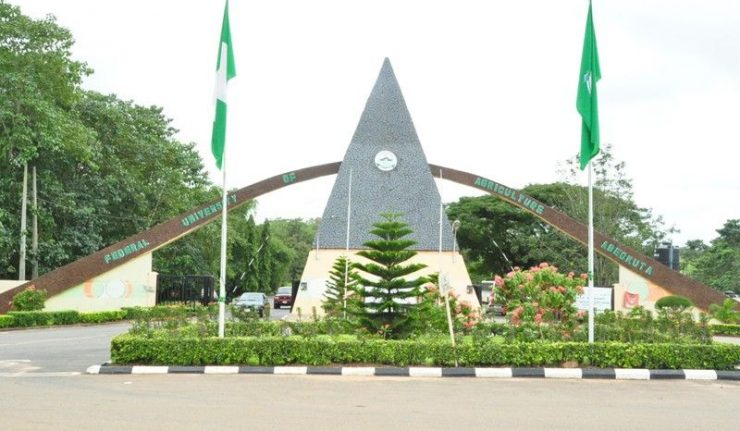
Professor Adewale Dipeolu of the Federal University of Agriculture, Abeokuta, has said that over 3,000,000 people stand to benefit from an agricultural app that will soon be developed as part of digital technology measures to combat the effects of climate change on agriculture by farmers, especially those in remote part of the country.
Dipeolu, who is the team leader of the Digital Financial Solutions for Farmers in Remote Communities Project, made this call while speaking at a 2-day European Union-funded workshop held at FUNAAB to discuss the findings of the group’s baseline study on the effects of climate change on agriculture in remote communities in Imo, Ogun, and Kwara states.
The workshop had in attendance 40 stakeholders in agriculture drawn from government institutions, technical and vocational training schools specialising in agriculture, research institutes and governmental technology agencies.
He said Nigeria’s agricultural sector had been grappling with numerous challenges, exacerbated by climate change, erratic rainfall, erosion, pest and disease outbreaks, and insecurity issues, such as farmer-herder clashes and that these adversities had left farmers vulnerable, particularly those residing in remote rural areas.
He said: “We did a baseline study in three states of Imo, Ogun and Kwara states. We are here now to discuss the findings of the baseline study. We went to the field to see if farmers were aware of these digital solutions to climate change. What are the challenges farmers face with climate change? If they use these digital provisions, is it affordable for them? Do they understand what they are trying to do to give them digital solutions and so on?
“After this workshop, we’ll collate all challenges we found in the field, which will guide us to develop an application that will be made available to farmers in the country, beginning with those in Imo, Ogun and Kwara states.
“We hope that the app will assist the farmers in their day-to-day activities. We hope that it will also help them to go into other livelihood activities and so on. That’s the essence of this particular workshop.
“This app will be translated into three languages: Yoruba, Igbo and Fulani/Hausa for farmers in the country to be able to use it effectively.
“The primary beneficiaries of this initiative encompass rural farmers, with particular emphasis on women and young involved in farming.
“Additionally, local authorities, telecoms providers, and officials in various Nigerian localities stand to benefit from specialised training in digital solutions, which will promote sustainable agricultural practices and offer alternative livelihoods for rural farmers, enabling them to adapt to the challenges posed by climate change. The ultimate beneficiaries of this project are expected to exceed 3,000,000 individuals residing in rural communities.
“The project focuses on educating farmers about innovative agricultural practices through e-learning platforms that promote sustainable farming techniques. By equipping farmers with the knowledge to embrace new digital solutions, against the backdrop of climate change, the project seeks to address the vulnerability experienced by farmers, particularly those residing in rural communities and remote areas.”