
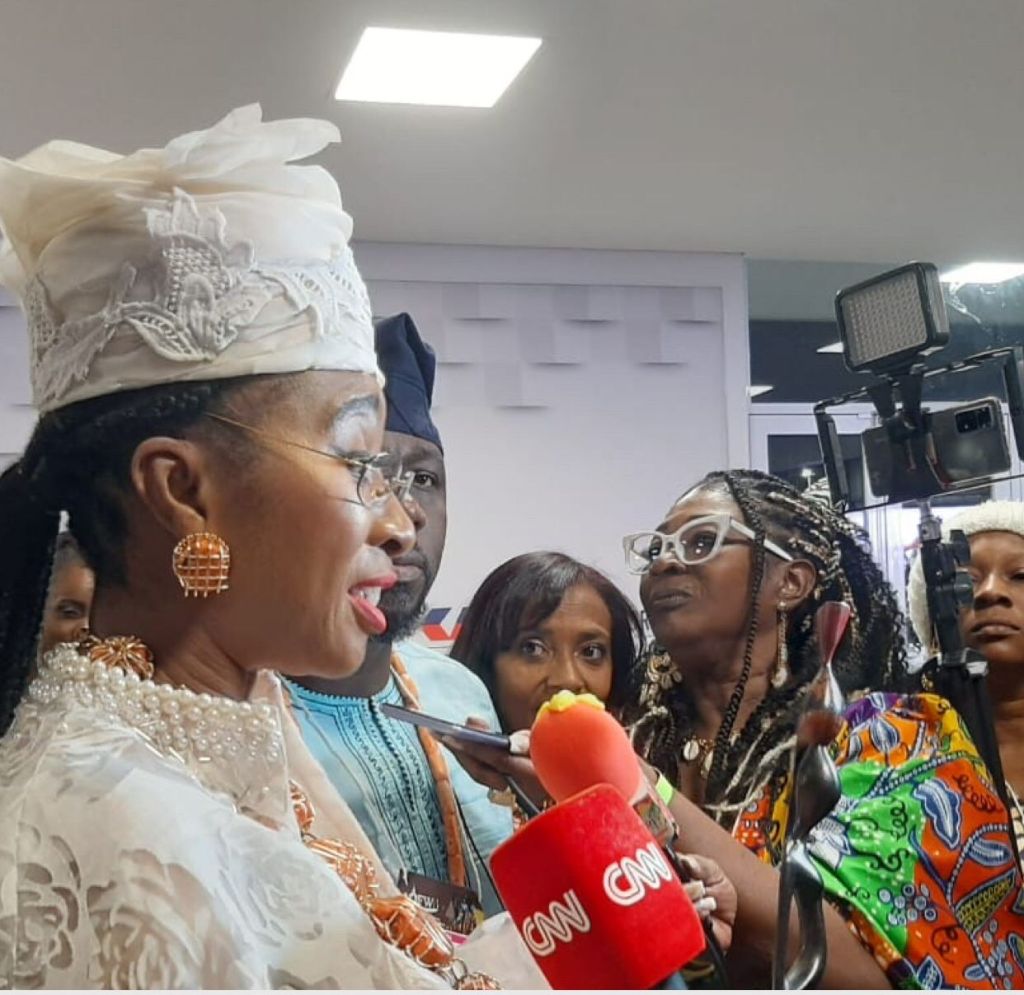
In a momentous event that has captured the attention of Brazil’s fashion industry, Queen Aderonke Ademiluyi Ogunwusi, the wife of Ọọni of Ifè, Kabiyesi Adeyeye Ogunwusi, successfully hosted the inaugural Africa Fashion Week in Brazil.This extraordinary showcase of African fashion has not only disrupted the dominance of European designers in Brazil, but has also ignited racial tensions within the industry.Historically, Afro-Brazilians faced significant obstacles and marginalization in the field of fashion design.However, Queen Aderonke’s pioneering efforts have brought about a transformative shift, propelling African fashion to the forefront alongside renowned European and American designers.
The Africa Fashion Week, held in the heart of São Paulo, served as a platform for Afro-Brazilians to freely embrace and incorporate traditional Yorùbá fabrics and designs, including Adire and Batik, into their events and celebrations.
The resounding success of the Africa Fashion Week, undeniably the most triumphant African fashion event in Brazilian history, has triggered racial conflicts within the fashion industry and television outlets. Showcasing over 300 models from diverse Afro origins, the event has drawn the ire of foreign fashion powerhouses who perceive African fashion as a potential threat to the on-going success of European fashion in Brazil.
The impact of this event on the black community in Brazil cannot be overstated. Afro-Brazilians are filled with joy and pride to witness their heritage and fashion traditions receive recognition and acclaim alongside global fashion trends. Many have been inspired to reclaim and reinvent their own designs, promoting African traditions and fostering unity among the African diaspora.
The success of the Africa Fashion Week has ignited fierce rivalries within the communication industry. Globo Television, regarded as the most influential network in Latin America, has faced criticism for attempting to overshadow Queen Aderonke’s unique African fashion designs by featuring an innocent African fabric seller.
The prominence of African fashion has disrupted established fashion houses, challenging their preconceived notions that African fashion is limited to traditional “Buba and Iro” styles. As tensions mount, the battle for recognition and influence in the Brazilian fashion landscape continues to unfold.
The Africa Fashion Week in Brazil serves as a wake-up call, empowering the black community while unsettling foreign and white communities. It signifies a turning point in the fashion industry, where African fashion is reclaiming its rightful place on the global stage. The legacy of this event is poised to leave a lasting impact, as it encourages inclusivity, diversity, and cultural exchange in the ever-evolving world of fashion.
Since the resounding success of the African Fashion Week organized by Olori Aderonke Ademiluyi Ogunwusi in Brazil, several fashion schools have recognized the significance of Adire and Batik making, integrating these traditional techniques into their curricula. This newfound appreciation for ancestral fabrics has resulted in a surge in demand for Adire among the black community in Brazil.
Madam Silvana Saraiva, President of African Fashion Week in Brazil, has spoken out about the racial attacks and challenges they have faced following the event. Foreign designers and white communities have sought to undermine their initiatives, attempting to manipulate models and spread negativity. Despite these obstacles, Madam Silvana remains resolute and motivated to persevere.
The influence of Olori Aderonke Ademiluyi Ogunwusi on the black community in Brazil cannot be overstated. She has elevated African fashion to new heights within the country, earning admiration and pride from community members.
Cristina Ribeiro, founder of Cris Vieira moda Africana.
(Ancestrals)