
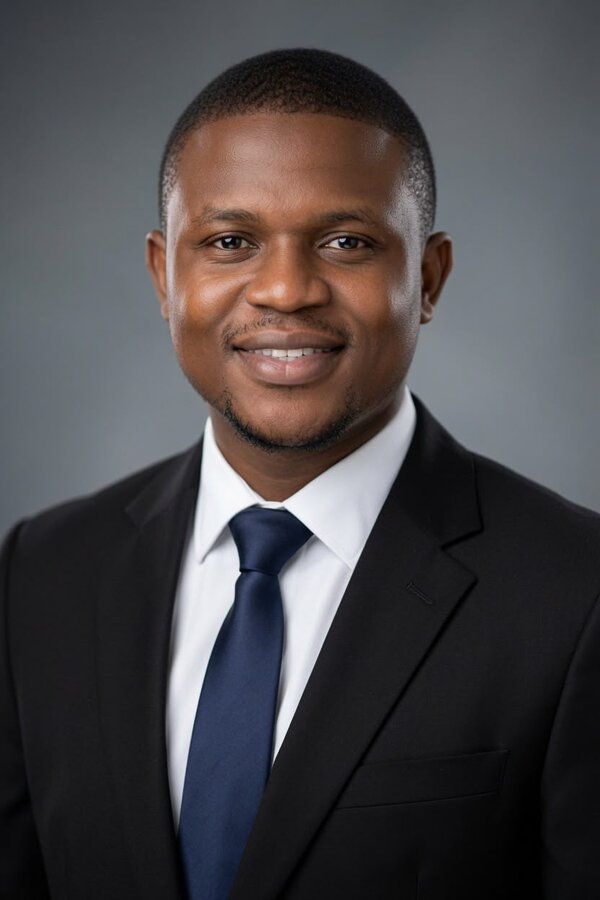
Column by Ademola Adekusibe
Nigeria turns 66 today, and once again October 1 arrives with the familiar rituals of independence: the national flag, patriotic messages, official ceremonies and speeches about the country’s resilience and potential. President Bola Ahmed Tinubu is scheduled to address Nigerians at 7 a.m. today as part of the country’s 66th Independence Anniversary. But anniversaries should do more than remind us of the date on which colonial rule ended. They should also force us to examine what successive generations have done with the political freedom inherited in 1960. Sixty-six years is long enough to celebrate survival, but it is also long enough to ask whether survival should still be the standard by which we measure the Nigerian project.
On October 1, 1960, Nigeria acquired political independence from Britain. That moment was historic because it transferred sovereignty to Nigerians and established the possibility of a country determining its own political direction. But independence was never supposed to mean that the work of building Nigeria was finished. It was the beginning of that work. The generation that inherited the country was confronted with the enormous task of transforming a territory administered under colonial rule into a stable political community capable of managing its diversity, developing its economy and building institutions that would serve citizens beyond individual governments. The tragedy of the Nigerian story is not that we have achieved nothing since 1960. We have achieved a great deal. The tragedy is that our progress has too often been interrupted, reversed or made unnecessarily difficult by institutional weakness and political instability.
Nigeria has survived a civil war, decades of military rule, several coups, economic crises, political transitions and the difficult process of rebuilding democratic institutions. Since 1999, the country has maintained uninterrupted civilian government, an achievement that should not be dismissed simply because democracy itself remains imperfect. At the same time, the durability of electoral democracy has not automatically produced strong institutions. A democratic government can still operate through weak systems, and elections can take place without resolving deeper questions about accountability, public trust and the effectiveness of the state. This is one of the central contradictions of Nigeria at 66: we have become more accustomed to democratic government, but we are still struggling to make institutions sufficiently strong that the quality of governance does not depend overwhelmingly on the individual occupying an office.
This is why the Nigerian conversation must move beyond the endless search for a perfect leader. Leadership matters enormously, but no country can sustainably depend on finding exceptional individuals every four years. A serious state must work even when the president is ordinary. Its civil service must retain institutional memory. Its courts must function according to law. Its security agencies must operate professionally. Its universities must produce knowledge. Its public institutions must maintain standards. Its infrastructure agencies must plan beyond political cycles. Its political parties must develop coherent programmes rather than existing primarily as vehicles for elections. When institutions are weak, every government starts to look like a new beginning, and the country repeatedly spends valuable time undoing, renaming or redesigning what the previous administration started.
There is another difficult question that Nigeria at 66 must confront: what does independence mean to a citizen who has political freedom but very limited economic freedom? A country may be sovereign in international law, yet millions of its citizens can still experience forms of dependence through unemployment, poverty, inadequate infrastructure, poor public services and limited economic opportunity. This is why the economic question cannot be separated from the meaning of independence. Nigerians did not struggle for political sovereignty merely so that a Nigerian government could replace a British government while ordinary people remained unable to exercise meaningful control over the conditions of their own lives.
The current administration has presented its economic reforms as necessary steps toward a more productive and prosperous Nigeria, and President Tinubu has repeatedly argued that the difficult phase of the reforms should give way to greater prosperity and opportunity. Those claims will ultimately be judged not by speeches but by outcomes. For citizens, the important questions are straightforward: can families afford basic necessities, can businesses operate productively, can young Nigerians find meaningful employment, can electricity and transportation support economic activity, can farmers produce competitively, can industries expand, and can public revenue translate into services people can actually see? These are not partisan questions. They are basic measures of whether the Nigerian state is becoming more capable of converting its enormous resources into better living conditions.
The cost-of-living question makes this particularly urgent. As Nigeria marks 66 years of independence, organised public-sector workers are demanding action on petrol prices and wages, with the Joint National Public Service Negotiating Council threatening a three-day warning strike beginning October 2 if its demands are not addressed. That development illustrates an important reality about Independence Day: national celebration and personal hardship can exist simultaneously. A citizen can love Nigeria and still complain about the price of food. A worker can be patriotic and still demand better wages. A young person can believe in the country’s future while questioning whether the country is currently providing enough opportunities for people like them. Patriotism should not require citizens to become silent about the conditions under which they live.
Perhaps Nigeria’s greatest unfinished project is therefore not independence itself but nation-building. Independence answered the question of who should govern Nigeria. It did not completely answer the more difficult question of how Nigeria should be governed. We have spent decades negotiating the relationship between the federal government and the states, between regions and the centre, between individual rights and communal identities, and between the enormous diversity of the country and the need for a functioning national political system. Those debates are not signs that Nigeria should necessarily disappear or that Nigerians are incapable of living together. They are evidence that a country as diverse as Nigeria requires institutions sophisticated enough to manage diversity without turning every political disagreement into an existential struggle.
For the Yoruba, this conversation deserves particular attention because Yoruba political history has always contained a strong tradition of debate about how society should be organised. From the old political institutions of Yorubaland to the constitutional debates of the First Republic and the regional development programmes of the Western Region, there is a historical record of experimentation with governance, education, economic development and local administration. That history should not be romanticised, because the past had its own inequalities and contradictions. But neither should it be forgotten. One of the responsibilities of the present generation is to study what worked, what failed and why, rather than approaching every political question as if Nigeria began with the latest election.
The same principle applies nationally. Nigeria does not lack history. It sometimes lacks institutional memory. We repeatedly produce committees to investigate problems that have been investigated before, announce reforms that resemble previous reforms, create programmes that disappear when administrations change and rediscover solutions that earlier generations had already considered. A country cannot accumulate knowledge if every political transition wipes away too much of what came before. Nation-building requires continuity. Governments should be allowed to change direction when necessary, but institutions should retain the knowledge acquired from previous attempts.
This is particularly important for Nigeria’s young population. Young Nigerians did not create the political structure they inherited, and they did not choose the economic conditions into which they were born. But they will eventually determine whether the Nigerian project becomes stronger or weaker. They will become the civil servants, entrepreneurs, journalists, teachers, engineers, doctors, lawyers, politicians, researchers and community leaders responsible for the next stage of the country’s development. The danger is that if young Nigerians inherit only cynicism, they may become convinced that public life is inherently corrupt, that institutions cannot work and that the only rational response is to leave. Migration itself is not a moral failure, and Nigerians abroad have made enormous contributions in many fields. But a country cannot permanently outsource its most ambitious citizens and expect its institutions to become stronger.
The challenge, therefore, is not to tell Nigerians to stop criticising their country. Nigeria needs more serious criticism, not less. What it needs is criticism that leads to institutional thinking rather than permanent despair. Saying that Nigeria is bad explains very little. Asking why a particular institution fails, how it can be reformed, what evidence supports a proposed solution and how that solution can survive a change of government is far more useful. The same applies to patriotism. Saying that Nigeria is great is not enough. The important question is what Nigerians are willing to build to make that greatness measurable in the lives of ordinary people.
At 66, Nigeria is neither the country of 1960 nor the country that many Nigerians imagine it should already have become. It is something in between: a country with extraordinary achievements and extraordinary unfinished business. It has produced globally recognised musicians, writers, athletes, entrepreneurs, academics, filmmakers and professionals. Its technology and creative sectors have demonstrated the capacity to compete internationally. Its people have built businesses and communities under circumstances that would have discouraged many others. Yet the country continues to struggle with insecurity, infrastructure deficits, institutional weakness, economic inequality and a political culture in which access to state power can sometimes matter more than the quality of public service.
The answer to these contradictions will not be found in nostalgia for 1960, nor in the romantic belief that Nigeria’s problems can be solved by one administration. It will be found in the slow, often unglamorous work of institution-building. It will be found in better schools, stronger public institutions, more productive industries, credible justice systems, accountable government, professional security agencies, reliable infrastructure and a political culture that rewards competence and public responsibility. None of these things is as dramatic as an Independence Day parade, but they are the things that make independence meaningful.
Sixty-six years after the Union Jack was lowered, the question is no longer whether Nigerians can govern Nigeria. We have been doing that for 66 years. The more important question is whether we can build institutions capable of governing Nigeria well, regardless of who happens to occupy the presidency, govern a state or control a local government.
Independence gave Nigerians sovereignty.
Nation-building is still our job.
And on this 66th Independence Day, perhaps that is the responsibility worth remembering most.
Happy Independence Day, Nigeria.
About the Author
Ademola Adekusibe is a Nigerian journalist, writer and media professional and the Operations Manager of The Yoruba Times, where he is involved in editorial operations, reporting, photography, videography and digital publishing.
His interests span politics, society, culture, history, identity and the forces shaping Nigeria and Africa. His work combines journalism and analysis, with a focus on examining the institutions, people and events behind the headlines.
He is also the writer and publisher of The Nigeria Brief with Ademola, where he writes on Nigerian affairs, African politics, society, culture, public life and the deeper questions shaping the country’s future.