
27th May 2024
Plateau Youth Associations from the Atakar, Berom, Irigwe, Mwaghavwul, and Ron ethnic groups in the state have appealed to the federal and state governments as well as all people of goodwill to help them recover the 151 indigenous communities forcefully occupied by armed men, who they say have uprooted the original owners from their land.
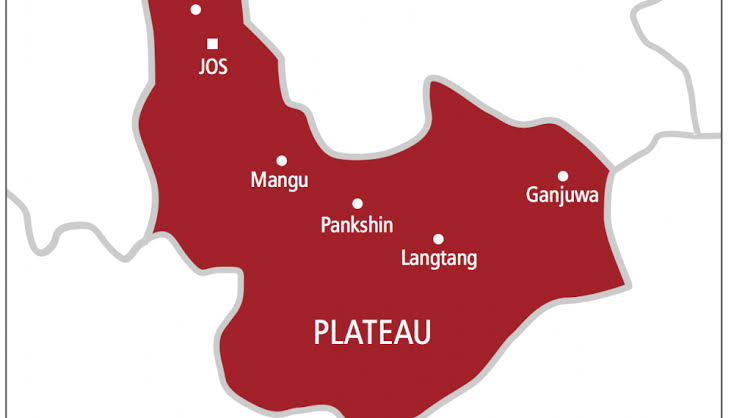
The associations, in conjunction with the Coalition of Plateau Indigenous Youth Bodies, decried at a press conference in Jos on Monday what they termed “the alarming space of Fulani occupation of hamlets, villages and the land grabbing on-going in the communities.”
The Chairman of Indigenous Youths, Paul Dekete, flanked by the youth presidents of the mentioned groups, pointed out that there was a curious connection between the areas where the natives had suffered the worst forms of displacement and denial of access to the rich natural and mineral endowment of such locations.
His words: “Given the unsatisfactory and feeble responses so far received from all levels of government in Nigeria, the Atakar, Berom, Iriggwe, Mwaghavwul, and Ron Youths Associations, in conjunction with the Coalition of Plateau Indigenous Youths Bodies, are constraint to draw the attention of the public and, especially, International Community on the alarming and unacceptable loss of ancestral lands as well as the denial of access to farmlands and mining sites currently being suffered by the customary landowners in the state.
“For several years to date, the youth bodies have been crying out and lodging complaints to appropriate authorities, including the Nigeria Police Force, Department of State Security, Operation Safe Haven, OPSH, National Human Rights Commission, the National Assembly, and others, that there is a serious undercurrent to the unprecedented and well-orchestrated terror attacks unleashed on our hamlets, villages, and communities with the principal motive of dispossessing us of our God-given lands and territory.
“The agenda and strategy of the Fulani terrorists is evidenced in attacks and killings on hamlets, villages, and communities, thereby intimidating and displacing native inhabitants, leading to the disruption of their livelihoods, paving the way for the occupation of such lands and denial of access, which consequentially produces ungoverned spaces and “NO-GO” areas for the supposedly conquered peoples in the 21st century.
“From our collective community experiences, we strongly believe there is a curious connection between the areas where our people have suffered the worse forms of displacement and denial of access to the rich natural and mineral endowment of such locations. It’s common knowledge that hamlets and villages in Barkin Ladi, Bassa, Bokkos Mangu, and Riyom Local Government Areas are richly endowed with resources such as favourable weather conditions, natural tourist sites, fertile soils, water bodies, cassaterite, columbite, and so many other minerals.”
He added: “It’s instructive, therefore, to judiciously note the rapidly changing economic and occupational demographics in the occupied territories. For instance, in Gashish District of Barkin Ladi LGA, the Fulani have currently taken over the economic activities of the area, having largely displaced native farmers from their ancestral areas. The exploitation and domination of the people are evidenced at local produce markets and transport businesses in and around the said Gashish District.
“It’s quite provoking to imagine that the foundations of churches that were destroyed by these terrorist elements have overnight been reconstructed as mosques, to the utter disregard of the fundamental rights of the displaced people. A case in point is the Rankum (Mahanga) in Jol, Ranchos, and Kak in Sopp, all in the Riyom Local Government Area.
“For the avoidance of doubt, over 151 hamlets and villages are either totally “annexed” or effectively being occupied by the Fulani militants, bandits, or terrorists in the aforementioned Local Government of Barkin Ladi, Bassa, Bokkos, Mangu, and Riyom. Below is the list of the affected areas, which can be independently be verified.”
They listed the communities and the years the natives were sacked and asked that the “Government in Nigeria and, indeed, the International Community should demonstrate the courage and political will of getting to the root of this matter by not only identifying the occupiers of the sacked hamlets, villages, and communities but to also unravel their internal and external networks and sponsors.
“We unequivocally call on the International Community to deploy its diplomatic ways and means to get the Nigerian Government to act positively to bring about legal and restorative justice for the victims… To utterly ignore the plight of the victims of land grabbing in all these areas lays credence to the suspicion of tacit condoning, endorsement, and compromise on the part of government, security agents, and, indeed, the international community.”