
By Ademola Adekusibe
October 29, 2025
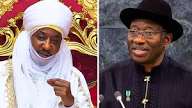
Emir of Kano, Muhammadu Sanusi II, has revealed that former President Goodluck Jonathan suspended plans to remove petrol subsidy in 2012 out of fear that Boko Haram insurgents could exploit the mass protests to launch attacks.
Sanusi, who was the Governor of the Central Bank of Nigeria (CBN) at the time, made the revelation on Tuesday while speaking at the Oxford Global Think Tank Leadership Conference, themed “Better Leader for a Better Nigeria.”
According to him, the government’s decision to backtrack was not merely economic but also tied to national security concerns amid the escalating Boko Haram insurgency in the North.
The 2012 nationwide protest against subsidy removal, popularly known as “Occupy Nigeria,” lasted for nearly two weeks and paralyzed economic activities across the country.
Sanusi explained that Nigeria’s petrol subsidy regime functioned as what he described as a “naked hedge”, a system where the federal government guaranteed a fixed pump price irrespective of fluctuations in global crude prices, exchange rates, or interest rates.
He said the arrangement eventually plunged the country into a cycle of debt and fiscal strain.
“If you look at the template, all of those amounts were being absorbed. The federal government was saying, ‘I have an unlimited pocket,’” Sanusi said.
“So we moved from a point where we were using revenues to pay subsidies, to where we had to borrow money to pay subsidies, to where we had to borrow money to pay interest on the borrowed money. We had become bankrupt.”
The emir noted that the policy, though well-intentioned, was misunderstood and poorly managed, stressing that its implementation without proper communication fueled public anger and distrust at the time.