
November 05, 2024
By Ayinde Adeleke
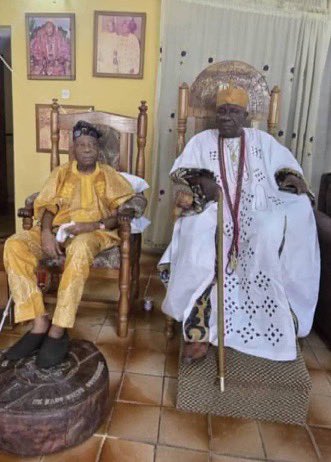
The Obaro of Kabba, Oba (Dr) Solomon Dele Owoniyi, recently led a high-profile delegation of his chiefs and community leaders to meet with Afenifere Leader, Pa Reuben Fasoranti, in Akure, Ondo State.
This visit highlights the importance of inter-community relationships and cooperation between Yoruba-speaking tribes, including the Owe people of Kabba, Kogi State.
Kabba is a significant town in Kogi State, known for its rich cultural heritage and history, with its own distinct dialect and customs.
As the traditional ruler of Kabba, Oba Owoniyi plays a vital role in promoting the community’s interests and preserving its cultural traditions.
The Owe people have a unique cultural identity, with their own language and customs. Kabba is the headquarters of the Kabba/Bunnu local government area of Kogi state and is divided into three major communities with a total of 14 clans.
The town is also an important trade center for coffee, cocoa, yams, cassava, maize, sorghum, shea nuts, peanuts, beans, cotton, and woven cloth produced by the Yoruba, Ebira, and other peoples of the surrounding area.
Details…..