
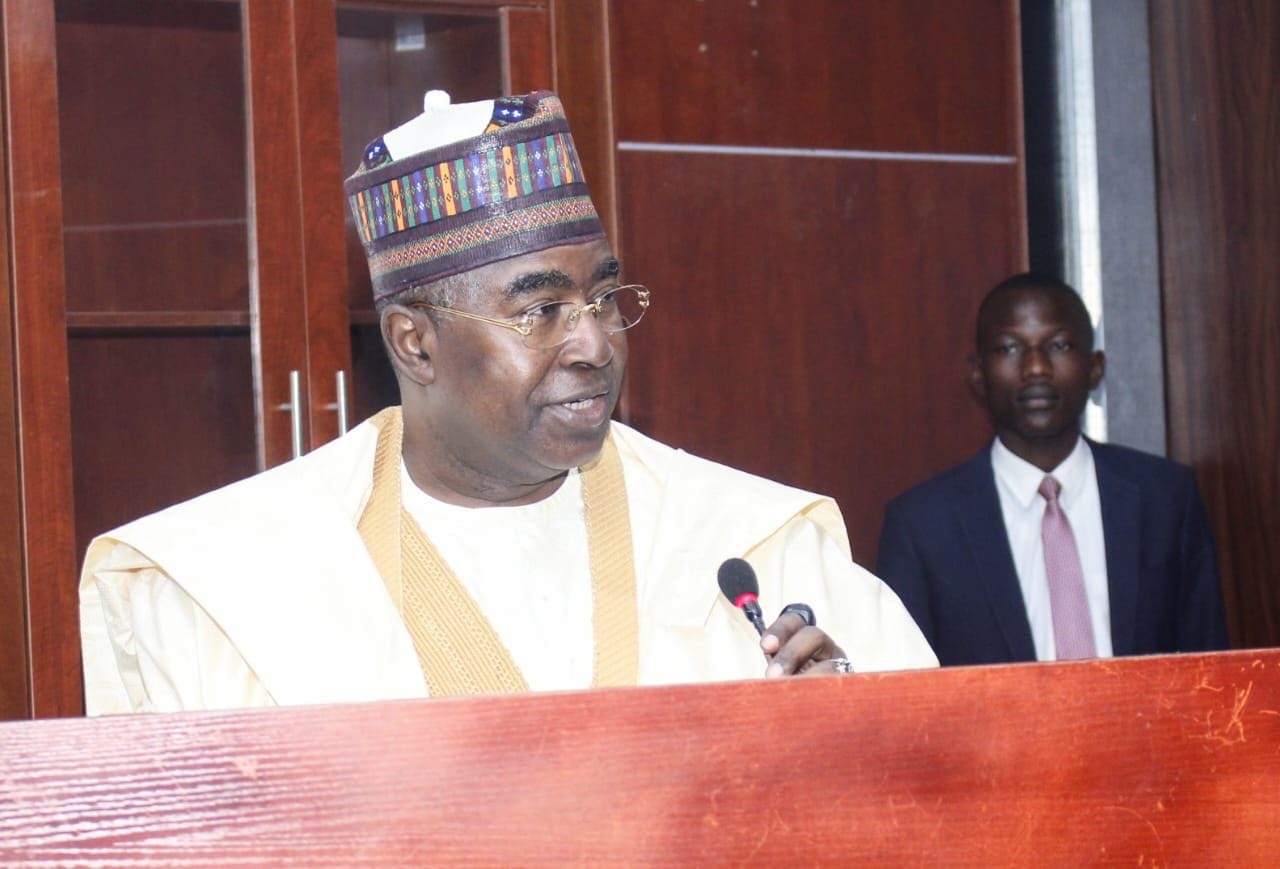
The Chairman and Chief Executive of the National Drug Law Enforcement Agency (NDLEA), Brig. Gen. Mohamed Buba Marwa (Rtd.), has directed investigators and prosecutors of the agency to intensify efforts to trace, seize and recover the proceeds and instrumentalities of narcotics trafficking.
Marwa gave the directive on Wednesday, September 2, 2026, while declaring open an advanced capacity-building programme on financial investigations, asset tracing, forfeiture, recovery and management of proceeds and instrumentalities linked to narcotics trafficking and related organised crime in Abuja.
The NDLEA chairman said the fight against drug cartels could no longer be won through arrests and drug seizures alone, stressing the need to target the financial structures that sustain criminal networks.
He described drug trafficking as fundamentally an economic enterprise supported by financiers, facilitators, money launderers and other professional enablers who operate behind the movement of illicit drugs.
Marwa warned that arresting couriers while leaving financiers untouched, or confiscating drugs without recovering the proceeds generated from trafficking, only addresses part of the problem.
According to him, organised criminal groups are increasingly exploiting technology, cryptocurrencies, complex corporate structures and legitimate businesses to conceal the ownership and origin of illicit wealth.
He therefore urged NDLEA investigators and prosecutors to develop the expertise required to analyse complex financial transactions, trace assets across borders, establish beneficial ownership, exploit digital evidence and build strong financial cases capable of supporting forfeiture and recovery.
Marwa said the agency’s next priority, following significant progress in narcotics seizures and prosecution of traffickers, was to dismantle the economic foundations of the drug trade and make narcotics trafficking a high-risk, low-profit enterprise.
He called for a shift from merely detecting crimes to disrupting criminal enterprises and from confiscating drugs to depriving traffickers of the wealth that motivates and sustains their operations.
The NDLEA chairman also noted that drug trafficking increasingly intersects with money laundering, corruption, cybercrime, human trafficking, illicit arms trafficking and other forms of organised crime, making sustained cooperation among law enforcement institutions essential.
He urged the agency’s intelligence, investigation, prosecution, forensic, asset investigation and financial investigation directorates to operate as interconnected parts of a single enforcement chain rather than working in isolation.
Marwa similarly called for stronger inter-agency collaboration, noting that no single institution possesses all the information, expertise and capacity required to dismantle sophisticated criminal networks.
He commended the calibre of experts and resource persons participating in the programme, including legal practitioners, financial investigators, asset recovery specialists and cryptocurrency experts from Nigeria and abroad.
Representatives of the Economic and Financial Crimes Commission (EFCC), Independent Corrupt Practices and Other Related Offences Commission (ICPC), Nigeria Financial Intelligence Unit (NFIU) and other sister agencies also participated in the programme alongside judges of the Federal High Court.
Marwa said their participation would strengthen the connection between investigation, prosecution and adjudication in the fight against narcotics trafficking and organised crime.
He further warned that asset recovery does not end with seizure or forfeiture, stressing that poor management and lack of transparency could reduce the value of recovered assets and weaken public confidence in the process.
He charged NDLEA officers to ensure accountability and transparency throughout the entire asset recovery process, from seizure and forfeiture to management and eventual realisation.
Marwa urged participants to treat the programme as more than routine training, saying the knowledge gained must be shared across directorates and translated into coordinated enforcement action.
He expressed confidence that the training would strengthen the agency’s ability to follow the money, identify hidden assets, build stronger evidence, secure forfeiture and ultimately deprive drug traffickers and organised criminal networks of the resources sustaining their operations.
In a goodwill message delivered on his behalf by Justice Inyang Ekwo, the Chief Judge of the Federal High Court, Justice John Terhemba Tsoho, commended Marwa for what he described as the significant strides recorded by the NDLEA under his leadership.
Tsoho also stressed the importance of collaboration between the Federal High Court, NDLEA and other law enforcement agencies, saying stronger institutional cooperation would enhance Nigeria’s standing in the international law enforcement community.
The Chief Judge described financial investigation, asset tracing, recovery and management of proceeds from narcotics trafficking and related crimes as critical areas requiring sophisticated law enforcement responses.
He commended the initiative and expressed support for continued collaboration between the judiciary and law enforcement agencies in tackling the increasingly complex nature of organised crime.