
July 02, 2025
By Ayinde Adeleke
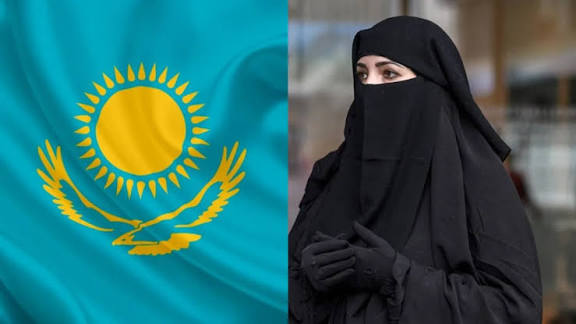
In a major move to promote national identity, Kazakhstan’s President Kassym-Jomart Tokayev has signed a law banning the wearing of clothing that covers the face in public places.
This decision aligns with a growing trend in Central Asian countries to restrict certain forms of Islamic attire.
The new law, which was enacted on Monday, prohibits individuals from wearing clothing that “interferes with facial recognition” in public, with specific exemptions for medical purposes, adverse weather conditions, and sporting and cultural events.
While the legislation does not explicitly mention religion or types of religious dress, it is seen as a measure to curb the wearing of niqabs and other face-covering garments.
President Tokayev has been a proponent of celebrating ethnic identity in Kazakhstan, a country with a majority Muslim population and a former Soviet republic.
“Rather than wearing face-concealing black robes, it’s much better to wear clothes in the national style,” he was quoted by Kazakh media as saying earlier this year.
“Our national clothes vividly emphasize our ethnic identity, so we need to popularize them comprehensively.”
This move is part of a broader effort to promote national culture and identity in Kazakhstan.
The country joins other Central Asian nations that have introduced similar laws in recent years. In Kyrgyzstan, police have been conducting street patrols to enforce the ban on Islamic face veils, while in Uzbekistan, violating the niqab statute can result in a fine of over $250.
Tajikistan has also taken steps to restrict the wearing of clothing deemed “alien to national culture.”
These moves reflect a growing trend in the region to promote national identity and cultural values over traditional Islamic attire.