
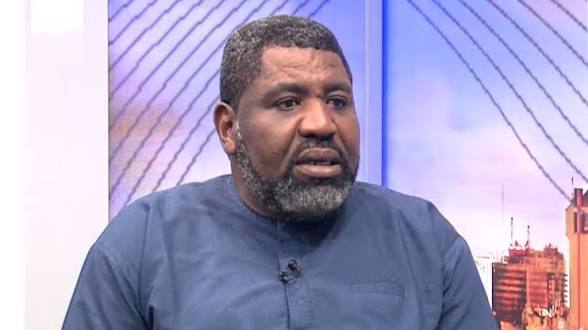
By Ademola Adekusibe
An investigation by Premium Times has raised serious questions about the academic qualifications of Anthony Kila, the suspended Pro-Chancellor of Michael and Cecilia Ibru University, reporting that several universities in Italy and the United Kingdom could not substantiate degrees and postgraduate qualifications he claimed to have obtained from them.
The investigation, published on October 10, 2026, examined qualifications listed in Kila’s academic and professional profile, including a bachelor’s degree, master’s degrees, a doctorate, an MBA and postgraduate certificates. Its findings have intensified scrutiny of his credentials and raised broader questions about the verification procedures used when individuals are appointed to senior positions in Nigerian universities.
The controversy has attracted particular attention because Kila has been a public commentator on governance and national affairs, including the performance of the administration of President Bola Tinubu. In May 2024, he described the administration’s performance during its first year in office as poor in an interview published by The Sun. His comments addressed the government’s delivery and the economic difficulties facing Nigerians.
That history provides relevant context to Kila’s public profile, although there is no established evidence connecting his criticism of the administration to the current questions about his academic qualifications. The issues should therefore be examined separately: his publicly expressed views on governance and the documentary evidence concerning the credentials attributed to him.
According to the Premium Times investigation, Kila claimed to have obtained a Bachelor of Arts degree in Classical Studies from Università per Stranieri in Italy in 1989, followed by a Master of Arts degree in European Studies in 1991. He also listed a postgraduate diploma in Media and Communication from the University of Essex in 1992 and a Master of Science degree in International Banking and Finance from City University London in 1994.
Other qualifications listed in his profile reportedly included a PhD in Political Economy from the University of Perugia in 1997, an MBA from Aston University in 2002, a postgraduate certificate in higher education from Cambridge in 2006 and a Master of Laws degree from Cambridge in 2009.
However, the newspaper reported that several institutions disputed aspects of these claims or indicated that the programmes concerned had not been offered in the periods Kila identified.
Aston University reportedly told the newspaper that its student registry contained no record of Kila studying for an MBA. City St George’s, University of London, reportedly said its records showed that Kila enrolled in a one-year Banking and International Finance programme in 2000 but was deregistered before completing it. That account differs from his reported claim of obtaining a master’s degree in the subject in 1994.
The University of Essex reportedly told the newspaper that it did not offer, and had never offered, the postgraduate diploma in Media and Communication that Kila said he obtained in 1992. The investigation also reported discrepancies concerning qualifications he attributed to Università per Stranieri in Perugia, stating that the institution’s historical records did not support his claims of obtaining a bachelor’s degree in Classical Studies in 1989 and a master’s degree in European Studies in 1991.
According to the report, the institution began offering bachelor’s degrees in 1992 and postgraduate degrees after 1999. The University of Perugia also reportedly said its economics department did not award a PhD in Political Economy of the kind Kila claimed to have obtained in 1997.
The newspaper further examined his claimed qualifications from Cambridge University. It reported that the university had not responded to its enquiry about his claimed Master of Laws degree and raised questions about his postgraduate certificate in higher education, distinguishing it from Cambridge’s separate Postgraduate Certificate in Education.
The latest investigation follows an earlier report published by Premium Times on October 3, 2026, which challenged Kila’s use of the title of professor. According to that report, Kila said the European Centre for Advanced and Professional Studies had awarded him the professorship and that he was a Jean Monnet Professor of Strategy and Development.
The newspaper reported that it could not establish the existence of the European Centre for Advanced and Professional Studies and that the European Education and Culture Executive Agency, which administers the European Union’s Jean Monnet actions, disowned the claimed professorship. Following the initial report, Michael and Cecilia Ibru University suspended Kila as its Pro-Chancellor, a position he had held since August 2025.
In his response to the latest investigation, Kila reportedly said he was gathering his academic and professional documents and contacting the institutions concerned. He also questioned who would benefit from what he described as efforts to destroy him. His response forms part of the record and should be considered alongside the newspaper’s findings.
The dispute ultimately turns on evidence. Authentic certificates, academic transcripts, verified student records and confirmation from the institutions concerned would be central to resolving the questions raised. The newspaper also described difficulties encountered during its verification process, with some universities citing data-protection rules that prevented them from confirming personal academic records to a third party.
The allegations nevertheless raise important questions about the systems through which academic qualifications are verified before individuals are appointed to positions of influence. Academic credentials can shape public trust, professional standing and access to senior roles. In a university, where the credibility of qualifications is central to the institution’s purpose, verification is particularly important.
Kila’s earlier criticism of the Tinubu administration also illustrates the public role he has occupied as a commentator on governance. Public figures who assess the conduct and performance of government officials inevitably contribute to debates about accountability and institutional standards. That role does not make them immune from scrutiny, just as scrutiny of their credentials does not automatically invalidate their views on public policy.
The relevant question is whether the standards applied to public institutions and political officeholders are also applied consistently to influential commentators, academics and university administrators. If credentials are presented as evidence of expertise, the organisations that rely on them must have procedures for checking their authenticity.
For Michael and Cecilia Ibru University, the controversy raises questions about what verification was conducted before Kila’s appointment and how the institution intends to address the discrepancies reported. The answers should be based on records and established procedures, not assumptions about political affiliation or personal motive.
The investigation has not established that Kila’s criticism of the Tinubu administration had any connection to the questions about his qualifications. Treating the two matters as evidence of one another would go beyond what the available reporting supports. What can be examined independently is his public record as a commentator and the evidence presented by the newspaper concerning his claimed credentials.
Ultimately, academic titles derive their value from the institutions and standards behind them. Where questions arise about the authenticity of qualifications, transparent verification is necessary to protect public confidence and the credibility of the institutions involved.
The wider issue is not simply about one individual. It concerns whether Nigerian institutions have effective procedures for verifying the credentials of those entrusted with authority, whether those procedures are applied consistently, and whether credible questions are answered with evidence. Those standards should apply regardless of a person’s public profile, political views or institutional position.