
Two human rights organisations, Centre for Information Technology and Development and Avocats Sans Frontières France, also known as Lawyers Without Borders on Tuesday, warned the Federal Government against controlling the digital space.
The duo said controlling the digital space would be counter-productive and antithetical to turning the country into a digital economy.
The organisations expressed concern that the government on one hand recognised the potentials of digital technology to transform the economy, but also wanted to control the way in which citizens were able to assess and deploy digital means independently.
They issued the warning in Abuja during the inaugural meeting and training of the Digital Rights Expert Group under the eRIGHTS project in Nigeria implemented by ASF in partnership with CITAD and Spaces for Change, funded by the European Union.
At the event, the Country Director, ASF France Nigeria, Angela Uzoma-Iwuchukwu, stressed the need for government not to put in place arbitrary legislations that would breach or restrict the enjoyment of human rights in Nigeria.
Uzoma-Iwuchukwu said rather, the government should work with the different developers and technological platforms to ensure that there was regulation within those organizations in line with international standards.
She warned that attempts to restrict or regulate the social media, by bringing in obnoxious laws and policies would have a direct impact on the enjoyment of freedom of expression of Nigerians, stressing the need for National Assembly not to pass obnoxious bills.
“This is because freedom of expression is guaranteed in the Nigerian constitution, and also in the region and other international human rights instruments that Nigeria is a signatory of”, she added.
The Executive Director of CITAD, Y. Z. Ya’u, said for several years, Nigeria had witnessed obnoxious bills being introduced in the National Assembly to censor the digital space.
While warning the National Assembly against wasting precious time and resources legislating on social media, Ya’u stressed the need for government to create a safe space for everybody to utilize the digital space to transform Nigeria’s digital economy.
He said: “Three years ago, the country announced the National Digital policy strategy, a very ambitious digital economy documents. The ambition is that the government will use that document to transform Nigeria into striving economy based on digital technology. And that’s requires massive development of infrastructure, massive digital skills acquisition but even much more allowed Nigerians to effectively utilize digital tools, devices and spaces.
“But on the other hand, over the last couple of years, we have also seen a progressive attempt to shrink the digital space in Nigeria. We have seen obnoxious bills been introduced in the National Assembly, including the one on fake news on internet, and so forth.
“Recently one has resurfaced again in the National Assembly. So what we have seen is that on the one hand, government has recognized the potential of digital technology to transform the economy. On the other hand, it has also recognized the potential of this technology to enhance citizen independence, urgency for transforming these conditions and that while it want to capture the economic potentials, it also wants to control the way in which citizens are able to assess and deploy digital means independently of government.
“So that’s the paradox we are and I think that it’s very important that we recognize that government itself is a hostage of its own policy and you cannot have that ambitious Digital Agenda while you are not allowing for free and safe utilization of the digital space. You can only have to transform the economy digitally, if all Nigeria’s feel free and safe to utilize the digital space that you are creating.
“And I think that for me, this is really what we need to focus about. What do we do to make goverment recognize that it’s own interest, in its effort to promote the digital agenda, it should also allow for free and safe internet in Nigeria.
“I think that for me, it was down to one thing. Instead of our National Assembly wasting a lot of precious time and resources legislating on social media, what they need to do is to take the digital rights and freedom bill that has been on the agenda for many years that will make internet safe for everybody, especially, women who are victim of online harassment and remove ambiguities in the cyber crime act, which was created to ensure that we fight cybercrime, but if you look at the statistics, or the highest number of people who are being detained and arrested using the cybercrime are actually journalists and activists rather than the criminals who have been swindling people of money. So, it’s not an effective tool for fighting cybercrime rather, is the tool that is being used to harass and detained journalists.
“So for us as campaigners, and also government agencies that are interested in promoting the effective utilization of digital technology, I think we should focus in creating a safe space for everybody to utilize the digital space so that Nigeria can be greater.”
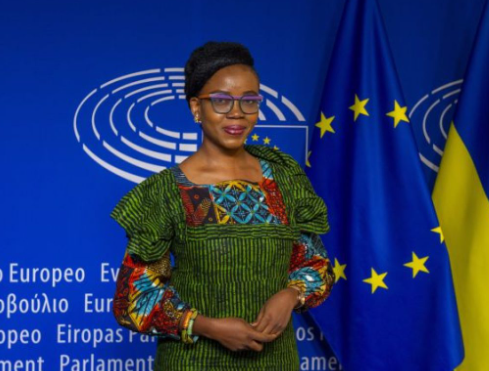
The Programme Manager of Civil Society, Human rights and Youth, (European Union Delegation), Wynyfred Achu-Egbuson, said the body was concerned in assisting Nigeria have an enabling environment for the enjoyment of digital rights.
According to her, the recent change in government and appointment of the Minister for Communications, Innovation and Digital Economy, Bosun Tijani presented a unique opportunity for civil society to engage with government towards ensuring that Nigeria’s digital space supported the ideals of the Universal Declaration of Human Rights and prevents any form of infringement on the human rights of Nigerians.