

By The Yoruba Times Editorial Board
Nigeria’s maternal mortality crisis has reached a point where expressions of concern are no longer enough. Every woman who dies from a pregnancy-related complication leaves behind a family whose life may never be the same again. Children may lose their mother, families may lose their primary caregiver, and communities may be left to deal with the consequences of a death that, in many cases, could have been prevented. Yet maternal mortality continues to expose serious weaknesses in Nigeria’s healthcare system, from poorly equipped primary healthcare centres to inadequate staffing, financial barriers and delays in emergency treatment. The country must confront this crisis with the urgency it deserves, because no meaningful assessment of national development can ignore the lives of women who die while bringing new life into the world.
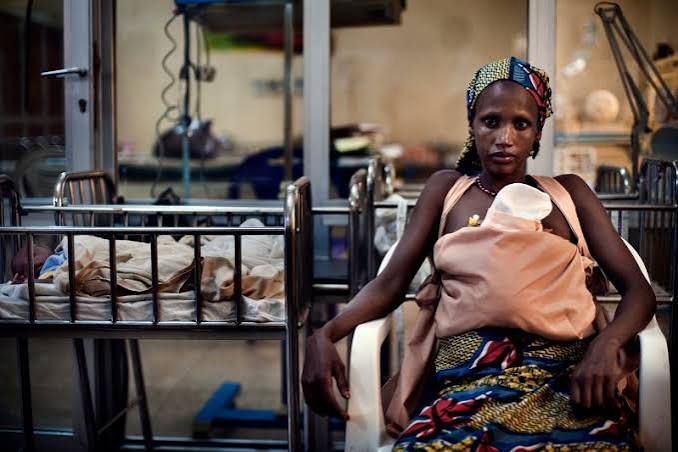
The figures are disturbing. According to the latest internationally comparable estimates published by the World Health Organization and its United Nations partners in April 2025, Nigeria’s maternal mortality ratio stood at an estimated 993 deaths per 100,000 live births in 2023. The global average was 197 deaths per 100,000 live births. The World Bank’s corresponding dataset estimates that Nigeria recorded approximately 75,000 maternal deaths in 2023. These are modelled estimates, not a direct registration of every death, but they reveal the magnitude of the challenge facing the country. Nigeria is carrying a disproportionate share of the global maternal mortality burden, and the scale of the problem demands a response that goes beyond routine healthcare announcements.
The significance of these figures becomes clearer when maternal mortality is understood for what it is: not simply a medical statistic, but a measure of whether a health system can protect women during one of the most vulnerable periods of their lives. Pregnancy and childbirth carry risks, and no health system can guarantee a complication-free outcome in every case. However, many of the leading causes of maternal death are known and can be treated when appropriate care is available quickly enough. Severe bleeding, infections and hypertensive disorders such as pre-eclampsia and eclampsia can become fatal without timely intervention. Skilled health workers, essential medicines, blood transfusion services, emergency surgery and reliable referral systems can make the difference between survival and death. The central issue, therefore, is not whether medicine has solutions to many of these complications, but whether Nigerian women can access those solutions when they need them.
Recent evidence about the condition of Nigeria’s primary healthcare facilities raises serious questions about that access. A PHC Operational Capability Report published by Orodata Science and Civic Tech in September 2026 assessed 1,480 primary healthcare centres across 277 local government areas in 16 states. The assessment, conducted between October 2023 and June 2025, examined staffing, infrastructure, equipment, electricity, water supply and accessibility. It found that only three per cent of the assessed facilities met national minimum staffing requirements, while 11 of the 16 states had no assessed facility that met the standard. The report also found that 38 per cent of the facilities operated without electricity, 39 per cent relied on unsafe water sources and 75 per cent lacked essential neonatal resuscitation equipment. These findings apply to the facilities assessed, not every primary healthcare centre in Nigeria, but they expose weaknesses in frontline healthcare that cannot be ignored.
The staffing figures deserve particular attention. Primary healthcare centres are often the first point of contact for pregnant women, especially in rural and underserved communities. They are expected to provide antenatal services, identify risks, offer basic care and refer patients who require more advanced treatment. Yet when facilities do not have enough trained personnel, their ability to fulfil these responsibilities is weakened. A health worker who must attend to too many patients cannot always provide the level of attention required. A facility without adequate midwifery coverage may struggle to provide continuous maternity services. When an emergency occurs outside the hours in which qualified personnel are available, a woman’s chances of receiving timely treatment may be reduced. These are not merely administrative shortcomings. They affect the quality, safety and reliability of care available to pregnant women.
The absence of reliable electricity and safe water is equally troubling. Electricity is essential for many aspects of modern healthcare, including lighting during delivery, the operation of medical equipment, the preservation of certain medicines and the provision of emergency services. Safe water is indispensable for hygiene, sanitation and infection prevention. Where these basic utilities are unreliable, even trained personnel may find it difficult to provide care under appropriate conditions. The problem becomes more serious when several deficiencies occur in the same facility. A shortage of staff combined with inadequate equipment, poor sanitation and unreliable power creates a chain of weaknesses that can compromise the care of both mothers and newborns. The Orodata assessment is a reminder that improving primary healthcare requires more than painting buildings or commissioning renovated facilities. It requires making them functional.
It is also important to distinguish maternal deaths from newborn deaths. The reported finding that 75 per cent of assessed facilities lacked essential neonatal resuscitation equipment relates directly to the capacity to support newborns experiencing complications at birth. It is not, by itself, a measure of maternal mortality. Nevertheless, it illustrates a wider problem in the quality of childbirth services. Safe delivery requires attention to the health of both mother and child, and a health facility that cannot respond effectively to newborn emergencies may also have other deficiencies that require investigation. Governments must use such findings to identify specific gaps and correct them rather than rely on broad assurances that healthcare services are improving.
Poverty adds another layer to the crisis. The cost of antenatal consultations, laboratory tests, medication, transportation and delivery can place a heavy burden on households already struggling to meet basic needs. When a pregnancy becomes complicated, the cost of emergency surgery, blood transfusion or specialist treatment may be far beyond what a family can readily afford. Some women may delay seeking care because they fear the expense, while others may arrive at a facility only to face further delays as relatives attempt to raise money. In an obstetric emergency, time is critical. Financial arrangements must never become an avoidable obstacle to life-saving treatment.
This is why maternal healthcare cannot be separated from the question of financial protection. Governments must ensure that women know which services are covered by public programmes and that eligible patients can obtain those services without being pushed into unaffordable debt. Emergency maternity care requires clear procedures that prioritise clinical urgency. Where public funding or health insurance is intended to protect vulnerable women, its benefits must be visible at the point of care, not merely stated in policy documents. A programme cannot be considered successful simply because money has been allocated or a launch ceremony has been held. Its real value lies in whether women can access the services it promises.
The Federal Government has recognised the need for targeted action through the Maternal Mortality Reduction Innovation and Initiative, known as MAMII, launched in November 2024. The initiative was designed to focus interventions on 172 local government areas across 33 states identified as high-burden areas. Its approach includes strengthening maternal healthcare services, improving referrals, connecting pregnant women to appropriate care and addressing barriers that prevent women from receiving emergency treatment. The initiative represents an acknowledgement that maternal deaths require focused interventions in communities where the risks and barriers are greatest.
However, the existence of a national initiative is only the beginning of the test. The government must provide evidence of implementation and measurable results. How many of the targeted local government areas have functioning emergency obstetric services? Are the relevant primary healthcare centres adequately staffed? Can women who need emergency surgery reach an appropriately equipped hospital without dangerous delays? Are the services promised under the initiative accessible in practice, and are women being protected from unaffordable charges? How is the programme measuring its impact on maternal deaths? These questions are necessary to determine whether public commitments are translating into real improvements. Where progress has been made, the government should publish the evidence. Where implementation has fallen short, the reasons should be disclosed and corrective action taken.
The responsibility is shared across Nigeria’s tiers of government, but it must not become an excuse for shifting blame. The Federal Government has a role in national policy, coordination, financing support, standards and monitoring. State governments carry substantial responsibility for the operation and quality of state hospitals, general hospitals and primary healthcare systems. Local authorities and community health structures can help connect women to services and identify barriers to access. These responsibilities must be clearly defined, properly funded and monitored. If a state’s facilities lack essential equipment, its government must address the shortage. If frontline facilities are understaffed, the responsible authorities must develop and implement a credible recruitment, deployment and retention plan. If referral systems are failing, the problem must be identified and corrected.
Government spending must also be judged by the services it produces. Nigeria needs reliable data on which facilities have the capacity to manage deliveries, which can provide basic emergency obstetric care, which can perform comprehensive emergency interventions and which require urgent upgrades. Investment should be directed according to verified needs, rather than political visibility or the convenience of announcing new projects. A facility with a leaking roof, no reliable electricity, inadequate staffing and insufficient equipment should not be treated as adequately served simply because it appears on a government list. Public reporting should identify the problems, the institutions responsible for resolving them, the resources required and the timelines for completion.
Accountability must extend to the investigation of maternal deaths. Every death should prompt a careful review of the circumstances, including whether danger signs were recognised, whether treatment was delayed, whether the appropriate staff and supplies were available and whether referral procedures worked as intended. Such reviews should be designed to identify preventable failures and improve the system, not automatically to blame individual health workers. Where negligence or misconduct is established, appropriate accountability is necessary. Where the problem is a lack of equipment, staff or institutional support, those deficiencies must be addressed. The purpose of reviewing a maternal death must be to prevent the next one, not simply to record the previous one.
At the same time, public education and community engagement remain important. Pregnant women and their families should have access to reliable information about antenatal care, danger signs and the need to seek urgent attention when complications arise. Community health workers and midwives can help identify risks and connect women to appropriate services. But it would be unjust to place the burden of responsibility on women alone. Encouraging early hospital attendance is of limited value if the nearest facility cannot provide the necessary care, transportation is unavailable or treatment remains financially inaccessible. Public awareness must be matched by functioning services.
The Yoruba Times therefore calls on the Federal Government and state governments to treat maternal mortality as a measurable public health priority. This requires strengthening primary healthcare facilities, ensuring adequate staffing, providing essential medicines and equipment, improving access to safe blood supplies, expanding emergency obstetric services and establishing reliable referral arrangements. It also requires transparent reporting on maternal deaths, implementation of corrective measures following death reviews and public disclosure of progress under existing programmes. Government agencies should be able to show not only how much they have spent, but what has changed for pregnant women as a result.
The evidence does not suggest that every maternal death can be prevented, nor should every adverse outcome automatically be treated as proof of negligence. It does, however, show that Nigeria faces a grave challenge and that serious weaknesses in the country’s frontline healthcare system require urgent attention. The national maternal mortality estimate, combined with the findings from the 1,480 primary healthcare facilities assessed by Orodata, provides sufficient reason for governments to examine whether women are receiving the quality of care they need. The appropriate response is not to trade accusations, but to establish clear responsibilities, make evidence-based investments and measure whether those investments are saving lives.
No woman should have to die giving birth because essential treatment was unavailable, a referral was delayed, a facility lacked the necessary staff or her family could not afford emergency care. Maternal survival must not remain a subject that receives attention only when a new report is published or a tragic story attracts public sympathy. It must become a continuous test of the effectiveness of Nigeria’s health system and the seriousness of its governments.
Nigeria cannot continue to treat maternal deaths as business as usual. The measure of a functioning health system is not simply how many facilities it operates, but whether women can enter those facilities and receive the care necessary to survive. The Federal Government and state governments must turn their promises into measurable results, because protecting mothers is a public responsibility that cannot be postponed.