
The Alliance of Middle Powers
What an EU–Canada–Australia bloc would actually do to global leverage, and why the biggest losers may not be the ones you expect.
I. This Is No Longer Hypothetical
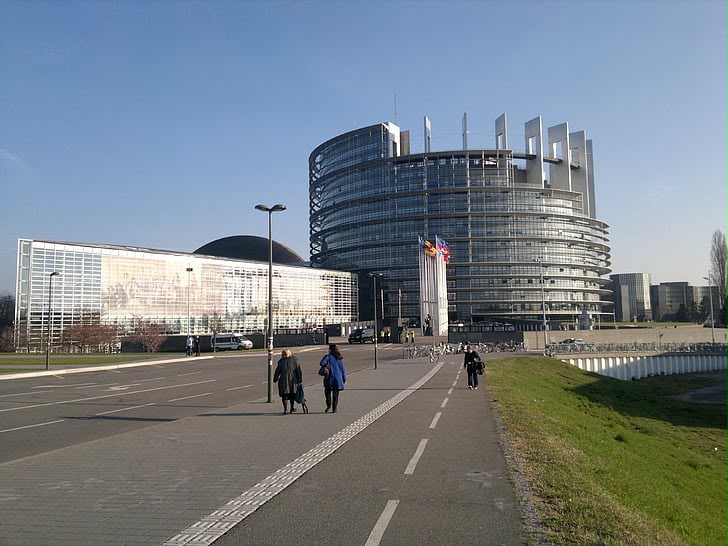
On 16 September, in her State of the Union address, Ursula von der Leyen proposed that Canada become the European Union’s first “associate member.” The next day Mark Carney stood in the European Parliament in Strasbourg. Roberta Metsola, the Parliament’s president, described the proposed status as a third way between full membership and candidate status, and said plainly that other countries would come knocking, naming Australia and New Zealand. Canberra did not wait to be asked twice. Australia’s trade minister said his government was on the same page as Ottawa and would watch closely what Carney does. The substance being negotiated is far more radical than the diplomatic language suggests. According to the Wall Street Journal’s reporting, Brussels and Ottawa are discussing free movement of goods, services and workers in strategic sectors, energy, AI, defence and critical minerals, which in effect shifts the EU’s economic border across the Atlantic. The talks also cover joint undersea cables, data centres, cloud storage, satellite networks and infrastructure to move Canadian energy to Europe. Carney’s framing is the giveaway. He has said Canada can work with Europe on strategic autonomy, which he defined as access to semiconductors, payment systems, clean energy and space communications that does not depend on the goodwill of superpowers. He has repeated that in Australia. Note the plural. Superpowers. Not China. Both. And Washington heard it. Donald Trump said he would consider fresh tariffs on the EU if the associate-membership bid turns “hostile,” this on top of an existing US–EU arrangement under which European goods already face a 15% tariff, and a full trade war with Canada, its largest trading partner. So the question is not whether this is happening. It is what it would actually change.
II. The Arithmetic of a Third Pole
Start with mass, because in geoeconomics mass is the first variable. The European Union is roughly a $20 trillion economy with about 450 million people. Canada adds something over $2 trillion and 41 million. Australia adds close to $2 trillion and 27 million. The combined entity would be on the order of $24 trillion and more than 510 million consumers, broadly comparable in economic weight to the United States and substantially larger than China. But raw GDP is the least interesting number here. What matters is complementarity, and this particular combination is unusually well-matched. The EU is the world’s most powerful regulatory market and one of its poorest in raw materials. It is demographically shrinking, energy-import dependent, land-constrained, and has spent three years discovering that its industrial base rests on inputs it does not control. It has depth in manufacturing, pharmaceuticals, machine tools, aerospace and standards-setting, and almost nothing under the ground. Canada and Australia are the two most resource-endowed advanced democracies on the planet. Australia is a dominant producer of lithium, iron ore, uranium, coal and LNG, and hosts effectively the only significant rare-earth separation capacity outside China. Canada holds potash, uranium, nickel, cobalt, aluminium, hydropower, oil, timber, freshwater and Arctic geography. Both are under-populated, capital-hungry, and locked into export relationships they have come to distrust. Each side has precisely what the other lacks. That is the definition of a viable bloc, and it is rarer than people think. Most proposed alliances are between economies that compete rather than complete.
III. What Actually Changes: Five Mechanisms of Leverage
1. The Brussels Effect Gets a Continent Bigger. The EU’s real power has never been military. It is the ability to set rules that firms adopt globally because complying twice is more expensive than complying once. Add Canada and Australia and that regulatory bloc covers a half-billion high-income consumers across three continents and four oceans. Carbon border adjustment, AI governance, data protection, supply-chain due diligence: these stop being European eccentricities and become the default operating standard of the developed world. Every exporter on earth, including every African exporter, then designs to that standard or loses the market.
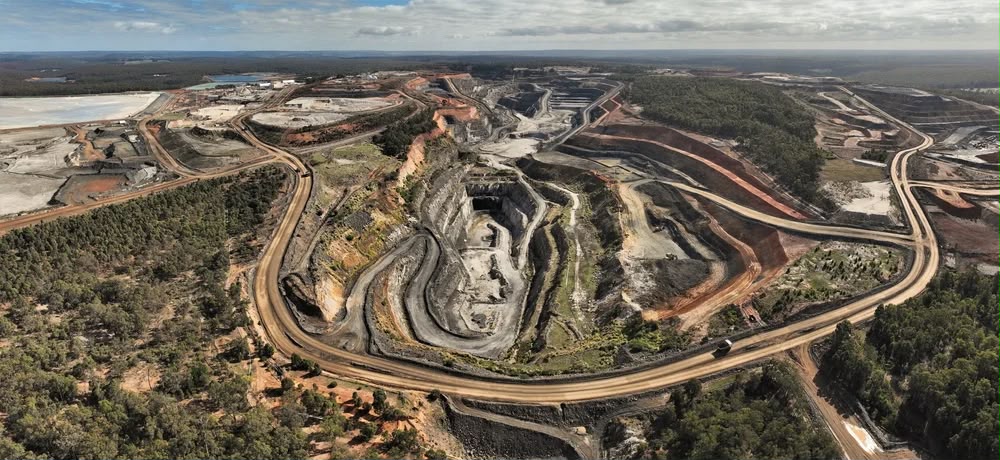
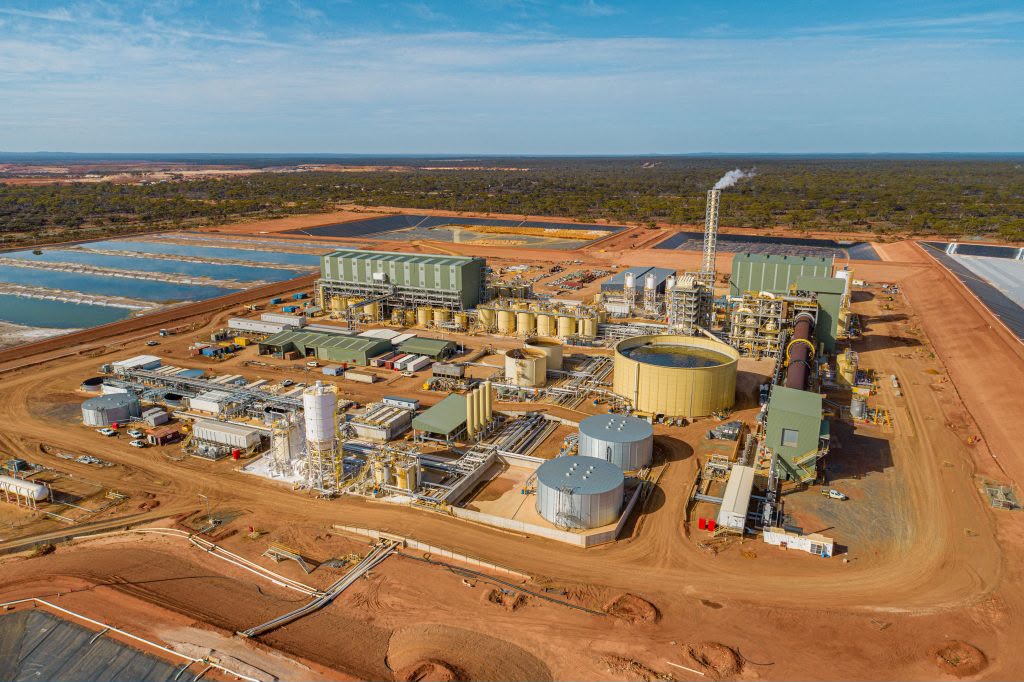
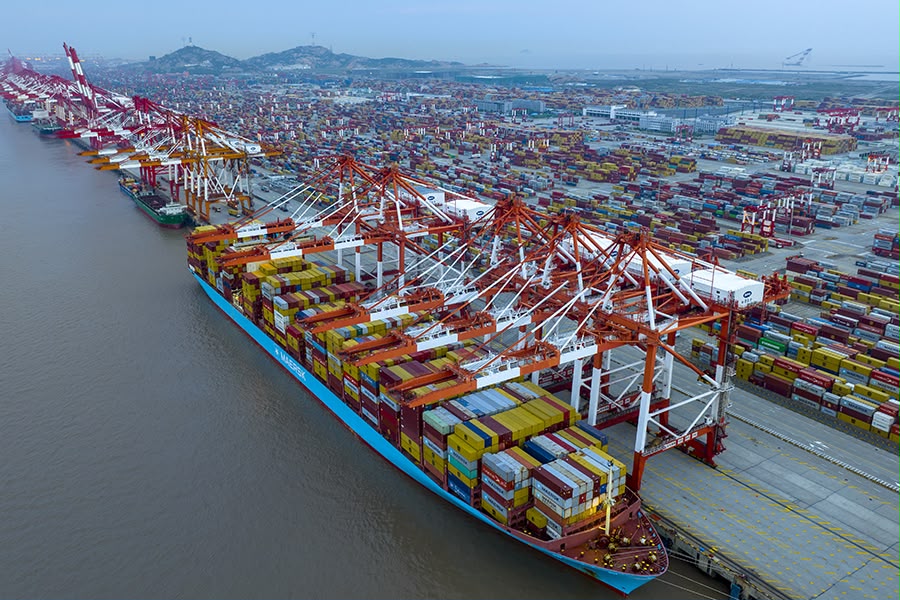
2. Critical Minerals: Breaking Monopsony, Not Building a Cartel. The reason Western mining projects keep dying is not geology. It is that China, as the dominant buyer and refiner, can drop prices below the cost of new entrants long enough to kill financing, then let prices recover. It is monopsony power, and it has worked repeatedly against lithium, rare earths, graphite and cobalt projects in Australia and Canada. A bloc that combines EU demand with Australian and Canadian supply can do what neither can do alone: guarantee offtake at price floors, co-finance refining, and make projects bankable against Chinese price warfare. That is the single most consequential economic mechanism in the entire proposal, and it is why Metsola listed critical raw materials first when she described what the partnership could touch, alongside energy, connectivity, AI, education, defence and the Arctic.
3. Payments: The First Real Crack From Inside the Western Camp. Carney named payment systems explicitly. Understand what that means. Years of BRICS de-dollarisation rhetoric have produced very little, because the participants lack deep, liquid, rule-of-law capital markets. But if Canada and Australia, US treaty allies, G7 and G20 members, dollar-bloc economies by default, begin hedging into euro-denominated settlement for commodities and building payment rails outside American jurisdiction, that is a categorically different event. It is not adversaries seeking an alternative. It is friends seeking an exit. The dollar’s strength was never only economic. It was the absence of a credible alternative that allies trusted. Washington is currently manufacturing one.
4. Defence-Industrial, Not Defence. This is where honest analysis has to restrain the headline. Europe’s rearmament programmes, Canada’s participation in European defence-industrial arrangements, and the EU–Australia Security and Defence Partnership signed in March 2026, covering cyber, economic security, critical minerals, hybrid threats, maritime security, space and defence industry cooperation, add up to procurement integration and interoperability. They do not add up to a mutual defence guarantee. There is no Article 5 here, and the EU’s own Article 42.7 does not extend to associates. What it does create is a second buyer’s market for defence equipment, which erodes American leverage over allied procurement, historically one of Washington’s most reliable instruments of alliance discipline.
5. The Arctic. Add Canada to a bloc that already contains Denmark, and therefore Greenland, Finland and Sweden, and the Arctic becomes a single coordinated theatre in which the United States is the outsider. Given recent American pressure on Greenland, the inclusion of the Arctic in Metsola’s list of partnership areas is not a throwaway line. It is a message.
IV. The Case Against: Why This May Underdeliver
A serious analyst must say where the argument is weak, and it is weak in four places. Geography does not negotiate. Roughly three-quarters of Canadian exports go to the United States, through integrated continental supply chains, autos, pipelines, electricity grids, built over seventy years. You cannot reroute an assembly line across the Atlantic by treaty. Meanwhile Australia’s single largest trading partner, by an enormous margin, is China. Both countries are structurally captured by the very dependencies this bloc is meant to reduce. Diversification at the margin is real; substitution is fantasy. The EU cannot decide quickly. Foreign policy still requires unanimity among twenty-seven governments. One capital can stall for domestic reasons that have nothing to do with Canada. The bloc that is being sold as a decisive response to superpower coercion is institutionally the slowest-moving major actor on earth. “Associate member” does not exist. There is no such category in the treaties. It would have to be invented, most plausibly as a heavily enhanced association agreement, negotiated, translated, ratified by the European Parliament and possibly by national and regional parliaments. CETA, a simpler instrument, took seven years and is still not fully ratified. Anyone promising this bloc within an electoral cycle is selling something. Politics is reversible. Carney could lose. Australian governments change. And the entire proposition is a response to one American administration’s behaviour. If Washington’s posture softens, the urgency evaporates, and half-built institutions are abandoned all the time. Brussels itself is careful to insist the arrangement is not directed against anyone, which is both diplomatically necessary and analytically revealing about how much conviction sits behind it.

V. Who Loses
The United States loses the most, and by its own hand. American power has rested on two pillars: military primacy and the ability to make market access conditional. The second pillar only works if there is no alternative market. Tariffing Canada into Brussels’ arms and then threatening Brussels for accepting them is not strategy; it is the compression of decades of accumulated alliance capital into a single bargaining cycle. The deepest damage is not the trade diverted. It is that allied capitals have now been forced to build the institutional muscle for acting without Washington, and institutions, once built, outlive the grievance that produced them. China loses a specific and valuable tool. It loses the ability to discipline Western mining through price warfare, and it loses the long-running ability to play Europe against the Anglosphere on technology and market access. The United Kingdom is the quiet casualty. Outside the EU, outside this arrangement, and watching the two anchor states of any imagined CANZUK federation walk into Brussels instead. Brexit’s final invoice arrives not as a trade statistic but as a strategic irrelevance.
VI. What This Means From Here
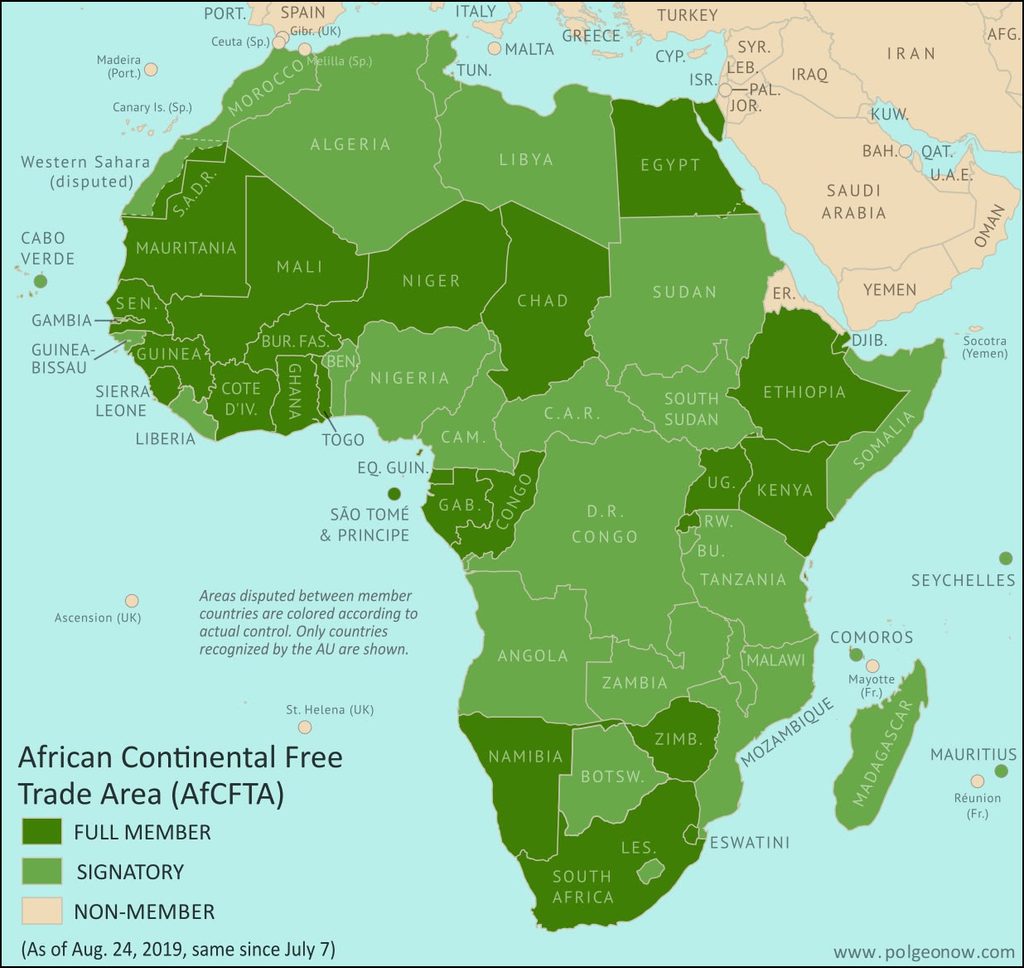
Two lessons for Africa, one encouraging and one uncomfortable. The encouraging one is the template. Three wealthy, sovereign, functioning democracies have concluded that no one of them is large enough to be independent, and that pooling regulatory power, procurement and infrastructure is the only route to autonomy. That is precisely the argument for the African Continental Free Trade Area, and precisely the argument West Africa has been busy losing: ECOWAS fracturing, the Sahel states walking out, national elites preferring small sovereignty to large leverage. Middle powers elsewhere are pooling. We are unpooling. The contrast should be studied, not celebrated. The uncomfortable lesson is this: friendshoring is not a market opportunity for Africa. It is a competitor. The entire logic of an EU–Canada–Australia critical-minerals architecture is to source lithium, cobalt, nickel, rare earths and uranium from jurisdictions considered politically safe, and Canadian and Australian deposits are the alternative to Congolese, Zimbabwean, Guinean and Namibian ones. Capital that might have developed African processing will be directed, with subsidy and offtake guarantees, to Quebec and Western Australia instead. Layer on traceability and ESG compliance requirements set by a bloc of half a billion consumers, and African producers face higher barriers to a market that is simultaneously trying to avoid needing them. There is a counter-move, and it is the obvious one: if the West is building buyer coordination, African producers must build seller coordination. A continent that supplies the majority of the world’s cobalt and a substantial share of its manganese, bauxite and platinum has bargaining power only if it stops negotiating country by country, mine by mine, against blocs that negotiate as one. Sell ore separately and you are a price-taker forever. Coordinate refining, standards and offtake and you are a party to the conversation.
Conclusion
The EU–Canada–Australia bloc will probably not become the tight federation its enthusiasts imagine. It will more likely become a dense web of sectoral arrangements, minerals, energy, defence procurement, data infrastructure, research mobility, that never quite cohere into a single polity but collectively change who needs whom. That is still enormously consequential. The unipolar order did not end when China rose. It ends the day American allies conclude that their prosperity and security no longer require American permission, and start building the pipes to prove it. Von der Leyen’s proposal and Carney’s speech may be remembered as the week that conclusion stopped being private. The world is not becoming bipolar between Washington and Beijing. It is becoming a contest of blocs, in which the decisive question for every other country, Nigeria emphatically included, is whether you enter the negotiation as a member of something, or alone.
Geopolitics with Oladimeji Bolarinwa — The Thought Builders Institute