
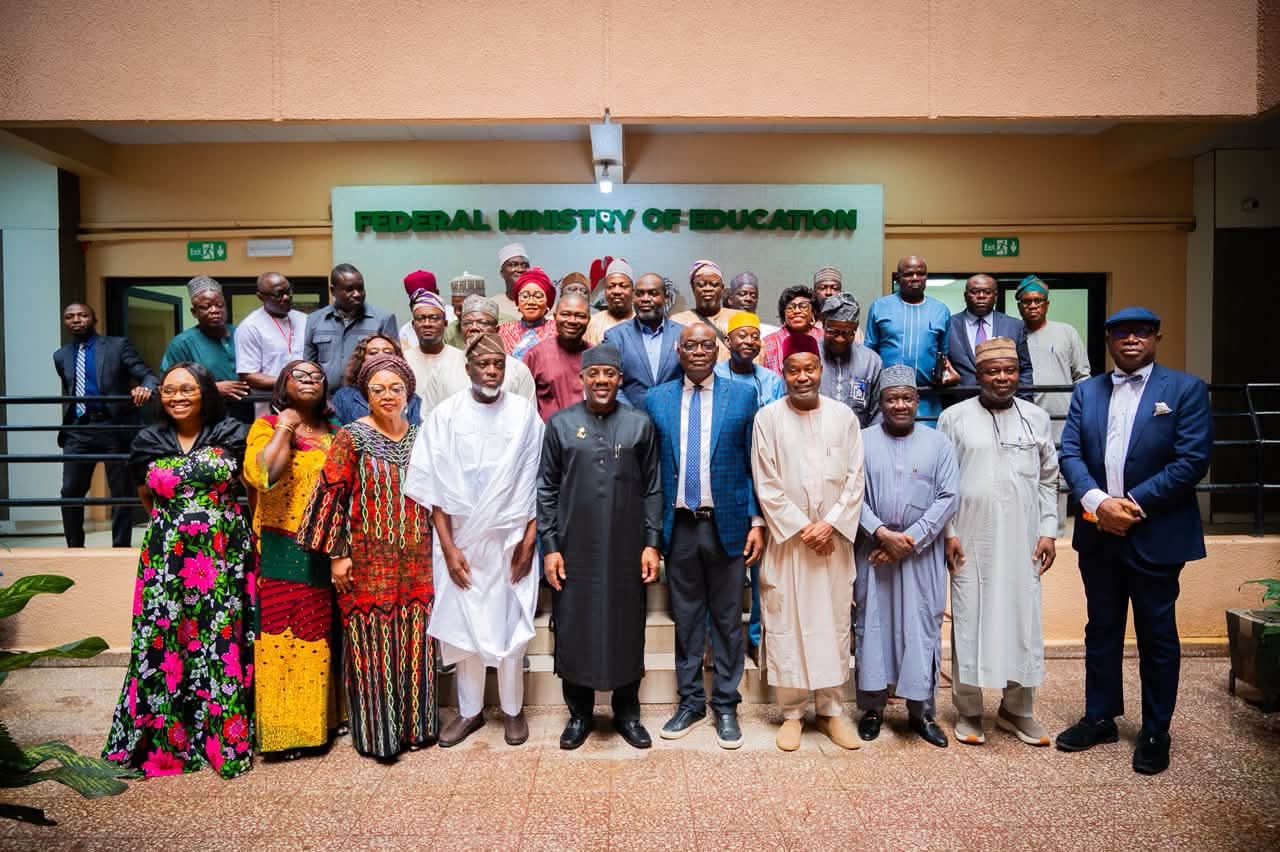
The Federal Government has commenced major reforms aimed at strengthening accreditation and quality assurance in Nigeria’s tertiary institutions and ending the practice of temporarily borrowing academic staff, equipment and facilities to meet accreditation requirements.
The Honourable Minister of Education, Dr Maruf Tunji Alausa, CON, disclosed this in Abuja while inaugurating the Ministerial Committee on Strengthening the Accreditation and Quality Assurance System for Tertiary Institutions in Nigeria.
Dr Alausa said accreditation must reflect the actual and sustainable capacity of an institution, stressing that prescribed standards must be maintained throughout the year and not only during accreditation visits.
According to the Minister, the reform will introduce a digital, data-driven and continuously verifiable accreditation system that will deploy technologies including geospatial mapping, geotagging and secure digital records.
The proposed system will verify the identity of academic staff and their institutional affiliations, as well as confirm the ownership, functionality and sustained availability of facilities, laboratories, workshops, libraries and major equipment in tertiary institutions.
The Minister also directed the Committee to develop stronger measures to tackle illegal admissions and other weaknesses within the existing regulatory framework.
The Committee, chaired by Professor Ishaq Oloyede, has been tasked with reviewing existing accreditation policies and recommending measures to improve monitoring, verification, technology adoption and continuous quality assurance across tertiary institutions.
The Federal Ministry of Education will collaborate with the National Universities Commission (NUC), National Board for Technical Education (NBTE), National Commission for Colleges of Education (NCCE) and other relevant stakeholders to ensure that accreditation standards are authentic, functional and sustainably available to students.
The reform is expected to make accreditation a more accurate reflection of the quality and capacity of tertiary institutions, rather than a temporary exercise centred on meeting requirements only when accreditation teams are expected.