
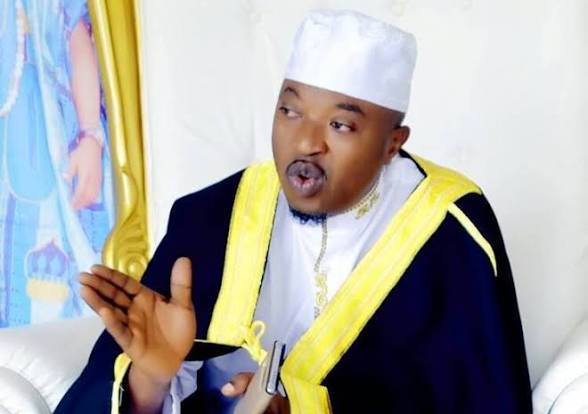
The Osun and Oyo State governments, alongside the Afobaje Council, should formally investigate the Oluwo of Iwo over his alleged confessions during a visit to Saudi Arabia concerning the desecration of traditional shrines and the destruction of Orisa representations within the palace.
Any Oba whose conduct demonstrates disregard for the traditional stool, its sanctity and the cultural and spiritual institutions associated with it should face appropriate disciplinary action.
The Oluwo’s repeated controversial conduct and public displays of behaviour that fall below the decorum expected of someone occupying such an exalted traditional position, whether in Canada or elsewhere, should, at the very least, warrant disciplinary proceedings and possible suspension pending an appropriate review.
Unfortunately, the growing number of traditional rulers whose conduct brings the institution into disrepute, particularly through their apparent embrace of foreign religions, Islam and Christianity, at the expense of the indigenous traditional religion through which they acquired the legitimacy to occupy their respective stools, is strengthening arguments questioning the continued relevance of these institutions.
The traditional institution increasingly appears to be struggling to justify its relevance beyond the conferment and, in some instances, commercialisation of chieftaincy titles for the gratification of wealthy individuals seeking to massage their egos; the sale or gifting of land; and the covert use of traditional influence to mobilise political support or sponsor preferred political candidates.
This situation is particularly troubling when measured against the widely held traditional principle that the Oba is the father of all.
How can an institution credibly claim to represent and unite all its subjects when some of its occupants openly compromise that responsibility by taking sides in partisan political contests?
Many Obas appear increasingly content with playing ceremonial figurehead roles while neglecting the traditional obligations and rites expected of them, particularly those relating to the veneration of ancestors and the observance of spiritual responsibilities attached to their stools.
When they are not using their positions to preach against and denounce our Orisas, some are found rolling on church floors or in open fields during Christian revival programmes, apparently seeking to emulate the biblical King David in his expressions of religious devotion.
What they seem to forget, however, is that King David did not ascend his throne through Orisa consultation, nor did he inherit a palace with Orisas to whom traditional rites and obligations were owed.
One cannot selectively embrace the privileges of a traditional institution while dismissing the cultural and spiritual responsibilities that accompany those privileges.
Similarly, when an Oba assumes the responsibility of anointing or openly endorsing one governorship aspirant at the expense of other contenders, he undermines the very principle upon which his traditional authority should rest: that he is the father of all, irrespective of their political affiliations or ambitions.
THE NEED FOR INSTITUTIONAL REFORM AND GOVERNMENT OVERSIGHT
The increasing departure from established traditional norms, which some Obas appear to justify under the guise of modernisation, makes a compelling case for greater oversight by the Ministries of Local Government and Chieftaincy Affairs.
Modernisation should not become an excuse for abandoning traditional obligations while retaining the privileges and authority associated with the stools.
I therefore propose a more proactive oversight framework covering the following areas:
1. Screening and Regulation of Chieftaincy Awards
The relevant ministries should introduce appropriate guidelines for the conferment of chieftaincy titles, including preliminary screening of prospective recipients.
Consideration should be given to their contributions to society, community development and the immediate local economy of the domain in which the title is being conferred.
Chieftaincy titles should represent recognition of genuine contributions to society rather than becoming commodities available to the highest bidder.
2. Preservation of Traditional Rites and the Sanctity of the Palace
Occupants of traditional stools should be required to acknowledge and uphold the traditional rites and cultural obligations attached to their offices.
They should provide formal undertakings that no desecration, destruction or unauthorised removal of traditional deities and sacred representations within their palaces or communities will take place.
An Oba should not have unilateral authority to destroy or discard cultural and spiritual institutions, including the physical and non-physical structures that predate his occupancy of the stool and belong to the collective heritage of the people.
3. Financial Accountability for Chieftaincy Proceeds
Funds received from individuals in connection with the conferment of chieftaincy titles should be treated as revenue belonging to the traditional stool and institution, NOT as the personal proceeds of the occupant of the stool.
Such funds should be properly accounted for and deployed towards the maintenance of the palace, the welfare of palace attendants, traditional functionaries, praise singers and other individuals whose livelihoods depend on their association with the palace.
It is worth emphasising that many of these people depend almost entirely on occasional handouts they receive from visitors to the palace.
The institution should establish a structured arrangement for their welfare rather than leaving their livelihoods to chance and individual generosity.
4. Introduction of Modern Financial Management and Auditing
If some Obas are embracing modernisation in the administration and practices of their stools, then such modernisation must extend to financial management.
Palace accounts should be properly maintained, periodically audited and subjected to appropriate accountability standards.
The traditional institution should not be exempt from financial transparency simply because it operates under customary authority.
Modernisation must come with accountability.
5. Broadening Representation in Traditional Succession
In line with the need to modernise the institution, consideration should be given to making eligibility and participation in traditional succession more inclusive of the major Agbo’les (compounds or extended families) within communities.
The rights and opportunities associated with traditional stools should not remain exclusively concentrated within a few recognised ruling houses where legitimate historical and customary grounds exist for broader participation.
This would encourage inclusiveness, reduce unnecessary succession disputes and strengthen the sense of collective ownership of traditional institutions.
6. Strengthening the Afobajes and King Selection Councils
The Afobajes and King Selection Councils must be empowered and expected to discharge their traditional responsibilities effectively.
Their roles should not end with the selection and installation of an Oba.
They should provide guidance and support to occupants of the stools, particularly on matters affecting cultural heritage, social welfare and the collective interests of their communities.
Equally important, they must be held accountable for failures in discharging their responsibilities.
Where they collude in, facilitate or turn a blind eye to abuses and misconduct by occupants of the stools, appropriate disciplinary measures and sanctions should follow.
CONCLUSION
The traditional institution is an important part of Yoruba heritage, history, identity and civilisation. However, its continued existence and relevance cannot rest solely on the prestige attached to crowns, palaces and titles.
The institution must earn and retain the respect of the people through responsible leadership, cultural preservation, impartiality, accountability and service to society.
An Oba cannot claim to be the father of all while openly taking sides in partisan politics. Neither can an occupant of a traditional stool selectively embrace the privileges of the institution while rejecting the cultural and spiritual obligations that accompany them.
You cannot modernise an institution by dismantling the very foundations upon which its legitimacy rests.
If the traditional institution is to survive and remain relevant to future generations, it must undergo meaningful reform, restore public confidence and demonstrate that it still has a purpose beyond ceremonial appearances, political influence and the conferment of titles.
— Gbonka of the Universe