
Renowned historian Professor Toyin Falola has urged Nigerian policymakers and academic institutions to embrace indigenous African environmental knowledge as a critical tool in addressing the country’s growing ecological challenges.
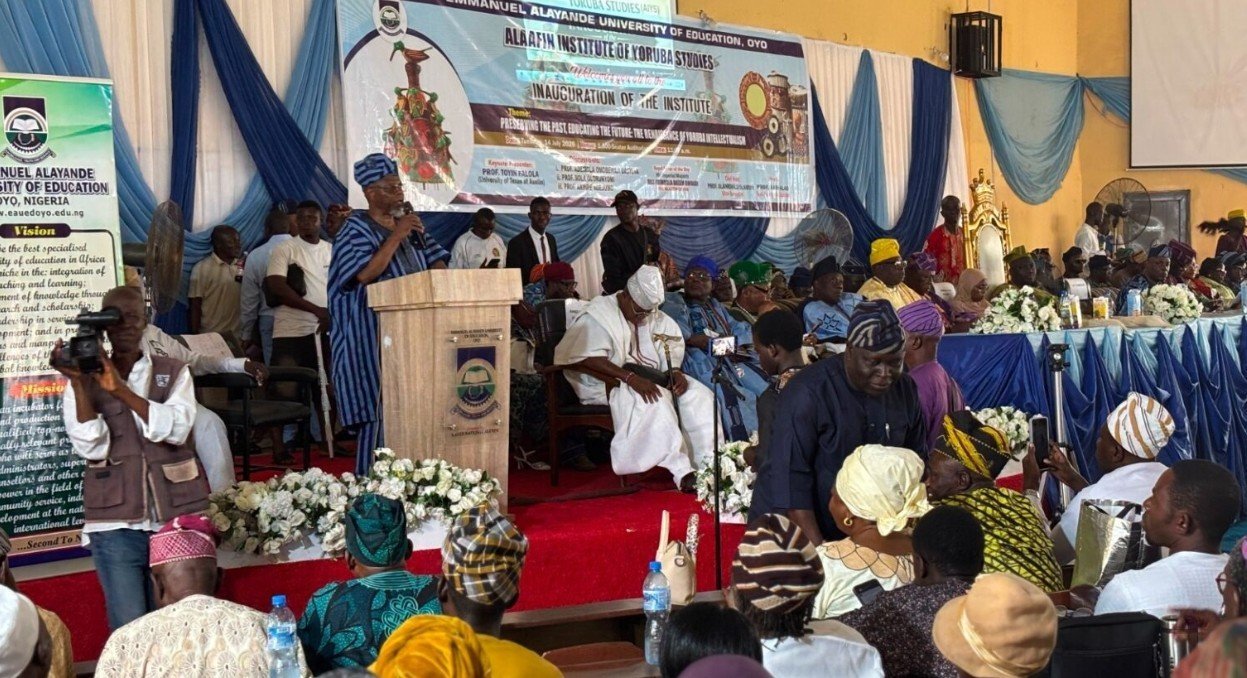
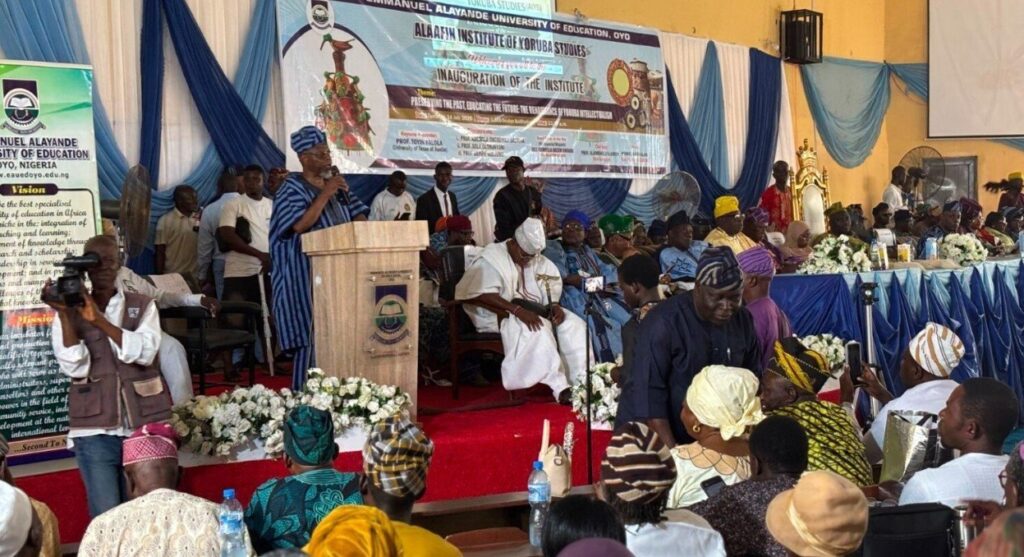
Falola made the call while delivering a keynote lecture titled “Yorùbá Mythologies and Their Relevance Today” at the inauguration of the Alaafin Institute of Yoruba Studies at Emmanuel Alayande University of Education, Oyo.
The eminent historian argued that the impacts of climate change, deforestation, pollution, and environmental degradation cannot be effectively addressed through modern science and legislation alone. According to Falola, Nigeria must draw from indigenous knowledge systems, including traditional conservation practices and community-based methods of protecting forests, rivers, and other natural resources.
“Yorùbá mythology holds ancient ecological knowledge about our natural world. Many rivers, forests, mountains, animals, and plants are considered sacred because they are linked to Òrìṣà. These traditions can teach us about respecting and preserving the earth,” Falola said.
He urged policymakers, educators, and researchers to incorporate indigenous ecological philosophies into environmental education, public policy, and community development programmes. Falola also called on Nigerian universities to move beyond token recognition of African traditions and institutionalise them within mainstream academic disciplines.
The inauguration was attended by prominent traditional rulers, including the Alaafin of Oyo, Oba Akeem Abimbola Owoade, who served as Royal Father of the Day, as well as Vice-Chancellor Professor Olanrewaju Olaniyan and other academics. The event also honoured Falola for his decades of scholarship.
The Alaafin Institute of Yoruba Studies was established to recover and institutionalise traditional African knowledge systems that can contribute to national development.