
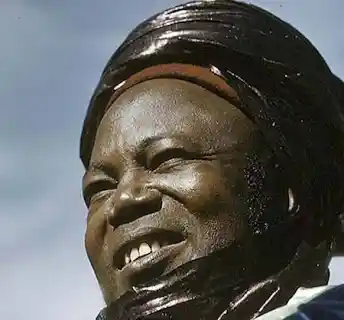
“Sardauna Built the North – But He Built It on Tribalism,” Essay by Khaleed Yazeed Sparks Heated Debate
By Ademola Adekusibe
June 24, 2026
A thought-provoking essay by Khaleed Yazeed has ignited a fierce debate over the legacy of Sir Ahmadu Bello, the Sardauna of Sokoto, and the foundations of modern Northern Nigeria .
In the essay, Yazeed argues that while the Sardauna built institutions like Ahmadu Bello University, Kaduna Polytechnic, and the Nigerian Defence Academy, his political project was fundamentally flawed. The writer contends that Sardauna’s policies and ideology were designed to preserve the power of the Fulani elite and keep the Hausa masses in a state of subjugation .
Yazeed asserts that the Sardauna did not build the North to be free but to be suspicious of others . According to the essay, he fostered a North that fears Southern Nigeria more than poverty, is taught to hate the Igbo before it is taught to innovate, and sees Christians as a threat rather than fellow citizens .
The writer links the Sardauna’s policies to modern crises, arguing that the Almajiri system, educational neglect, and even the banditry crisis are, in part, a legacy of a political structure designed to maintain control . He criticises the “One North, One Destiny” slogan as a tool to obscure what he describes as Fulani domination over the Hausa majority .
The essay has drawn sharp criticism, with many arguing that it presents a distorted and simplistic view of history. A rejoinder by Dr. Umar Osabo describes the essay as “mischievous” and “dangerous,” arguing that it fails to account for the complex historical context of the colonial era .
Critics point out that the North entered independence with a severe educational and administrative disadvantage compared to the South. The Sardauna’s “Northernisation” policy, they argue, was a pragmatic strategy to accelerate human capital development and prevent the region from being completely marginalised in a new Nigeria .
Defenders of the Sardauna’s legacy also highlight his record of interfaith relations, noting that he appointed Christians to key positions and preached coexistence . The rejoinder argues that modern failures, such as poverty and insecurity in the North, are the result of decades of poor governance and elite exploitation, not the policies of a man who died in 1966 .
The controversy surrounding the essay reflects a deeper struggle within Northern Nigeria over its political identity and future. The debate has been further fueled by recent political realignments, including the alliance between Rabiu Kwankwaso and Peter Obi, which some see as a break from the old order and others as a betrayal of the North’s political heritage .
Yazeed’s essay, while controversial, has forced a conversation about the foundations of the North’s political thought and its relevance in a rapidly changing Nigeria. The debate is likely to continue as the country moves toward the 2027 elections.