
By Ademola Adekusibe
January 3, 2026
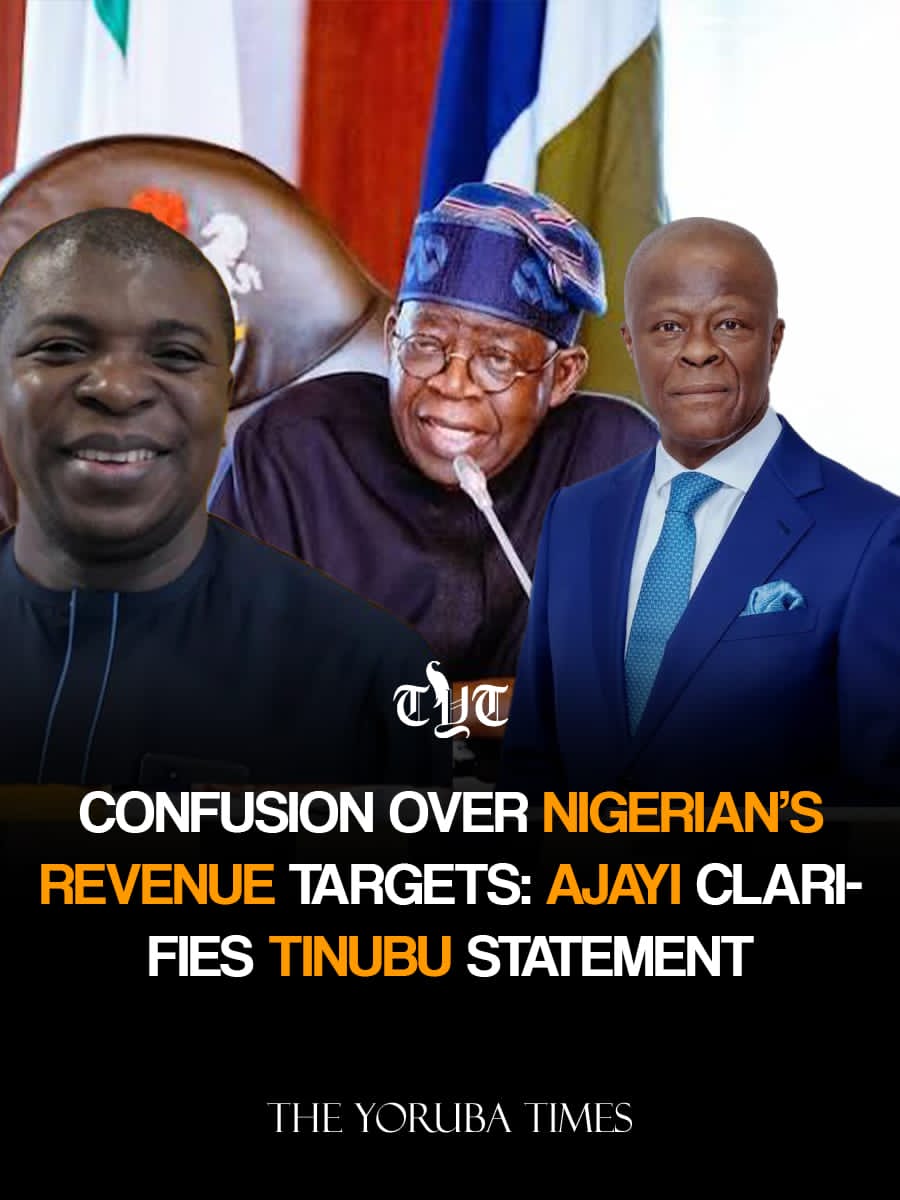
Public discourse on Nigeria’s government finances has recently been muddled by misunderstanding and misrepresentation, according to Temitope Ajayi, Senior Special Assistant to President Bola Tinubu on Media and Publicity.
In a statement addressing recent remarks by President Bola Tinubu and Finance Minister Wale Edun, Ajayi explained that the confusion arose from a misunderstanding between the total revenue generated by government agencies and the portion actually available to the federal government.
Last September, President Tinubu had announced that the federal government had achieved its non-oil revenue target for 2025. Agencies such as the Nigeria Revenue Service reportedly collected over ₦22 trillion in taxes, while the Nigeria Customs Service generated over ₦5 trillion. In addition, the Nigerian National Petroleum Company (NNPC) remitted several trillions of naira to the Federation Account, alongside other government agencies.
However, during a public hearing at the National Assembly later in the year, Minister Wale Edun said the Federal Government could not adequately fund its capital budget due to limited funds. Some commentators and opposition figures seized on this statement, suggesting a contradiction between the president and the minister.
Ajayi clarified that the statements are not contradictory. He noted that Tinubu was referencing total revenue collected by government agencies, while Edun was speaking specifically about the federal government’s share from the Federation Account—the money actually available for federal spending.
“All revenues collected by agencies such as the NNPC, NPA, NIMASA, NMDPRA, NCC, and others are first paid into the Federation Account,” Ajayi said. “This fund is then distributed to the federal, state, and local governments according to the constitutional allocation formula. Meeting revenue targets does not mean the federal government has all the money it needs for expenditure.”
Ajayi further highlighted that most Nigerian states depend heavily on their allocations from the Federation Account, with internally generated revenue contributing less than 10 percent for the majority. He urged the media and public commentators to distinguish between revenue collection and federal availability when reporting on public finance.
He also warned against the proliferation of misleading information, stressing that accurate public understanding is essential for sustaining democracy and promoting good governance. “While the opposition and civil society are entitled to critique government performance, the media must act as a buffer, ensuring public debates are guided by facts rather than misrepresentation,” Ajayi said.
According to Ajayi, both President Tinubu and Minister Edun were correct in their respective statements, which addressed two different fiscal realities, and Nigerians are encouraged to approach discussions on public finance with context and clarity.