
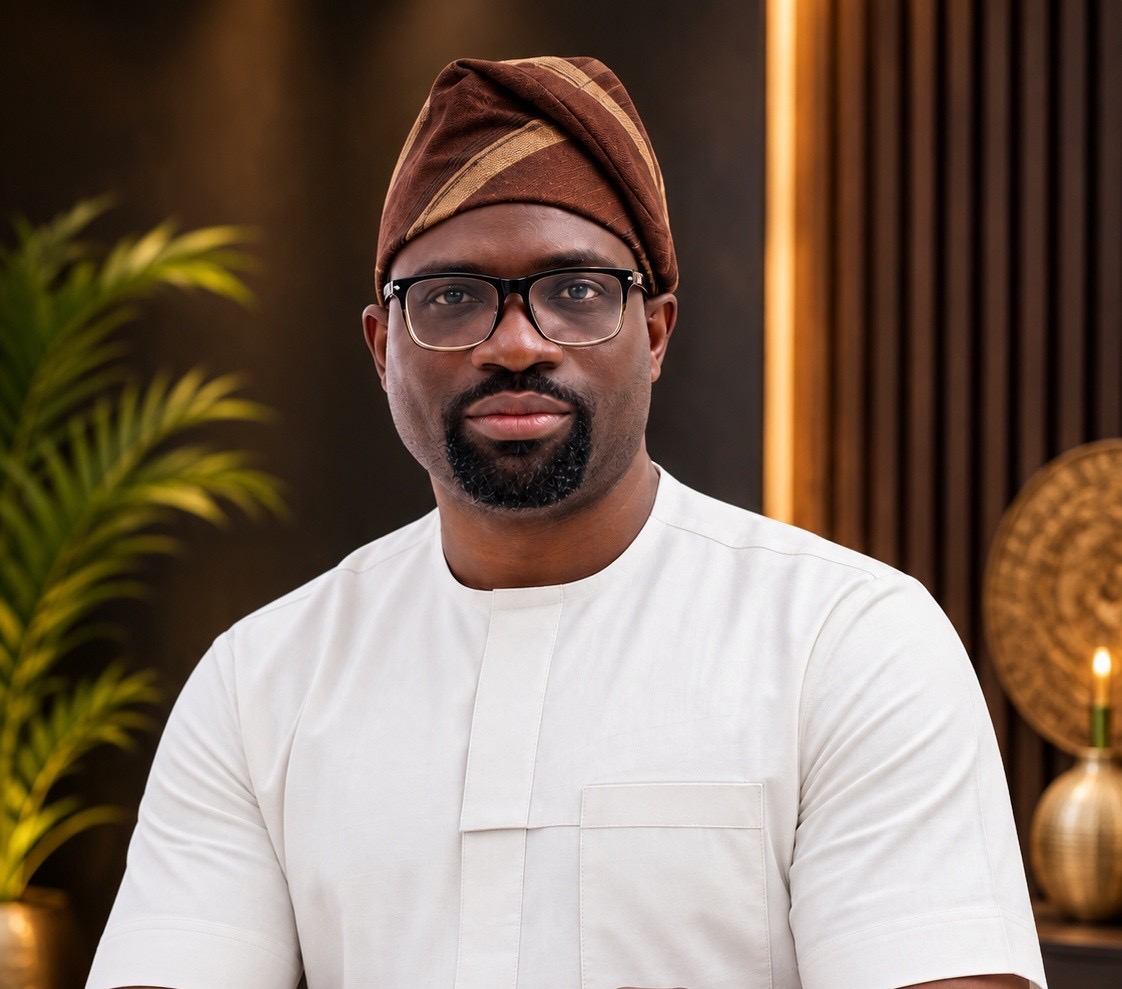
Bọ́lárìnwá Ayọ̀ọlá
At the return of democracy to Nigeria after decades of military junta administration, stretching from 1985 to 1999, Nigeria was given a new lease of life and once again embraced the democratic experience. The excitement was high across the country, and expectations were enormous. Indeed, Nigerians were hopeful that the country would gradually evolve into their own Eldorado within a few years of democratic administration.
Twenty seven years down the line, however, it appears that very little progress has been made in many areas of development across Nigeria. While the population continues to explode, basic key performance indicators used to measure the standard of living continue to tell a negative story of stagnation and underdevelopment that has come to define successive democratic administrations in Nigeria.
Yorubaland, through each cycle of elections, has elected representatives at all levels of government who have been entrusted with the responsibility of developing the land. Yet, the Yoruba states have continued to fall short of the level of performance associated with the political history of Yorubaland under civilian administrations during the periods 1954 to 1966 and 1979 to 1985.
One cannot help but wonder why the magic seems to have disappeared, while the performance of public officers appears to decline with each successive electoral cycle. There are clearly underlying problems responsible for this trend, and these problems deserve the attention of all Yoruba people.
The pre-independence Yoruba political movers and shakers, as well as the political giants who continued to dream big between 1979 and 1985, began their political journeys in a Nigeria where opportunities were limited and access to quality education was far more restricted than it is today. Yet, despite those limitations, they stood out and achieved remarkable feats.
Could it therefore be said that Yorubaland now lacks leaders who can think big, dream big and understand how to develop the land, despite the tremendous progress that has been made in literacy and education?
The problem is not that Yorubaland lacks quality hands or people capable of dreaming big. Rather, the political situation across Nigeria has gradually crept into the political machinery and imagination of the Yoruba political class and, to some extent, the wider Yoruba society. This development has continued to undermine the process and reduce the chances of electing the right people into positions of political authority.
The Yoruba political leaders of the pre-independence era and those who carried their legacy into the period between 1979 and 1985 were driven by a passion for excellence, a deep affection for the development of Yorubaland and a desire to etch their names positively in the history of the land.
In contrast, contemporary Yoruba politicians appear to be driven by different motivations, while the Yoruba electorate is increasingly distracted by religious sentiments and the difficult economic conditions that continue to influence and, in some cases, cloud their judgement when choosing political office holders.
The Nigerian political environment has, unfortunately, become heavily monetised. Political party structures are increasingly influenced or purchased through money and political connections. Candidates are often selected based on financial capacity, political influence or loyalty rather than merit, qualification, ability, competence and capacity to deliver meaningful development.
Yorubaland has not been immune to this unfortunate reality. Politicians compete intensely for the opportunity to secure political positions and obtain the backing of political parties, while the enormous financial cost of participating in politics continues to determine who can enter and remain within the political space.
Beyond the politicians themselves, the Yoruba people, who once proudly contributed collectively to finance the Action Group, have become economically traumatised. Many members of the electorate now sell their votes for immediate financial rewards, often without considering the long term consequences of such actions.
The economic hardship facing ordinary people should not be ignored or dismissed. When people struggle to feed their families, pay school fees, access healthcare and meet their daily obligations, the temptation to accept immediate financial inducements becomes understandable. However, the collective consequences of such decisions can be devastating. The money received on election day may provide temporary relief, but the poor leadership that emerges from such an electoral process can impose years of economic hardship on the same people who sold their votes.
Religion has also increasingly influenced the political environment of Yorubaland, sometimes at the expense of competence, character, capacity and developmental vision. Political choices should not be determined primarily by religious identity. The responsibility of the government is to provide security, education, healthcare, infrastructure, economic opportunities and a better future for everyone, regardless of religious affiliation.
The achievements of Yoruba political geniuses between 1954 and 1966 and between 1979 and 1983 were largely the result of selfless dedication to public service. The leaders of these eras cared far less about personal gains and were more focused on the collective development of the Yoruba people and the wider society.
These were leaders who were not afraid to dream, think and act big. They designed and initiated development plans intended to outlive their administrations. Some embarked on development projects from which their own administrations could never fully benefit because the projects were designed to mature over many years.
That is one of the fundamental differences between visionary leadership and political opportunism.
A visionary leader understands that the greatest achievement of political office is not necessarily what can be completed within one tenure. It is what can be started during that tenure and successfully carried forward by subsequent administrations.
In recent times, President Bola Ahmed Tinubu, during his tenure as Governor of Lagos State from 1999 to 2007, demonstrated some elements of the visionary leadership associated with the golden era of Yoruba politics. His administration initiated the development of a long term development framework for Lagos State, which provided a strategic direction that subsequent administrations could build upon.
The significance of such an approach cannot be overstated. Long term development does not necessarily produce immediate political rewards. A governor who begins a twenty year development programme may not be in office when the full benefits become visible. Yet, that is precisely the kind of thinking required from leaders who genuinely care about the future.
The continued development of Lagos State demonstrates the importance of institutional continuity and long term planning. When a development vision extends beyond one administration, successive governments can improve upon it rather than abandoning everything that came before them.
Unfortunately, many Yoruba governors of the contemporary era appear reluctant to pioneer truly transformative long term development plans. Some seem afraid that they may not remain in power long enough to receive the political credit for such projects. Others appear more interested in policies and projects that can produce immediate political visibility, public applause and electoral advantage. This is a dangerous approach to governance.
A governor should not be afraid to initiate a project simply because another administration may complete it. A political leader should not be obsessed with receiving personal credit for every achievement. The real reward of leadership should be knowing that one’s contribution has improved the lives of generations yet unborn.
The great leaders of the past understood this principle. They knew that some of the institutions they established and some of the development projects they initiated would outlive them. Their greatness was not measured merely by what they personally gained from office, but by what they left behind for society.
Yorubaland must therefore begin to ask difficult questions about the quality of leadership it produces and the political culture that makes such leadership possible.
Are we still producing leaders who can think twenty, thirty or fifty years ahead?
Are our political parties producing candidates based on competence and vision, or primarily on financial strength and political connections?
Are our people choosing leaders based on their capacity to govern, or based on religion, party loyalty, financial inducement and personal relationships?
Are our governors developing policies that will transform Yorubaland for future generations, or are they simply looking for projects that can be completed and celebrated before the next election? These are questions that cannot be ignored.
Yorubaland does not lack intelligent people. It does not lack professionals, academics, entrepreneurs, technocrats or people with the capacity to develop transformative ideas. What appears to be lacking is a political environment capable of consistently identifying, promoting and empowering people with the vision, character and courage to translate those abilities into public development.
The Yoruba people must therefore rediscover the political culture of thinking beyond the immediate and return to the understanding that leadership is a responsibility, not merely an opportunity for personal advancement. We must begin to demand development plans that extend beyond the tenure of individual governors we must encourage leaders who are willing to plant trees whose fruits they may never eat.
Most importantly, Yorubaland must stop measuring political success solely by roads constructed, buildings commissioned or projects celebrated during a particular administration. True development should be measured by the strength of institutions created, the quality of human capital developed, the opportunities created for young people, the strength of the economy, the quality of education, the effectiveness of healthcare, the security of lives and property and the ability of the next generation to inherit a society better than the one we received.
The political giants of the past were not necessarily more intelligent than the people of today. They operated in a more challenging environment, with fewer resources and fewer opportunities. What distinguished many of them was their ability to think beyond themselves.That spirit must return.
Yorubaland does not need politicians who merely want to govern. Yorubaland needs leaders who want to build. The most important question for our generation is not simply what happened to Yoruba political genius, but whether we are prepared to create the political culture that will allow that genius to emerge again.
About The Writer
Bolarinwa Ayoola is a political analyst and social commentator whose work focuses on the cultural renaissance, social advancement, political development, and economic prosperity of Yorubaland. He is committed to examining the issues shaping Yoruba society, advocating for cultural preservation, and promoting ideas that advance the collective interests and sustainable development of the Yoruba people.