
April 27, 2024
Yam sack farming is the growing of yam in sacks.
The beauty of this method is that it allows even those with limited space to enjoy the benefits of homegrown yams.
Growing yam in sacks is not just a practical solution, it is also an eco-friendly and resource-efficient method.
By using sacks, you can save water and space and even reduce the risk of pests and diseases.
Here is a step-by-step guide to help you grow yam successfully in sacks:
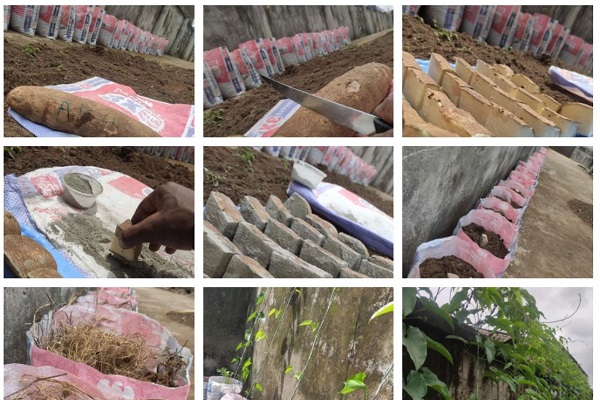
Step 1 – Selecting the appropriate sacks is the first step in successful yam cultivation. Get cement sacks or rice sacks, the bigger the sack(s) the better. You can get sacks from old garri, semo, and bean bags.
Step 2 – Before you begin planting, take a moment to select the right yam variety for your growing conditions. Here are a few popular choices to consider:
Dioscorea alata (Water Yam): Known for its smooth, tender flesh and sweet flavour.
Dioscorea rotundata (White Yam): Has a dry, starchy texture and is often used in traditional dishes.
Dioscorea cayenensis (Yellow Yam): Features a yellowish flesh and a milder flavour.
Then get ash from burnt charcoal and rub on the yam heads which have been cut in small sizes.
Step 3 – Fill the sacks with healthy soil.
Step 4 – You either bury the yam heads or cut your yam into small sizes, rub the ash on the piece, then bury deep in the sack filled with soil.
Step 5 – Proper care is essential for the successful growth of your yams. Yams love consistent moisture, so be sure to keep the soil evenly moist without overdoing it. Make sure the sacks have proper drainage to prevent waterlogging. Place the sacks outside where it can access rain and sunlight.
Step 6 – Provide support: As the yam plants grow, they will need support to prevent them from sprawling. Install stakes or trellises around the sacks and gently tie the vines to encourage upward growth. As soon as it starts springing leaves, attach a stick to it, so the leaves can climb.
Remember to perforate, make holes around the bag, to avoid water logging and decay and loss of the seedlings.
Other things can be planted this way too, such as potatoes, corn, okro, spinach.
There is lesser disease and pest infestation with yam sack farming; nonetheless, regularly check your yam plants for any signs of pests or diseases. Common yam pests may include armyworm, nematodes, aphids etc. If issues arise, address them with organic pest control methods or consult a professional if necessary.
Patience pays off! Your yam plants are usually ready for harvest 6-8 months after planting.