
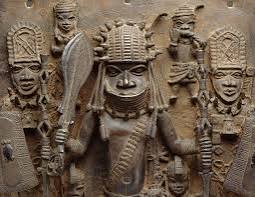
The Benin Bronze medals were carved at Ile-Ife
By Yinka Aiyelokun, PhD
Many have heard about the grandeur of Benin and its legendary bronze artistry. But few know the deeper story behind the sacred burial tradition of the Obas of Benin and the connection to their ancestral home, Ifè.
Contrary to popular belief, Òrun Oba Àdó – meaning “Heaven of King Ado”, was not originally established as the eternal resting place for all Edo kings. The site was first reserved for Àdó, popularly known as Eweka I, a son of Òrànmíyàn, whose lineage gave rise to the royal house of Benin. Over time, as Edo kings continued to honor the tradition of returning to their roots in death, the site naturally evolved into a royal necropolis.
In ancient custom, when an Oba of Benin passed away, it was the duty of palace emissaries to journey to Ile-Ife, the spiritual cradle of the Yoruba people, to inform the Ooni that “his child” had joined the ancestors. The Ooni, in turn, would receive the messengers with honor, care for them, and send them back to Benin to make the official announcement.
However, due to the difficulty of transporting an entire corpse over such a long distance, a significant compromise was adopted. Only the head of the deceased Oba, symbolic of the crown and authority—was sent to Ife for burial. This act followed the sacred belief: “Ori Ade o gbodo sun’ta” – “The head that wears the crown must not be laid to rest in a strange land.”
To preserve the memory and legacy of each departed Oba, bronze casters in Ife created finely crafted replicas of the severed royal heads. These bronze heads were then returned to Benin and kept in the palace as sacred memorabilia – symbols of royal continuity and ancestral connection.
Over the centuries, several such bronze heads were made, each a masterpiece of cultural reverence and historical significance.
But tragedy struck in 1897.
During the infamous British punitive expedition, Oba Ovonramwen Nogbaisi was captured, and the royal palace was looted. Among the many treasures stolen were these sacred bronze heads – priceless heirlooms that once carried the essence of kings and the echoes of Ife. Many of these artifacts were shipped off to Europe, now decorating foreign museums while their cultural soul remains rooted in Benin and Ife.
Orun Oba Àdó is more than a burial place, it is a testament to shared heritage, spiritual reverence, and a royal tradition that bridges Yoruba and Edo history.
Let’s keep our history alive. Share this to enlighten others on the deep cultural legacy behind the Benin bronzes and the sacred bond with Ile-Ife.