

September 5, 2025
Written by Funbi Alegbeleye
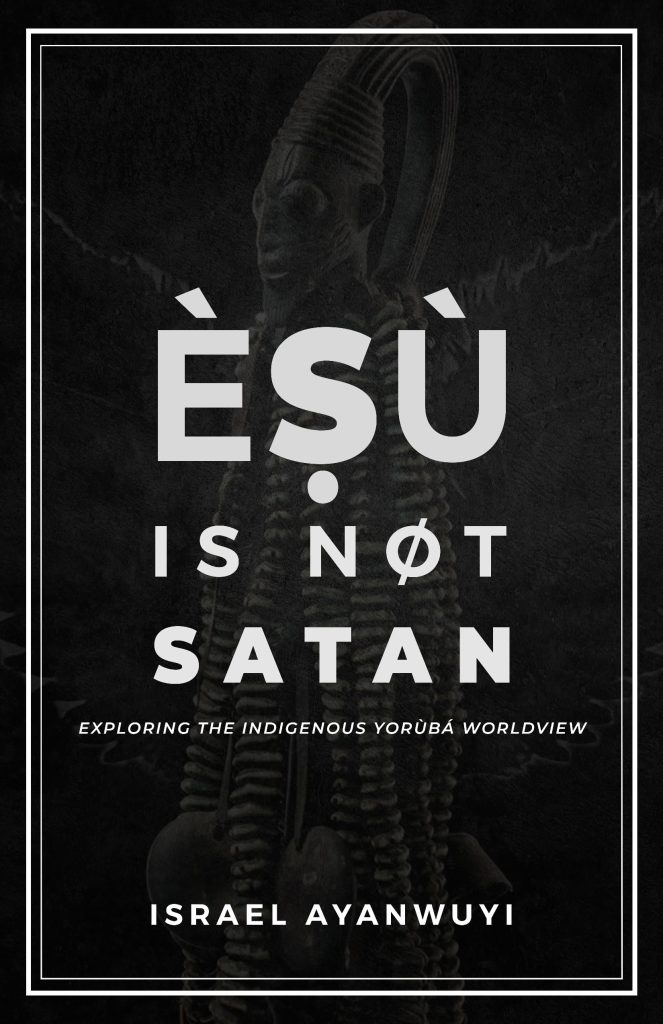
Most books you find online about Yorùbá philosophy, spirituality, or religion are often challenging to read—not only because of the language but also because of their intended audience. It is rare to find a book on this subject written for everyone, including those with little or no prior knowledge of the Yoruba Indigenous worldview. Esu Is Not Satan, by Israel Ayanwuyi, achieves that rare balance. It is written in a simple, engaging style that even a primary school student with decent reading ability can understand.
Like many Yorùbá people, I grew up in a Christian household, where my only exposure to indigenous traditions was framed negatively. I was taught that what existed before Christianity was “evil,” “backward,” and to be avoided entirely. Popular media reinforced this narrative, presenting traditional practices as dark forces against the “light” of foreign religions. Though I did not think much about traditional religion at the time, I often wondered why I knew so much about distant places and beliefs, yet almost nothing about the traditions of my own ancestors. During my undergraduate years, I began to take steps toward understanding my roots, but the spiritual and philosophical aspects still felt distant—almost forbidden. By chance, I was recommended this book, and it remains the best I have read on Yoruba culture and worldview.
Although the title focuses on correcting the misconception that equates Èṣù with Satan, the book is much more than that. It serves as a clear introduction to Yorùbá traditional practices, also known as Ìṣẹ̀ṣe. Ayanwuyi recognises that to truly understand Èṣù, one must first understand the worldview he comes from. With vivid descriptions and plain language, the author breaks down complex concepts into simple, digestible lessons. The book is structured so that each chapter builds on the last, guiding the reader gradually into a deeper appreciation of Yorùbá thought.
One of the most striking revelations in the book is the Yorùbá belief that every human being is born with both good and evil. Those who commit evil do so by consciously amplifying that side of themselves. This perspective challenges the way we think about morality, justice, and balance in the world. It raises profound questions: What does justice mean when everyone has both good and evil within them? How should one live to achieve balance? And how would the world look if seen through a Yorùbá philosophical lens?
Esu Is Not Satan is a thought-provoking work that corrects misconceptions while opening the door to deeper reflection. Whether you are a Christian, Muslim, or belong to another faith, this book is worth reading—not just to learn about Yoruba beliefs, but to broaden your understanding of humanity, heritage, and the timeless wisdom embedded in African traditions.