
-Witnesses Most Intense Rainfall in 30-50 Years
October 15, 2024
By Samuel Ogunsona
One of the most arid places in the world, Sahara Desert, recorded its first flood in decades.
The rare and intense rainfall event has swept across the Sahara Desert in southeast Morocco, defying the region’s arid reputation. Over two days in September, a low-pressure system brought nearly 8 inches of rain to some areas, according to NASA satellite data.
Errachidia, a desert city, recorded 3 inches of rainfall, exceeding four times the normal September average and accounting for over half a year’s worth of rainfall. Houssine Youabeb from Morocco’s meteorology agency described the event as unprecedented, saying, “It’s been 30 to 50 years since we’ve had this much rain in such a short space of time.”
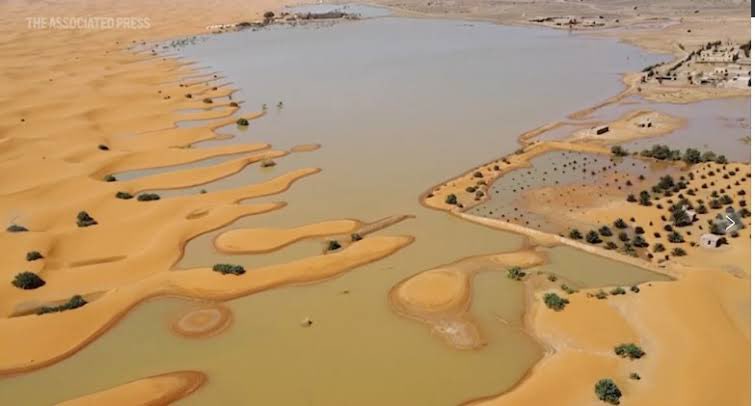
The deluge transformed the desert terrain, creating new lakes and flooding areas normally dry. Merzouga, a desert town, saw sand dunes carved into lakes, while Iriqui National Park’s usually dry lake was filled.
NASA satellite images reveal extensive new lakes across the northwest Sahara.
While remote areas bore the brunt of the rainfall, some towns and villages experienced deadly flooding, claiming over a dozen lives. This extreme weather event aligns with research suggesting human-caused climate change may lead to more frequent and intense rainfall in the Sahara.
The Sahara, spanning 3.6 million square miles, experienced unusual greenery in September due to storms pushing further north. As fossil fuel pollution continues to disrupt the water cycle, more extreme rainfall events may become increasingly common in the region.