
October 22, 2024
The YorubaTimes Editorial
The refereeing crisis in Nigeria’s football and it persistent exclusion from the Confederation of African Football (CAF) elite has become a festering sore, undermining the existence of good football in the country.
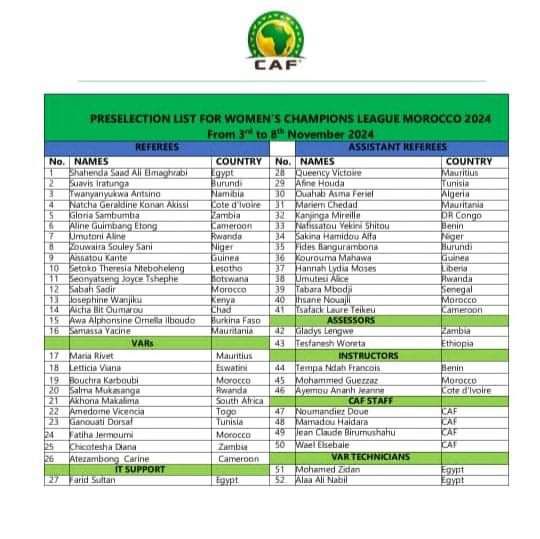
The recent announcement by the Confederation of African Football (CAF) regarding the list of referees for the 2024 CAF African Women’s Champions League has once again left Nigeria’s football community reeling.
Another year, no Nigerian referees made the cut, a disturbing trend that raises fundamental questions about the state of refereeing in Africa’s most populous nation.
Nigeria’s football has historical richness with its passionate fan base which makes this exclusion more puzzling. The country has produced some of the continent’s finest players, coaches, and administrators, yet its referees remain conspicuous by their absence from CAF’s elite panel.
What’s behind this persistent snub when referees from Benin Republic, Niger among other neighboring countries got invitations.
The answer lies in a toxic mix of poor investments, corruption, and neglect by the country’s football governing bodies.
The first issue is the lack of investment in referee development programs. Despite significant funding from FIFA, Nigeria’s refereeing standards have failed to improve. This is largely due to the mismanagement of funds meant for referee development.
Instead of investing in training, infrastructure, and capacity building, these funds have been squandered on unnecessary administrative expenses and dubious projects.
Corruption is another major factor contributing to Nigeria’s refereeing crisis. Allegations of bribery, match-fixing, and other forms of malfeasance have tarnished the country’s reputation, eroding trust in the sport’s arbiters.
This has created a culture of distrust, where referees are viewed with suspicion rather than respected for their impartiality.
Gross underpayment of referees is another contentious issue. Nigerian referees are paid a pittance, often forced to travel long distances under harsh conditions for minimal compensation. This has led to a situation where only those with alternative means of income can afford to officiate, thereby limiting the pool of talented referees.
The source of these problems lies in the Nigerian football system’s systemic flaws. Manipulation of referee development funds and appointment processes has created a culture of cronyism and incompetence. Favorites are appointed to key positions, regardless of merit, while those who dare to speak out against corruption are silenced or ostracized.
The Nigerian Football Federation (NFF) and Nigerian Professional Football League (NPFL) must take responsibility for this crisis.
They have failed to address the systemic issues plaguing refereeing development, opting instead for cosmetic solutions and token gestures.
To regain credibility on the continental stage, Nigeria must embark on a comprehensive overhaul of its refereeing system. This requires overhauling referee development programs to prioritize meritocracy and transparency.
As Edo Queens prepare to compete in the Women’s Champions League, Nigeria’s refereeing community remains under scrutiny. Regaining credibility on the continental stage demands bold action. The NFF and NPFL must seize this moment to reform refereeing in Nigeria.
The future of Nigerian football depends on it.
Will they rise to the challenge, or will the country’s referees continue to languish in obscurity? Only time will tell.
Only through radical reform can Nigeria reclaim its rightful place among Africa’s football elite.
The ball is in the NFF and NPFL’s court. They must choose between perpetuating the status quo or embracing change.
Nigeria’s football fans deserve better.