
By Ademola Adekusibe.
November 7, 2025.
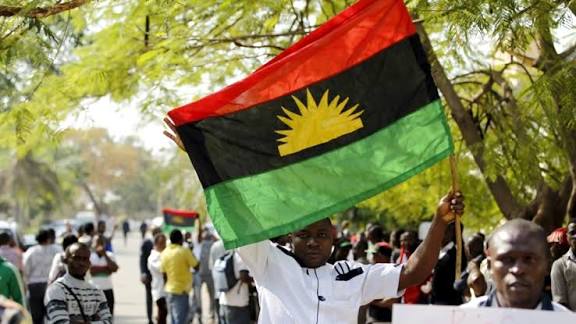
Fresh revelations have exposed a coordinated lobbying campaign by a Biafran separatist movement to shape United States foreign policy against Nigeria through a $10,000-per-month contract with a former American congressman.
Documents published on the website of Moran Global Strategies, a firm owned by ex-U.S. lawmaker Jim Moran, confirm that the company was hired by the Biafra Republic Government in Exile (BRGIE) in June 2024 to “lobby to gain U.S. support for Biafra’s independence.”
The campaign, which centers on claims of “Christian persecution” in Nigeria, has been described by foreign policy analysts as a deliberate attempt to rebrand a secessionist struggle as a global religious crisis capable of drawing Washington’s sympathy.
Jim Moran, who represented parts of Virginia for 24 years in Congress, stated on his firm’s website that he would raise concerns about “human rights abuses, persecution of Christians, and Islamic fundamentalism” in Nigeria, themes that have recently appeared in former President Donald Trump’s speeches and policy remarks.
The development has drawn renewed attention following Trump’s recent decision to classify Nigeria as a “Country of Particular Concern” and his threat to intervene militarily to “protect Christians.”
In the wake of Trump’s comments, a viral video released by the American Veterans of Igbo Descent (AVID). a U.S.-based group led by former servicemen of Nigerian origin, called on Washington to establish a U.S. military base in Port Harcourt, claiming it would help stop the “Christian genocide” in Nigeria. The group’s message was addressed to U.S. Secretary of War Pete Hegseth and appeared to echo the same language and advocacy themes in Moran’s lobbying filings.
These developments have fueled speculation among Nigerian citizens and policy experts that the ongoing diplomatic strain between Nigeria and the United States may have been engineered by the Biafran separatist lobby through a carefully coordinated influence campaign.
“The pattern is clear,” said a Lagos-based analyst. “First came the lobbying contract, then the congressional letters, then the CPC designation, and now open calls for U.S. military presence. It looks like a strategic cascade built from that $10,000 deal.”
Critics say the campaign exploits America’s sensitivity to religious freedom, using moral outrage as a diplomatic weapon to pressure Nigeria. They argue that while insecurity in Nigeria affects both Christians and Muslims, the lobby’s narrative oversimplifies the situation and falsely paints the conflict as one-sided.
The irony, analysts note, lies in the geography. The Biafra region, located in Nigeria’s southeast, remains one of the most stable and predominantly Christian zones in the country. Violence is largely concentrated in the north, where both Muslims and Christians have been victims of extremist attacks.
If confirmed, the Moran lobbying contract could represent one of the most effective and inexpensive influence operations in recent U.S.-Africa relations, buying international attention and reshaping Washington’s stance toward Nigeria for a modest $10,000 monthly fee.
The Nigerian government has yet to issue an official response, but observers warn that the situation underscores Abuja’s vulnerability in global perception management and its failure to control the international narrative surrounding its internal security challenges.