
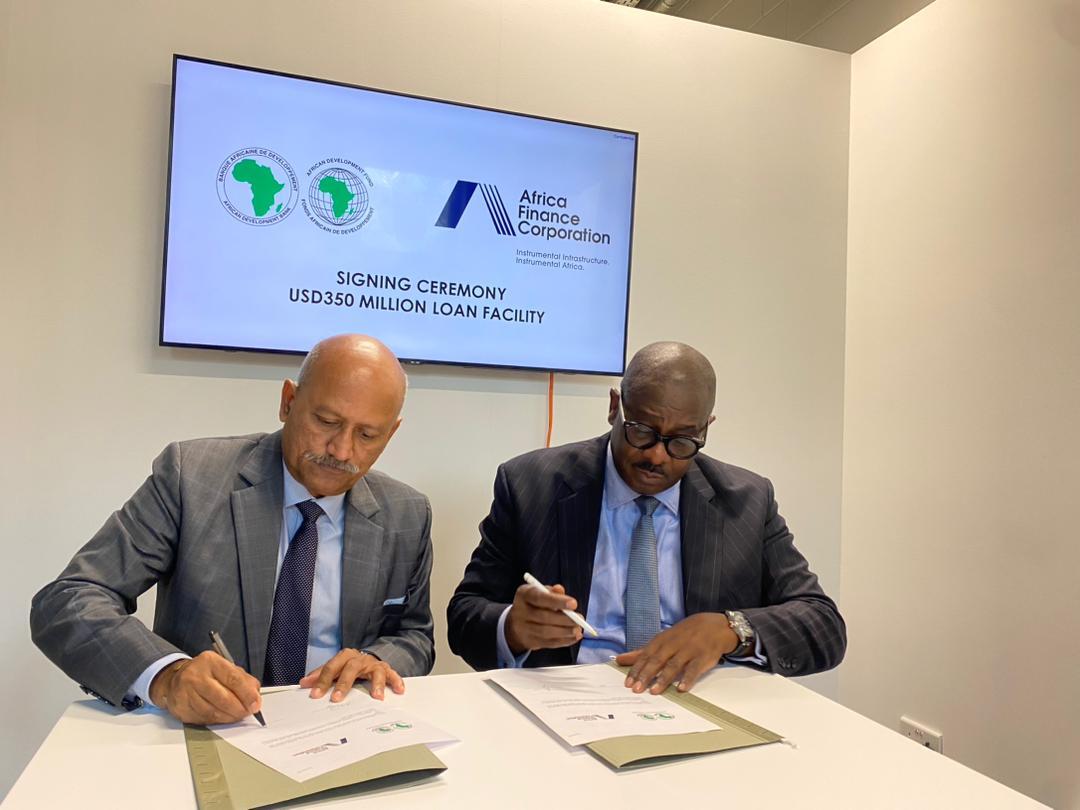
The Africa Finance Corporation (AFC), one of the leading infrastructure solutions providers in the continent has announced that it has signed a $350 million long-term line of credit with the African Development Bank (AfDB).
The agreement, which was signed during the on-going 28th Conference of the Parties (COP 28), supports urgently needed financing for infrastructure projects to underpin sustainable development and economic growth.
A statement yesterday, explained that the collaboration was a significant milestone in a long-standing relationship, with AfDB becoming a shareholder in AFC in 2019, and the institutions co-investing in multiple transformational infrastructure projects.
“Most recently, both institutions joined the US, EU and governments of Angola, the Democratic Republic of Congo and Zambia in signing a Memorandum of Understanding for development of the Lobito Corridor expansion, with AFC appointed lead project developer.
“The financing agreement with AfDB will enable AFC to mobilise additional resources towards continued development of infrastructure projects in its focus sectors, including power, transportation, telecommunications, and natural resources.
“These projects play a pivotal role in closing Africa’s infrastructure deficit and creating new opportunities for economic growth and prosperity,” the statement added.
Speaking at the signing ceremony, AFC Board member and Executive Director of Financial Services, Sanjeev Gupta, said: “AFC and AfDB have always enjoyed a mutually beneficial partnership and this facility further embeds our shared vision for a prosperous, resilient, and sustainable Africa.
“It is crucial that premier institutions in Africa work together and share knowledge, capacity and collectively negotiate on behalf of Africa to drive a development agenda that is both pragmatic and sustainable and ensures that it creates economic prosperity through local manufacturing, value addition and a shift away from the historic extraction and export driven model that has plagued the continent.
“We welcome the opportunity to widen and deepen our collaboration and deliver on our mandate that will unlock the continent’s economic potential, create jobs, and improve the quality of life for millions of Africans.”
For his part, the Vice-President, Private Sector, Infrastructure & Industrialisation at the AfDB, Solomon Quaynor said: “The partnership between the AfDB and the AFC exemplifies a shared commitment to catalysing sustainable development across the continent.
“Through this line of credit, the two institutions, together, forge a path toward economic empowerment, infrastructure growth and a brighter future of Africa.”
According to the statement: “AFC has one of the highest investment-grade credit ratings on the continent (A3 by Moody’s), which it leverages to achieve among the lowest borrowing costs of any institution in Africa for deployment in developing critical infrastructure projects.
“The latest agreement underscores the power of leading African multilaterals, combining the strength of their resources and expertise, to drive rapid industrialisation and generate millions of jobs essential for the burgeoning youth population, enhancing the value of Africa’s raw materials and catalysing overall economic expansion.”