

By Oladimeji Bolarinwa
Every civilisation that has shaped the world has had a sacred centre. Catholics have Rome. Muslims have Mecca. Jews have Jerusalem. The Yoruba, and the tens of millions across the Atlantic who still call on the Orisa, have Ile-Ife.
Yet Ile-Ife is rarely spoken of in those terms. To most Nigerians it is a university town in Osun State, a royal seat, a place of festivals and occasional headlines. Few see it for what it once was: the spiritual capital of an empire that ruled not through soldiers but through legitimacy, ritual and the authority to say who was truly a king.
This essay makes a simple argument. Ile-Ife was, and could again be, the Vatican of the Black world. Whether it becomes that depends less on history than on whether the Yoruba choose to remake it.
Where the world began
In Yoruba cosmology, Ile-Ife is not just an old city; it is the place where the earth itself was created. The name says so. Ile-Ife is usually rendered as “the land of expansion” or “the place of spreading”, where solid ground was first spread over primordial water.
The traditions differ in detail. In one, Olodumare sent Obatala down a chain from the sky with a snail shell of earth, a hen and a chameleon. The hen scattered the soil, and dry land spread outward from Ife. In another, Oduduwa completed the task after Obatala faltered, and became the first ruler of the new world. The rivalry between the two figures echoes in Ife’s festivals to this day.
What the traditions share is the claim that matters politically. All Yoruba kingdoms trace their royal lines to Oduduwa and his descendants, who left Ife to found new kingdoms. Ife is therefore Orirun, the source. Every Yoruba crown, in this understanding, is a branch of one tree whose root lies in Ife.
An empire without an army
Ile-Ife’s power was never mainly military. Oyo built cavalry and conquered; Ibadan raised war chiefs. Ife’s influence worked differently. It held the one thing every ambitious ruler needed and could not seize by force: sacred legitimacy.
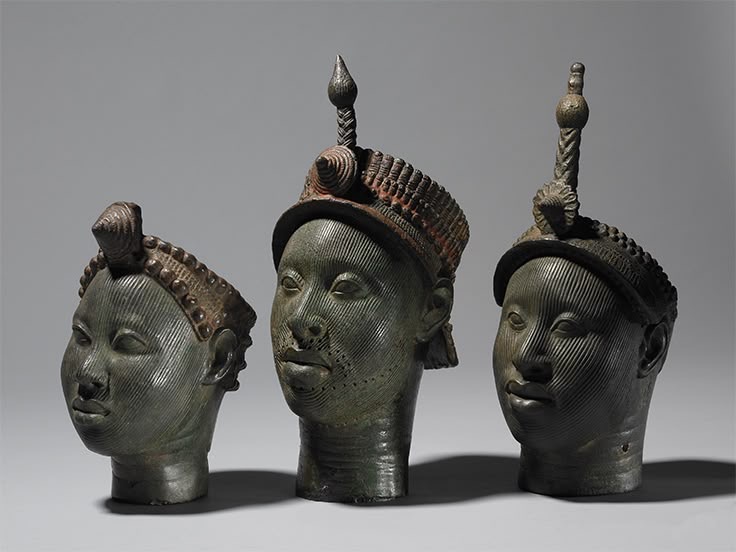
That legitimacy took concrete forms. The right to wear the beaded crown with its veil of fringes, the ade, was understood to descend from Oduduwa. Royal lines from Oyo to Ijebu, Ekiti and Ondo told their founding stories through princes who departed from Ife. Benin’s ruling dynasty traces itself to Oranmiyan, a prince of Ife, whose son Eweka became the first Oba of the second Benin dynasty. Some Portuguese accounts from the late fifteenth century describe a distant spiritual overlord, the “Ogane”, who confirmed Benin’s kings; many historians identify that figure with the Ooni of Ife, though the identification remains debated.
Ife’s artists left the most eloquent evidence of its stature. Between roughly the twelfth and fifteenth centuries, Ife workshops produced naturalistic heads in terracotta and copper alloy of extraordinary refinement. When the German ethnographer Leo Frobenius encountered them in 1910, he refused to believe Africans had made them and speculated about a lost Greek colony or Atlantis. That reaction tells us as much about colonial thought as about Ife. A society capable of such art had wealth, specialist guilds, royal patronage and a sacred court at its centre.
This is what an empire of the spirit looks like. It does not need garrisons. It needs other rulers to believe that their crowns are incomplete without its blessing.
Why the Vatican comparison works, and where it breaks
The Vatican is the clearest modern example of power without an army. It covers less than half a square kilometre and guards itself with a ceremonial Swiss Guard. Yet it maintains diplomatic relations with most of the world’s states and speaks to over a billion Catholics. Its power is moral, symbolic and institutional.
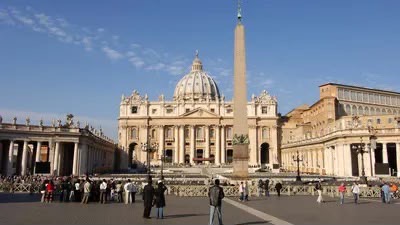
Ile-Ife shares the foundations of that model. It is a sacred origin point. It has a sacred ruler, the Ooni, regarded by tradition as the custodian of the Yoruba spiritual inheritance. It has a calendar of rites, such as the Olojo festival, that renew the bond between the ruler, the Orisa and the people. And it has a dispersed global faithful who regard it as their spiritual home.
The comparison breaks in three places, and honesty about them is the starting point for any serious project.
No sovereignty. The Vatican has been an independent state since the Lateran Treaty of 1929. Ile-Ife is a town inside a Nigerian state, and the Ooni’s office exists at the pleasure of state law and politics.
No central doctrine. Catholicism has one hierarchy and one teaching authority. Orisa traditions are decentralised: priesthoods in Osogbo, Oyo, Havana and Salvador answer to their own lineages, not to Ife.
No institutions of reach. The Vatican runs universities, a diplomatic corps, media, archives and a global charity network. Ife’s spiritual authority has almost none of that machinery.
The Vatican is not a template to copy. It is proof that sacred centres can convert spiritual authority into durable, global influence when they build the institutions to carry it.
How a spiritual empire shrank
Ife’s decline was gradual, and it came from several directions at once.
The first was political. The rise of Oyo as a military superpower from the seventeenth century shifted practical power north. In the nineteenth century, the collapse of Oyo and the Yoruba wars brought violence close to Ife itself; the town was sacked and its population scattered for a period before being resettled. A sacred centre needs peace around it, and the Yoruba nineteenth century gave it little.

The second was religious. Islam spread through Yorubaland from the north, and Christianity arrived with missionaries along the coast. Both brought universal faiths with their own sacred centres abroad, Mecca and Rome or Canterbury. A Yoruba convert’s spiritual compass now pointed away from Ife. Within a few generations, a majority of Yoruba people belonged to faiths that taught them to regard the Orisa as idolatry.
The third was colonial. British indirect rule treated traditional rulers as administrative instruments. Kings were ranked, paid and deposed by colonial officers, then by Nigerian governments. The question of who was a legitimate king passed from Ife’s sacred authority to the state’s gazette. Disputes over precedence among Yoruba rulers, sometimes bitter and public, are partly a legacy of that transfer.
The result is a paradox. Ife remains symbolically central to Yoruba identity, yet its spiritual authority over most Yoruba people is weaker than at almost any time in its history.
The empire that crossed the ocean
The irony of Ife’s story is that its spiritual empire may be larger today outside Nigeria than inside it.
The Atlantic slave trade carried hundreds of thousands of Yoruba-speaking captives to the Americas, particularly in its final decades. They carried the Orisa with them. In Cuba, their descendants built Lukumí, often called Santería, where Yoruba remains a liturgical language. In Brazil, Candomblé preserved Orisa worship in Bahia and beyond. Related traditions took root in Trinidad, Puerto Rico and, more recently, across the United States, where many African Americans have turned to the Orisa as a path back to African identity.
These communities are not marginal. They are visible in music, art, literature and public religious life across the Americas. And many look to Ife as an ancestral source. Diaspora priests and devotees travel to Ife for initiation and pilgrimage. Ifá, practised from Ile-Ife to Havana to Salvador, gives them a shared intellectual and ritual vocabulary.
This is the raw material of a spiritual empire: a dispersed faithful with emotional loyalty to a sacred centre. What it lacks is organisation. There is no global Orisa council anchored in Ife, no pilgrimage infrastructure, no seminary that trains priests from four continents, and no diplomatic presence representing this constituency to governments.
Remaking the empire
A spiritual empire in the twenty-first century would not be about conversion or control. It would be about Ife becoming the recognised centre of a global civilisational network, and turning that recognition into influence for the Yoruba and for Africa. Five building blocks stand out.
1. A global council. A standing body, convened in Ife, that brings together recognised Orisa and Ifá priesthoods from Nigeria, Benin, Cuba, Brazil, Trinidad and the United States. It would not impose doctrine; it would coordinate, certify and give the tradition one voice when it needs one.
2. Pilgrimage infrastructure. Mecca and Rome show that pilgrimage is both devotion and economy. Ife’s festivals, groves and shrines could anchor a serious heritage and pilgrimage sector, with the accommodation, guides, security and visa facilitation that requires.
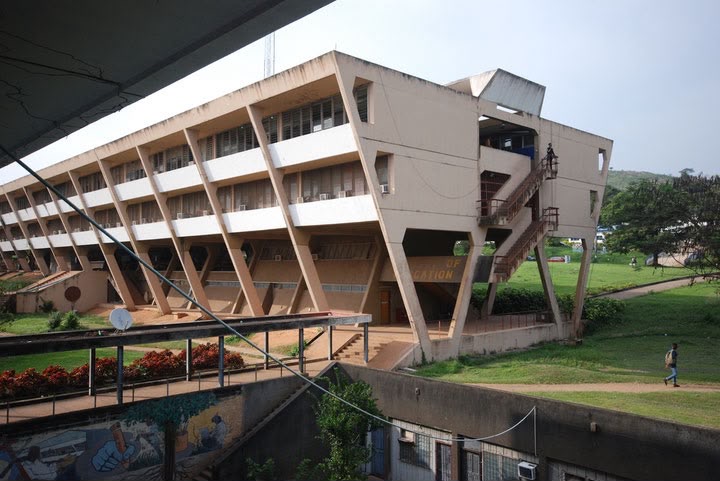
3. A seat of learning. A centre of advanced study for Yoruba religion, language, Ifá and history, training priests and scholars from across the diaspora. Obafemi Awolowo University is already in Ife; the intellectual foundation exists.
4. Custodianship of heritage. Ife’s bronzes and terracottas are scattered across museums in London, Berlin and elsewhere. A credible return and custodianship strategy, tied to world-class display in Ife, would restore both objects and prestige.
5. Spiritual diplomacy. The Ooni’s office already travels and receives visitors abroad. Structured properly, it could act like the Vatican’s diplomatic presence: speaking for a transnational constituency, building ties with diaspora governments, and representing Yoruba civilisation abroad.
None of this requires Yoruba Christians or Muslims to change their faith. Rome’s cultural pull reaches far beyond practising Catholics. Ife can be a civilisational centre for all Yoruba people, and a spiritual centre for those who keep the Orisa.
The choice before us
Empires of the sword fall when their armies fail. Empires of the spirit fade when their people forget. Ile-Ife has survived wars, conquest, conversion and colonial rule; its sacred claim has never been extinguished, only neglected.
The world is entering an age in which identity, culture and memory are instruments of power. Nations that can mobilise a global diaspora around a shared centre will carry weight. The Yoruba already possess that centre. The question is whether this generation will build the institutions to make Ife what its traditions always said it was: the place where the world began, and where a civilisation renews itself.
If this essay moved you, share it with someone who still thinks of Ife as just a town. And subscribe to follow the larger project on Ile-Ife and the remaking of a spiritual empire.