

Long before Silicon Valley, Yoruba babalawo were encoding knowledge in a system of two marks and 256 combinations. Ifá is not a computer. But it is one of the oldest living proofs that Africans built formal, binary-structured systems for storing and retrieving knowledge, and that fact has consequences for how Africa positions itself in the age of artificial intelligence.
The global story of computing is usually told as a European and American achievement: Leibniz in Hanover, Boole in Cork, Turing in Bletchley Park, Shannon at Bell Labs. Africa enters that story, if at all, as a market for smartphones or a source of cobalt. This article argues that the story is incomplete, and that who controls the story of computing is itself a geopolitical question.
The argument is not that the Yoruba invented the microchip. It is narrower and stronger: Ifá shows that the logic beneath digital computing, representing complex information through combinations of two states, was practised in West Africa as a mature intellectual system. Civilisations that forget their own intellectual inheritance negotiate the future as consumers. Those that remember it negotiate as contributors.
The Architecture: Two Marks, 256 Odù
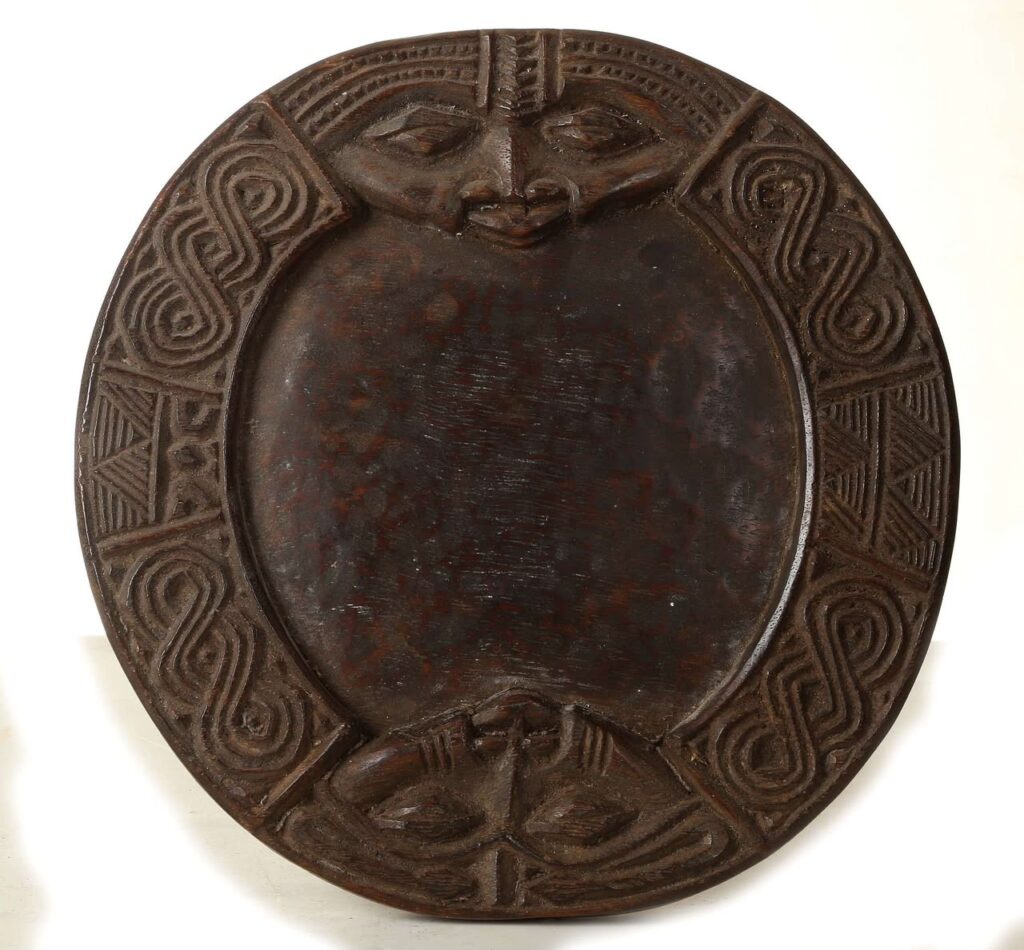
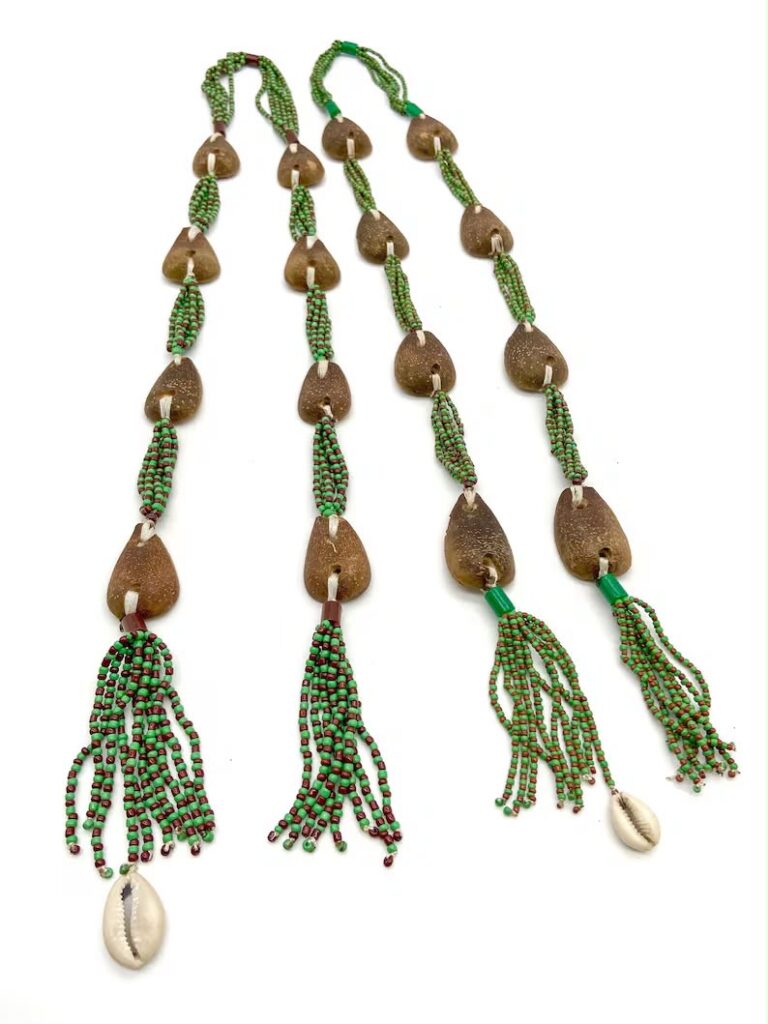
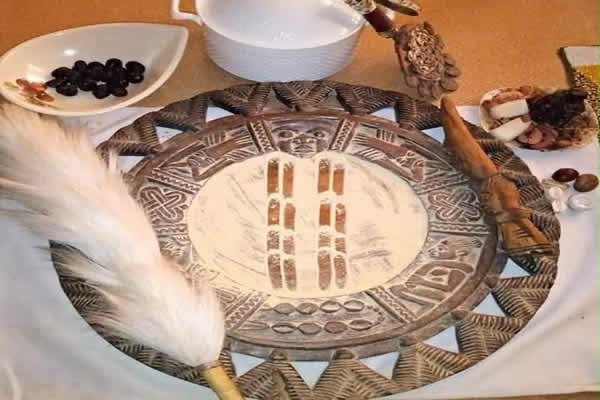
Ifá’s corpus is organised as a code of 256 signs, built from just two marks. A babalawo casts either the opele, a divining chain of eight half seed-pods, or manipulates sixteen sacred palm nuts called ikin. Each throw resolves into one of two states, recorded on the opon Ifá, the divination tray, in iyerosun powder as a single stroke (I) or a double stroke (II).
Four such marks form one column, giving 2⁴ = 16 possible figures. These are the sixteen principal Odù, the Ojú Odù or Meji, beginning with Ogbe (four single marks) and Oyeku (four double marks). Two columns read together give 16 × 16 = 256 Odù in total. In modern terms, that is 2⁸: eight binary positions, exactly the structure of a byte.
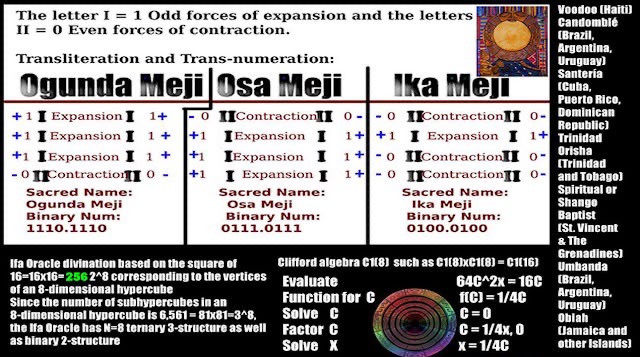
Each Odù is an address. It points to a body of verses, the ese Ifá, which carry history, medicine, law, ethics, cosmology and precedent. The babalawo does not generate the verse at random; the cast selects which part of a vast memorised archive is retrieved. Encoding, addressing and retrieval: the vocabulary of computer science describes the system with uncomfortable precision.
The ordering matters too. The Odù have a fixed seniority, Ogbe first and Ofun last among the principal sixteen, and the combined Odù inherit their names from the two columns that make them. That is a structured, rule-governed namespace, not a loose collection of omens.
The Route of a Code: From West Africa to Leibniz?
The most provocative claim in this field comes from the American ethnomathematician Ron Eglash. In African Fractals (1999), he traced a possible chain of transmission linking African divination to the binary arithmetic that underpins modern computers. The chain runs roughly as follows:
- African divination. Sixteen-figure binary systems appear across Africa: Ifá among the Yoruba, Fa among the Fon of Benin, Afa among the Ewe, and sikidy in Madagascar.
- Arab geomancy. The Arabic science of ʿilm al-raml (“the science of the sand”) uses the same sixteen four-row figures of single and double marks, drawn in sand. Its early practitioners placed its origins in North Africa.
- Medieval Europe. In the twelfth century, scholars in Spain such as Hugh of Santalla translated Arabic geomancy into Latin. It became a fashionable learned art across Europe.
- Combinatorial philosophy. Thinkers such as Ramon Llull developed systems for combining symbols mechanically, a tradition that fed into early modern logic.
- Leibniz. Gottfried Wilhelm Leibniz published his binary arithmetic in 1703. Two and a half centuries later, Claude Shannon and others made binary the foundation of digital electronics.
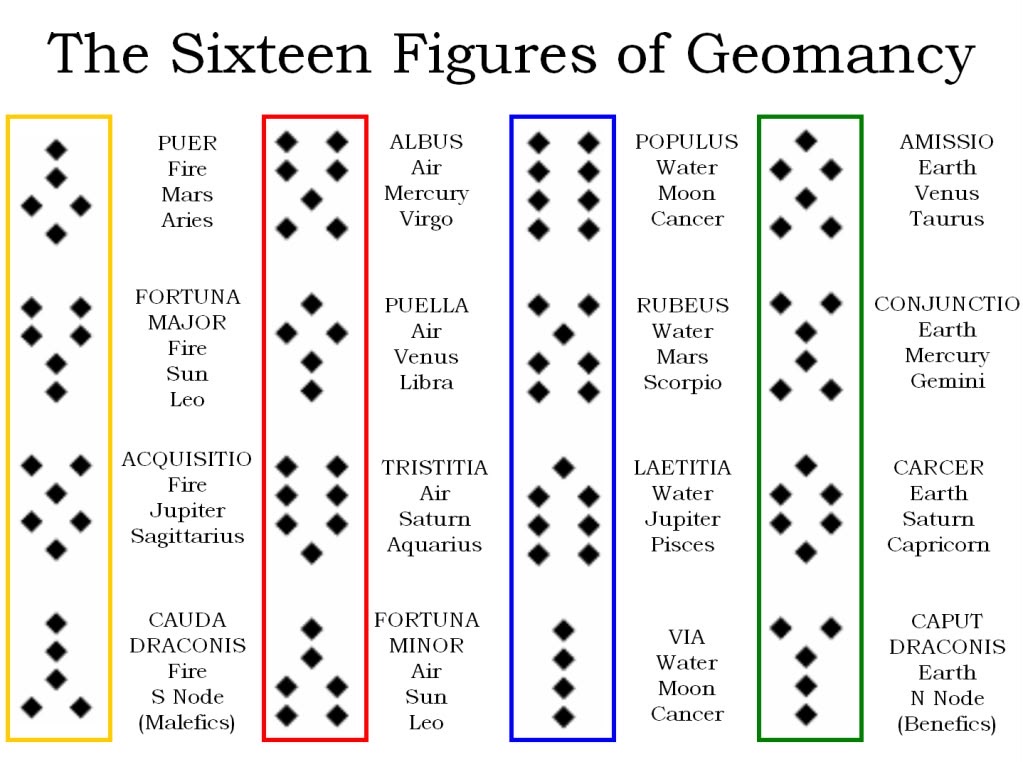
This chain must be stated honestly. Its early links, from Africa into Arab geomancy and from there into Europe, are well supported by the shared sixteen-figure structure and the translation record. Its later links are weaker. Leibniz himself credited the Chinese I Ching, whose hexagrams the Jesuit Joachim Bouvet sent him, as confirmation of his binary system. Scholars also dispute whether geomancy spread from sub-Saharan Africa northward, or from the Arab world southward into West Africa.
What is not in dispute is the structural kinship. The same sixteen binary figures exist in Ile-Ife, in Arab sand-writing and in medieval European manuscripts. Africa sits inside the long history of binary thinking, not outside it.
Knowledge and Power: Who Owns the Story of Computing?
The erasure of Ifá from the history of information science was not an accident; it followed the logic of colonial knowledge. Colonial administrators and missionaries classified Ifá as “fetish” and “superstition”. That label did political work. A people whose intellectual systems are called superstition can be governed, converted and educated by others without objection.
The consequences outlived colonialism. Nigerian school curricula teach Boolean algebra without mentioning that a binary corpus survives in the country’s own south-west. Many Yoruba Christians and Muslims learned to see Ifá as something to be ashamed of. The result is a double alienation: Africans were removed from the global story of computation, and taught to remove themselves.
Recognition has begun from outside. UNESCO proclaimed the Ifá divination system a Masterpiece of the Oral and Intangible Heritage of Humanity in 2005, and inscribed it on its Representative List in 2008. Scholars such as Wande Abimbola have documented the corpus in depth. Yet international recognition as “heritage” can freeze a living knowledge system into a museum piece, admired as culture rather than engaged as thought.
This is where geopolitics enters. Narratives about who thinks rigorously shape who receives investment, whose universities are trusted, and whose engineers are hired as architects rather than as labour. Soft power is partly epistemic power: the authority to be believed when you claim to understand the world.
The Strategic Stakes in the Age of AI
The twenty-first century’s great-power contest is increasingly a contest over computation: chips, data, models and the talent that builds them. The United States and China dominate it. The Gulf states, India and the European Union are spending heavily to avoid dependence. Africa risks entering the AI age as the continent that supplies minerals and data but owns neither the models nor the narrative.
Ifá matters here in three practical ways.
Language and data sovereignty. Large AI models perform poorly in Yoruba because little high-quality Yoruba text exists online. The Ifá corpus, carefully documented and digitised, is among the richest bodies of Yoruba literary, legal and philosophical language in existence. Whoever digitises it, and on whose terms, will shape how machines understand Yoruba.
Diaspora as a network. Ifá is practised far beyond Nigeria: in Benin and Togo, and in the Americas through Lukumí in Cuba, Candomblé in Brazil and communities across the United States. This is a transnational network of millions with a shared intellectual reference point centred on Ile-Ife. Few African institutions have such a ready-made global constituency.
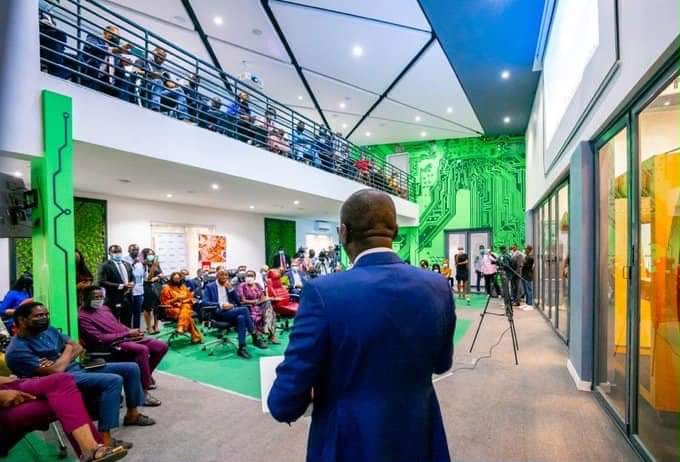
Talent and confidence. Lagos is already one of Africa’s leading technology hubs. A generation of Yoruba engineers who know that binary logic has roots in their own civilisation approaches technology as heirs, not borrowers. Confidence is not a soft asset; it shapes ambition, risk-taking and the willingness to build original platforms rather than localised copies.
The danger is extraction. Foreign companies and universities are already collecting African language data. If the Ifá corpus is digitised by outsiders without Yoruba institutional control, the Yoruba will once again supply the raw material while others own the value.
Guardrails: What Ifá Is and Is Not
The case for Ifá is strongest when it is not inflated. Overclaiming hands critics an easy victory and undermines the serious argument.
Ifá is a binary-structured system of knowledge encoding and retrieval. It is not a machine that computes, and the babalawo were not writing software. Binary representation is one ingredient of computing; programmable logic, electrical switching and stored-program architecture are others, and those emerged elsewhere. The claim that “the Yoruba invented computers” is false and should be avoided.
The transmission chain from Ifá to Leibniz is a hypothesis, not established fact. It is legitimate to present it as a serious scholarly argument; it is not legitimate to present it as proven.
Finally, Ifá is a religious and spiritual system for its practitioners. Reducing it to a mathematical curiosity can be its own form of disrespect. The mathematical reading should sit alongside the sacred one, not replace it.
The defensible claim is still remarkable: an African civilisation developed, preserved and transmitted a sophisticated binary system across centuries, and that system belongs in any honest history of information.
Conclusion: From Heritage to Strategy
Ifá should be treated not only as heritage to protect but as a strategic asset to develop. That shift requires deliberate action by Yoruba and African institutions.
Own the archive. Yoruba-led institutions, working with babalawo, should digitise and annotate the Ifá corpus under clear rules on access, licensing and consent, so that its value stays with the community that preserved it.
Teach the connection. Schools and universities in the south-west can introduce binary arithmetic through the Odù, as ethnomathematics programmes elsewhere already do with indigenous patterns. It costs little and builds confidence early.
Fund the scholarship. Serious research on the history and mathematics of Ifá, and the disputed transmission routes, should be produced in Africa, not only in American and European departments.
Use the network. The Ifá diaspora across the Atlantic is a ready-made channel for cultural diplomacy, investment and intellectual exchange centred on Ile-Ife.
In a multipolar world, power flows to those who can tell a credible story about their own capacity. The Yoruba have one written in two marks and 256 signs. The question is whether they will tell it themselves, or wait for others to tell it for them.