
By Ademola Adekusibe
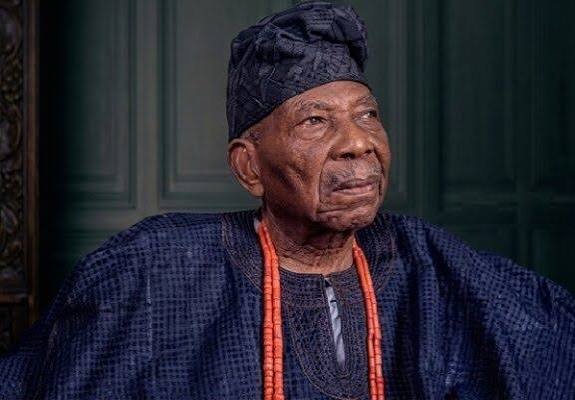
The death of Pa Reuben Famuyide Fasoranti at the age of 100 is more than the departure of an elder statesman. It is the passing of a political patriarch whose life was intertwined with the education, ideological formation and democratic struggles of the Yoruba people. For Afenifere, for the Karọọjire tradition and for a Yoruba nation increasingly separated from the political experiences that shaped its older generation, his death carries a weight that cannot be measured by age alone.
A century is a remarkable span of life. Yet longevity, by itself, does not confer historical importance. What makes Fasoranti’s passing consequential is the character of the life behind those hundred years: the classroom before the political platform, public service before personal acclaim, ideological apprenticeship before leadership, and a sustained association with a political tradition that outlived the governments and institutions through which it first expressed itself.
He belonged to a generation that understood that a people cannot preserve its future without taking responsibility for its past. They inherited a Yoruba society with established systems of communal authority, a strong culture of education, an emerging political consciousness and a growing determination to shape its own destiny within a changing Nigeria. They did not create every institution they inherited, nor did they resolve every contradiction within their society. But they participated in the difficult work of transmitting its political memory from one generation to another.
Fasoranti was among the last prominent custodians of that inheritance. His death therefore leaves a vacancy that cannot be filled simply by appointing another leader, organising another gathering or issuing another statement in the name of Yoruba unity. It raises a deeper question: what happens to a political tradition when the generation that lived its formative struggles is no longer present to explain, defend and correct its inheritance?
That is the question the Yoruba nation must confront as it mourns Baba.
A Man Formed Before the Age of Political Spectacle
Born on May 11, 1926, in Uso, in present-day Ondo State, Fasoranti entered a world in which Nigeria was still under British colonial rule. The country had not yet attained independence, and the political institutions that would later define its national life were still taking shape. He lived through the transition from colonial administration to independence, the First Republic, military intervention, the struggle for democratic restoration and the emergence of the Fourth Republic.
Few individuals are privileged to witness so much history within a single lifetime. Fewer still remain active participants in public affairs long enough to become symbols of continuity between political generations.
Fasoranti’s early professional life was rooted in education. He attended Ondo Boys’ High School and the University College, Ibadan, and pursued further studies in education, including postgraduate training abroad. He worked as a teacher and school administrator, serving in institutions in the Ondo-Akure axis before establishing schools of his own.
His educational work included Omolere Nursery and Primary School, Akure High School and St. Frances’ Academy in Igoba, Akure, founded in memory of his late wife.
These are not incidental details in the story of a political leader. They are central to understanding the kind of society he helped build.
Before he became a recognised elder in Yoruba politics, Fasoranti was involved in the process through which a society prepares its children to inherit its institutions. A teacher does not merely transfer information. At his best, he helps form habits of thought, discipline, responsibility and judgement. A school administrator must also understand that an institution’s reputation depends on standards that cannot be abandoned whenever convenience demands it.
This was the foundation of Fasoranti’s public life. He came from a tradition in which education was understood as a means of individual advancement and collective development. The educated person was expected to contribute something to the community that made his education possible.
That expectation has weakened in many parts of contemporary public life. Qualifications are increasingly treated as personal possessions, while success is measured by the wealth accumulated, the offices occupied and the influence commanded. The older ideal demanded something more: that education should produce people capable of serving society and preserving the standards by which society judges its own conduct.
Fasoranti’s years in education gave practical expression to that ideal. The institutions he established became part of his contribution to the development of his community. His legacy in this area should not be reduced to a line in an obituary. It belongs to the larger history of the Yoruba commitment to education as an instrument of social mobility, civic advancement and cultural continuity.
The Awoist Inheritance Was a Responsibility, Not a Slogan
To understand Fasoranti’s place in Yoruba political history, it is necessary to understand his relationship with Chief Obafemi Awolowo.
Fasoranti belonged to the political tradition associated with Awolowo’s Action Group and later the Unity Party of Nigeria. Between 1979 and 1983, he served as Commissioner for Finance in the government of Chief Michael Adekunle Ajasin in the old Ondo State.
His association with Awolowo was not a passing political arrangement. He remained one of the prominent surviving adherents of the Awoist tradition long after the political circumstances of the First and Second Republics had disappeared.
The significance of that tradition extended beyond loyalty to an individual leader. Awolowo’s political project was built around a recognisable set of ideas concerning education, social welfare, public administration, regional development and the responsibilities of government. Its achievements and limitations can be examined historically, but its place in the political development of the old Western Region is undeniable.
The tradition demanded that political ideals be translated into institutions and public programmes. Education had to reach children. Healthcare had to be accessible. Public finances had to be managed. Rural communities had to be connected to economic opportunity. Political leadership had to be judged by what it delivered to the people, not merely by what its representatives promised.
Fasoranti’s service as Commissioner for Finance placed him within that administrative tradition. Finance is not an abstract technical responsibility divorced from the lives of ordinary people. It determines how much government can spend, which priorities receive attention and whether public programmes can be sustained. A government’s social ambitions mean little if its financial administration cannot support them.
President Bola Tinubu, in his tribute to Fasoranti on his centenary in May 2026, specifically praised his integrity and financial prudence during the Ajasin administration. That recognition reflects the place public discipline occupied in the reputation associated with the elder statesman.
The larger lesson is that political philosophy must be judged partly by the quality of the institutions it produces. An ideology that exists only in speeches is incapable of educating a child, maintaining a hospital or managing a public treasury. Its worth depends on whether its adherents can convert its principles into durable public service.
Fasoranti’s generation understood this relationship between ideas and administration. Their political formation was connected to movements with identifiable traditions, senior figures who provided mentorship and institutions through which political beliefs could be tested in practice.
That is what made the Awoist inheritance more than a convenient label. It imposed expectations on those who claimed it.
The present generation of Yoruba political actors must decide whether that inheritance will remain a living standard or become a ceremonial reference invoked whenever an elder dies.
The Meaning of Omoluabi in Public Life
The Yoruba concept of Omoluabi offers another way of understanding the significance of Fasoranti’s life.
Omoluabi is not simply a flattering description of a respectable person. It is an ethical ideal concerned with character, self-restraint, truthfulness, responsibility and the recognition that personal conduct affects the standing of the wider community. It is a standard against which an individual is expected to measure himself, particularly when entrusted with responsibility.
An Omoluabi is not defined solely by age, wealth, ancestry or title. The title may command attention, but character determines whether that attention is deserved. Age may bring experience, but experience must be accompanied by judgement. Public office may confer authority, but authority must be exercised with restraint.
This distinction matters because contemporary society has increasingly confused visibility with worth. Political prominence is often mistaken for leadership, public relations for achievement and the possession of influence for the possession of character.
The older Yoruba understanding of reputation was more demanding. A person’s name was a form of inheritance. It could be strengthened by years of responsible conduct or damaged by a single act of dishonour. The individual did not exist entirely apart from his family, community or the institutions with which he was associated. His conduct reflected upon them.
Fasoranti’s public reputation was closely connected to discipline, personal austerity and commitment to the causes he embraced. Those qualities formed an important part of the tributes paid to him by political leaders and associates. They help explain why he remained a figure of reference long after his formal government service had ended.
A conservative understanding of society begins with the recognition that institutions cannot survive through laws alone. They also depend on habits, expectations and standards of conduct transmitted across generations. A constitution can establish the rules of government, but it cannot independently manufacture honesty. A school can prescribe discipline, but it cannot guarantee that its students will carry that discipline into public life. A political organisation can declare its principles, but its members must give those principles meaning through their conduct.
Traditions survive when people embody them.
This is why the death of an elder such as Fasoranti should prompt more than the exchange of tributes. It should lead to a serious examination of whether the values associated with his generation are being transmitted to those who will inherit the institutions he leaves behind.
If Omoluabi is reduced to a word used at funerals, centenary celebrations and political ceremonies, it will lose its power as a social standard. Its real test lies in the conduct of the living.
Public Service and the Discipline of Office
Fasoranti’s years in public service are important not only because of the positions he occupied, but because they provide a basis for considering the responsibilities that accompany political authority.
He served in government during the Second Republic, when the old Ondo State was governed by the Ajasin administration under the Unity Party of Nigeria. His tenure as Commissioner for Finance connected him to a period in which the political tradition associated with Awolowo sought to sustain programmes of social development through public administration.
Government finance demands a difficult balance between ambition and available resources. It requires officials to distinguish between expenditure that produces lasting public value and spending driven by political expediency. It also requires the recognition that public money belongs to the public, irrespective of which party controls the government.
The importance of this principle has not diminished. Indeed, in a political environment where citizens frequently question how public resources are managed, the relationship between personal conduct and institutional credibility remains fundamental.
The reputation Fasoranti acquired for financial prudence contributed to the way his public service was remembered. Such a reputation matters because public trust is built over time. It cannot be secured permanently through official titles or inherited from a political mentor. It must be sustained by a record that people can examine.
The conservative lesson is straightforward: public office is a temporary trust, not a private possession. A government official is not the owner of the institution he serves. He is responsible for preserving its capacity to function and for leaving it in a condition that allows those who follow him to serve the public.
This principle applies equally to political parties, traditional institutions, professional bodies and socio-political organisations. Their leaders may become closely associated with them, but no individual should be permitted to become the sole measure of an institution’s existence.
Fasoranti’s death makes that distinction especially important. The generation that remembers his public service must now consider how its standards can be preserved without depending on the continued presence of the people who first embodied them.
The Democratic Struggle Was Not Without Sacrifice
Fasoranti’s political life continued beyond the end of the Second Republic. During the years of military rule, he became associated with the wider struggle for democratic government and the defence of Yoruba political interests.
Military rule interrupted constitutional politics, restricted political participation and concentrated authority in institutions that were not accountable to voters in the ordinary democratic sense. The struggle for a return to civilian government involved political leaders, lawyers, journalists, activists and ordinary citizens who insisted that Nigeria should be governed through constitutional institutions.
Fasoranti was among the Yoruba elders associated with that resistance. His experience included an assassination attempt during the regime of General Sani Abacha, an episode later recalled by Tinubu in his centenary tribute.
Such experiences remind us that the democratic rights enjoyed, however imperfectly, in the present did not emerge automatically. They were shaped by political conflicts and sustained by people who were prepared to oppose the concentration of power in the hands of unelected rulers.
Democracy is not simply the act of holding elections. It requires institutions capable of limiting authority, protecting lawful disagreement and ensuring that governments remain accountable to citizens. Without those conditions, elections risk becoming rituals that confer legitimacy without guaranteeing responsible government.
For a political tradition concerned with the preservation of institutions, opposition to military authoritarianism was not a contradiction. It was a defence of constitutional order against arbitrary power.
Fasoranti’s participation in the democratic struggle belongs to this wider history. His life connected the political experience of the old Western Region with the difficult period in which Nigeria sought to restore civilian government.
That experience should be documented carefully and taught honestly. It should not be turned into a convenient myth in which every figure of the older generation is beyond criticism. Historical seriousness requires the recognition of achievements, mistakes, disagreements and consequences.
But neither should the sacrifices associated with that period be forgotten simply because younger Nigerians did not experience them personally.
A nation that forgets the price of its institutions risks treating them as disposable.
Afenifere and the Burden of Continuity
Fasoranti’s place in Afenifere gave his later years particular significance. The organisation became a major platform through which he participated in debates concerning Yoruba identity, federalism, regional development and the position of the Yoruba people within Nigeria.
Afenifere emerged from the political tradition associated with Awolowo and the progressive movements of the old Western Region. Its historical concerns have included the structure of the federation, the distribution of political authority and the social and economic development of Yorubaland.
Under Fasoranti’s leadership, the organisation remained a reference point in these debates. His presence connected its contemporary political activities to an earlier generation whose experiences had shaped its identity.
Yet Afenifere’s history has also included internal divisions and disagreements over political strategy, leadership and alliances. A serious obituary should not pretend that the organisation was free of such difficulties. Nor should the passing of its leader become an excuse to avoid examining the challenges confronting it.
The important question is what happens next.
A political organisation that survives for generations must possess more than a revered leader. It must have a clear understanding of its purpose, credible processes for selecting leadership, mechanisms for resolving disagreements and a way of translating its stated principles into practical action.
Without these foundations, an organisation can become dependent on personalities and vulnerable to fragmentation whenever leadership changes. Its name may survive while its influence declines. Its historical achievements may continue to attract praise even as its capacity to shape present events diminishes.
Fasoranti’s death places the responsibility of continuity before Afenifere in unmistakable terms. The organisation must preserve its institutional memory while demonstrating that the political tradition it represents remains relevant to the lives of contemporary Yoruba people.
That requires more than repeating the names of Awolowo, Ajasin and the other figures who shaped the movement. It requires engaging with the questions they confronted and determining how their principles should inform the circumstances of today.
The challenge is not to reproduce the past exactly. It is to understand what gave the past its enduring value.
The Personal Grief Behind the Public Figure
Fasoranti’s century of life also contained profound personal loss. His wife died in 1991, and his daughter, Funke Olakunrin, was killed by gunmen in July 2019 while travelling in Ondo State.
The killing of Olakunrin brought national attention to the insecurity confronting travellers and families in parts of Nigeria. For Fasoranti, it was a personal tragedy that no public position or lifetime of achievement could make easier to bear.
There is a tendency to turn elderly public figures into symbols and forget the ordinary human relationships behind their titles. Yet an elder statesman remains a husband, father, relative and friend. The pain of losing a loved one does not become less real because the bereaved person is nationally recognised.
Fasoranti endured these losses while remaining a prominent figure in Yoruba public life. His personal history was therefore marked by both the responsibilities he assumed in public and the grief he carried in private.
The Yoruba tradition of honouring elders should include an understanding of this human dimension. Respect does not require pretending that a person’s life was free from suffering. It requires recognising the full measure of the life lived.
His death brings that long personal journey to an end. His family has lost a father and patriarch. Afenifere has lost its leader. The Yoruba nation has lost an elder whose life connected several generations of political experience.
These losses are related, but they are not interchangeable. The public may remember the statesman, while his family must mourn the person whose place in their lives cannot be filled by public tributes.
The Karọọjire Tradition and the Loss of a Patriarch
For the Karọọjire tradition, Fasoranti’s passing is a particularly heavy loss because it represents the departure of a figure whose life was connected to a much older understanding of Yoruba political responsibility.
The loss is not merely that of a respected name. It is the loss of a living witness to a political culture in which elders were expected to preserve institutional memory, provide counsel and remind succeeding generations that the interests of the community were larger than the ambitions of any single individual.
Such a role cannot be recreated through ceremonial language alone. It depends on experience, trust and the accumulated authority of a life spent participating in public affairs. An elder’s counsel carries weight not simply because he is old, but because the people seeking it believe that his judgement has been tested by time.
That is why the passing of the last prominent figures of a political generation can leave a movement feeling diminished even when its formal structures remain intact.
For the Karọọjire tradition, the challenge now is to ensure that the values associated with its older custodians do not disappear with them. The duty is to preserve the intellectual and political inheritance, to document its history and to develop leaders capable of carrying its responsibilities into a new era.
This does not mean that younger generations must agree with every position taken by their predecessors. Continuity is not blind obedience. A serious tradition allows debate, learns from experience and corrects its own shortcomings. What it cannot afford is historical amnesia.
The Yoruba nation needs institutions that can remember without becoming trapped in nostalgia, adapt without abandoning their foundations and disagree without destroying the relationships necessary for collective action.
Fasoranti’s death makes this responsibility more urgent. The elders who once served as bridges between the past and present are departing. The living must now build stronger bridges through education, documentation, institutional discipline and serious engagement with the political questions of the day.
The Yoruba Nation Must Learn to Preserve What It Inherits
The death of Fasoranti should prompt the Yoruba people to examine a question that extends beyond Afenifere or any single political movement: how does a nation preserve the best of its inheritance while confronting the failures of its present?
No society can remain healthy by living entirely in the past. The circumstances confronting the Yoruba today are not identical to those of the colonial period, the First Republic or the military years. Economic conditions have changed, political institutions have evolved, and younger generations face challenges that their grandparents could not have anticipated in their present form.
But change does not eliminate the need for continuity. A society still needs institutions that educate its children, transmit its language, preserve its history, regulate the conduct of public officials and provide credible ways of resolving disagreements.
The old Yoruba political tradition understood that development required organisation. It was not enough to proclaim pride in one’s identity. A people had to build schools, establish institutions, develop its economy and cultivate leaders capable of translating collective aspirations into practical outcomes.
That is the difference between cultural sentiment and cultural stewardship. Sentiment celebrates what a people has inherited. Stewardship accepts responsibility for ensuring that the inheritance remains useful to those who come after.
Fasoranti’s life offers a reminder of this distinction. His work in education, his service in government and his involvement in Afenifere were different expressions of participation in public life. They connected personal responsibility to the development and preservation of institutions.
The Yoruba nation should honour that legacy by investing in the institutions that will outlive the present generation. Schools must continue to provide meaningful education. Political organisations must develop credible leadership. Historical records must be preserved. Public service must be measured by conduct and results. Cultural identity must be sustained through practice rather than reduced to ceremonial declarations.
These responsibilities cannot be delegated entirely to the dead, however revered they may be. The living must carry them.
Baba Has Gone to Rest
At 100, Pa Reuben Famuyide Fasoranti had lived through a century of extraordinary political and social change. He had served as an educator, participated in government, endured the pressures of political struggle and led Afenifere through a period in which the Yoruba political landscape continued to change.
He had also endured personal losses that no public honour could erase. His life was not a simple story of uninterrupted achievement. It was a long human journey shaped by duty, conviction, adversity and grief.
He has now gone to rest.
For his family, his departure is an intimate loss. For Afenifere, it is a test of institutional continuity. For the Karọọjire tradition, it is the loss of a patriarch. For the Yoruba nation, it is the passing of one of the last prominent figures whose life connected the politics of the old Western Region to the struggles of contemporary Nigeria.
The appropriate response is not to pretend that another man can simply become Fasoranti. History does not produce replacements on demand. Every generation must produce its own leaders, and every leader must earn the trust that accompanies the responsibilities of public life.
What can be inherited are the lessons: the importance of education, the discipline of public service, the value of institutional memory, the need for constitutional government and the obligation to preserve a people’s cultural and political inheritance.
Those lessons will matter only if they are carried into practice.
The Yoruba nation must therefore mourn Baba without surrendering to nostalgia. It must honour him without turning his memory into a substitute for the difficult work ahead. And it must recognise that the departure of an elder places a greater burden on those who remain.
Fasoranti paid his dues to the Yoruba nation through a lifetime of service. His place in its history will be determined not only by the tributes spoken over his grave, but also by whether the institutions and values to which he devoted his life continue to serve future generations.
Baba has gone to rest. The duty of preserving the inheritance he leaves behind now belongs to the living.
May Pa Reuben Famuyide Fasoranti rest in peace.