
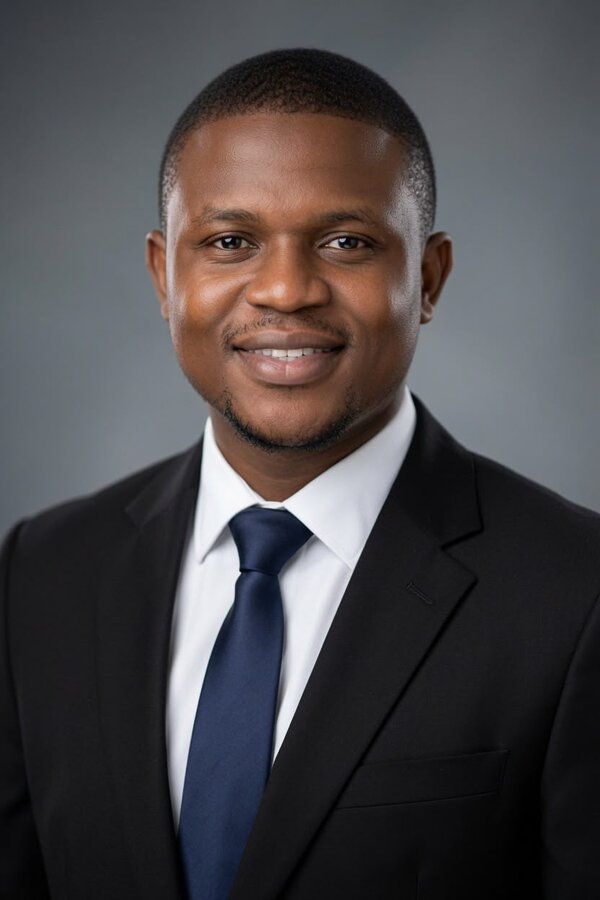
By Ademola Adekusibe
I have never seen an opposition as useless as the one Nigeria has today. That may sound harsh, but it is precisely how I see the state of opposition politics in this country. We have politicians who spend their days telling Nigerians how unpopular President Bola Ahmed Tinubu supposedly is, yet they appear incapable of putting their own political house in order. They want to remove the President, but they cannot even agree on how to organise themselves into a credible alternative. They talk about rescuing Nigeria, yet their personal ambitions, endless rivalries and inability to build a united front continue to undermine the very project they claim to be pursuing.
If Tinubu is truly as unpopular as his opponents insist, what exactly is stopping them from building a formidable opposition capable of defeating him? That is the question I believe every serious observer of Nigerian politics should be asking.
Let me state my position clearly: I support President Tinubu’s presidency because I believe the work his administration has been doing deserves recognition and should be assessed on its merits. I am not suggesting that every policy is perfect or that Nigerians have no legitimate economic concerns. No responsible political discussion should pretend that the difficulties facing ordinary citizens do not exist. But I refuse to accept the lazy argument that because people are dissatisfied with certain aspects of the government, every politician opposing Tinubu automatically becomes a better alternative. Opposition is not a qualification for leadership, and criticising a President is not proof that one knows how to govern a country.
What I see in the current opposition is a troubling combination of political entitlement, personal ambition and strategic confusion. Everybody wants to become President, everybody believes he has the formula to rescue Nigeria, and everybody appears ready to explain why the other person should step aside. Yet the difficult work of building a sustainable national coalition remains a problem. If this is the opposition that expects Nigerians to entrust it with presidential power, then it has a great deal to explain.
ATIKU AND OBI: TWO PRESIDENTIAL AMBITIONS, ONE FUNDAMENTAL PROBLEM
Atiku Abubakar and Peter Obi are among the most prominent opposition figures in Nigeria. Both have built political followings, both have supporters who believe they can lead the country, and both have criticised the direction of the Tinubu administration. But the question is no longer simply whether they want to challenge Tinubu. The question is whether they understand what it takes to build the political coalition required to win the Nigerian presidency.
Atiku has pursued the presidency for years. Obi emerged from the 2023 election with a substantial following, particularly in the South-East, among younger voters and among Nigerians who believed his candidacy offered a different political direction. Yet presidential ambition and presidential victory are two entirely different things. Nigeria is too politically complex for any candidate to assume that a loyal support base, enthusiastic rallies or a strong social media presence will automatically deliver the presidency.
The opposition’s challenge is that its leading figures have not consistently demonstrated the ability to place a common national strategy above their individual ambitions. They may agree that they want Tinubu out of office, but agreeing on an opponent is not the same as agreeing on a candidate, a political programme or a strategy for governing together.
This is where I believe Atiku and Obi are wasting their time. They risk spending their political energy competing against one another, negotiating over tickets and struggling to reconcile their ambitions while the incumbent remains in office. Every political season becomes another round of arguments about who should lead, who should step aside and who deserves the opportunity to become President. Meanwhile, the fundamental question remains unanswered: where is the united political machinery capable of translating their combined support into a credible national challenge?
The presidency is not won through declarations of entitlement. It is won through votes, alliances, organisation and the ability to build relationships with constituencies beyond one’s traditional base. If Atiku and Obi cannot find a sustainable way to navigate these realities, they may continue to generate political excitement without resolving the strategic weakness that undermines their ambitions.
THE OPPOSITION’S BIGGEST PROBLEM IS NOT TINUBU. IT IS THE OPPOSITION ITSELF.
There is a contradiction at the heart of opposition politics in Nigeria. Politicians insist that the incumbent is vulnerable, yet their own conduct repeatedly raises questions about whether they can organise a credible alternative. They want Nigerians to believe that removing Tinubu is the country’s most urgent political task, but they struggle to demonstrate that they can work together long enough to make that objective realistic.
A serious opposition should be developing a coherent programme, building alliances across the federation, strengthening its party structures and explaining how it would manage the country’s economic and security challenges. It should be persuading Nigerians that it has the competence, discipline and political organisation to govern. Instead, too much attention is devoted to internal rivalries, presidential tickets and the personalities of individual leaders.
This is why I consider the current opposition deeply disappointing. Its politicians appear to have mistaken the desire to defeat an incumbent for the ability to do so. They have confused public criticism of the government with a ready-made electoral mandate. Most importantly, they have underestimated the difficulty of assembling a national coalition in a country as diverse as Nigeria.
A divided opposition can make an incumbent’s task easier, but unity alone is not enough. Even a united coalition must convince voters that it offers a credible alternative. It must explain its policies, demonstrate internal discipline and show that its members can work together after the election. The opposition must do more than agree on whom it dislikes. It must establish what it intends to do differently and how it intends to do it.
Until then, the loudest criticism of Tinubu will not necessarily translate into the political strength required to replace him.
PETER OBI MAY HAVE COST THE SOUTH-EAST A GENERATIONAL OPPORTUNITY
My greatest concern about Peter Obi is not simply his ambition to become President. Every Nigerian politician has the constitutional right to seek the office. My concern is what I consider the strategic consequences of the political direction associated with his presidential movement for the South-East and its long-term ambition to produce Nigeria’s President.
The South-East has every right to aspire to the presidency. Its people are Nigerians, and their desire for greater representation at the highest level of national leadership should not be dismissed. But a legitimate aspiration is not the same thing as a winning political strategy. The region must understand that presidential power cannot be secured through regional enthusiasm alone.
Obi’s 2023 campaign generated enormous excitement in the South-East and attracted substantial support from other parts of the country. Yet he finished third in the final presidential results announced by the Independent National Electoral Commission, receiving 6,101,533 votes, compared with Atiku Abubakar’s 6,984,520 and Tinubu’s 8,794,726. Those figures are a reminder that enthusiasm, even when substantial, does not automatically become a presidential mandate.
The question the South-East must now confront is whether the political approach associated with Obi’s candidacy has strengthened the region’s long-term path to presidential power or made that path more difficult. I worry that the region could spend years celebrating the popularity of a political movement without doing enough to build the alliances required to turn that popularity into a national electoral victory.
My fear is that the South-East could be pushed back by an entire political generation. I question whether, under the same approach to presidential politics, the region will be positioned to produce a President within the next 30 years. That is a serious concern, but it is not a declaration that the South-East is incapable of producing a President or that its future has already been decided. The region’s prospects will depend on the political choices it makes, the alliances it builds and the willingness of its leaders to think beyond immediate electoral excitement.
The South-East must distinguish between supporting a popular candidate and building a sustainable political pathway to the presidency. These are not the same exercise. A candidate can inspire millions of people and still fail to assemble the national coalition needed to win. A regional movement can command overwhelming loyalty at home while remaining unable to secure sufficient support elsewhere.
If the South-East wants the presidency, it must begin to think in terms of long-term political strategy rather than the fortunes of one candidate. It must build relationships with political leaders and voters across Nigeria, negotiate alliances that can survive electoral cycles and develop a strategy that does not depend entirely on the popularity of a single individual.
Peter Obi’s presidential ambition must not become a substitute for the South-East’s long-term political interest. No region should allow its future access to national power to depend entirely on one man’s calculations or electoral fortunes.
THE SOUTH-EAST CANNOT WIN THE PRESIDENCY BY VOTING FOR ITSELF ALONE
One of the most persistent mistakes in Nigerian politics is the belief that regional loyalty can substitute for national coalition-building. It cannot. A presidential candidate needs more than the overwhelming support of his home region. He must build a coalition broad enough to compete across the country and satisfy the constitutional requirements for election.
This is where the South-East needs a serious political rethink. If the region wants to produce a President, it must ask what it is doing to build relationships with the South-West, the North-Central, the North-East, the North-West and the South-South. It must consider what political compromises are necessary, what common interests can unite different constituencies and what alliances can be sustained beyond a single election.
The South-East cannot approach presidential politics as though the rest of Nigeria owes it an automatic transfer of power. Regional inclusion is a legitimate subject of national debate, but presidential victory still requires votes and political partnerships. A candidate cannot simply argue that his region deserves a turn and expect the electorate to deliver the office.
Consider the political diversity of the South-West itself. In the 2023 presidential election, Obi won Lagos, while Atiku won Osun. Obi also attracted support in other part of the region. The result demonstrated that regional voting is not uniform and that political relationships, party affiliation and candidate preferences can produce different outcomes within the same geopolitical zone.
The lesson for the South-East is that national politics requires more than regional solidarity. It requires political influence beyond regional boundaries. It requires the ability to negotiate with other groups without losing the confidence of one’s core supporters. It requires leaders who understand that a presidential election is a national contest, not a referendum on which region feels most deserving of power.
The South-East must therefore decide whether it wants to continue concentrating its political energy on the popularity of individual candidates or build a durable national alliance capable of making its presidential ambition more attainable. It cannot afford to confuse the two.
WHY I CONTINUE TO SUPPORT TINUBU
My support for Tinubu is not based on the belief that his administration has solved every problem in Nigeria. It is based on my assessment of his presidency and my belief that the work his administration has been doing deserves to be considered seriously rather than dismissed simply because his opponents want him removed.
A government should be judged by its policies, decisions, achievements and shortcomings. Where it succeeds, those successes should be acknowledged. Where it fails, it should be criticised. Where its decisions impose difficult costs on citizens, the government should explain its reasoning and be held accountable for the consequences. None of these principles requires the opposition to be treated as a credible alternative merely because it opposes the incumbent.
I am prepared to defend my support for Tinubu while recognising that other Nigerians may assess his record differently. What I want to see from his opponents is a serious demonstration that they can offer a more convincing governing programme and build the political machinery required to implement it.
Atiku and Obi cannot expect Nigerians to accept that they are ready to govern simply because they have criticised the President. They must show how their policies would work, how their political alliance would function and how they would manage the difficult choices confronting the country. They must demonstrate that they can rise above personal ambition and build a coalition with a realistic national reach.
My frustration with the opposition is that it often appears more interested in the politics of removing Tinubu than in the demanding work of persuading Nigerians that it can govern better. That is a fundamental weakness. A presidential election should not be reduced to a contest between people who dislike the incumbent and people who support him. It should also be a contest over ideas, competence, political organisation and the ability to govern a complex federation.
If the opposition cannot demonstrate these qualities, it should not be surprised when its criticism fails to produce the electoral outcome it desires.
NIGERIA DOES NOT OWE ANY POLITICIAN THE PRESIDENCY
There is a hard truth that every political movement in Nigeria must accept: nobody is entitled to the presidency. Not Atiku. Not Obi. Not Tinubu. Not any candidate from the South-East, South-West, North or South-South.
The presidency is a constitutional office, and the route to it is through an electoral process. Regional inclusion and political fairness are important, but they do not eliminate the need for candidates to win votes and build national support.
For the South-East, this means its presidential ambition must be accompanied by a serious national strategy. The region must develop political partnerships that extend beyond its traditional support base, engage other regions on common interests and recognise that compromises made today can shape its prospects tomorrow.
For the opposition, the lesson is equally direct. If its leaders genuinely believe that Tinubu is vulnerable, they must demonstrate that belief through organisation, unity and a credible alternative. They cannot spend every election cycle arguing among themselves and then blame the incumbent when their political ambitions collide.
For Tinubu’s supporters, including myself, the responsibility is to defend the administration’s record with arguments and evidence, acknowledge legitimate concerns and explain why we believe its direction deserves support. Political support should not mean blind loyalty, just as political opposition should not be confused with proof of superior leadership.
MY VERDICT: THE OPPOSITION NEEDS A STRATEGY, AND THE SOUTH-EAST NEEDS A PLAN
I stand by my description of the current opposition as the most useless I have seen in my lifetime. It is a deliberately blunt assessment of what I consider its inability to turn its criticism of Tinubu into a coherent and convincing national alternative. The opposition has every right to challenge the President, but it must also demonstrate that it can organise itself, manage its competing ambitions and persuade Nigerians that it is prepared to govern.
Atiku and Obi may continue to pursue their presidential ambitions, but unless they can resolve the fundamental problem of coalition-building, they risk wasting valuable political time. The presidency cannot be won through personal ambition alone, and no amount of outrage about an incumbent can substitute for a workable electoral strategy.
The South-East, meanwhile, must think beyond the next election. If its leaders genuinely want the region to produce a President, they must build alliances across Nigeria and prepare for the long game. Otherwise, the region risks spending decades debating why it deserves the presidency without doing enough to construct the political pathway to secure it.
I support Tinubu’s presidency because I believe his administration’s work deserves to be judged on its merits, and I do not consider the opposition’s current approach a convincing alternative. But my argument is not that the South-East should abandon its ambition or that opposition politics should disappear. It is that both the opposition and the South-East must confront the political realities they cannot wish away.
You cannot defeat a President simply by declaring him unpopular. You cannot win the presidency simply because you believe it is your region’s turn. And you cannot build national power while treating coalition-building as an afterthought.
That is the dilemma facing Tinubu’s opponents. It is also the strategic question confronting the South-East. Until they understand the difference between wanting power and building the political alliances necessary to win it, they risk remaining spectators in the very contest they are desperate to control.