
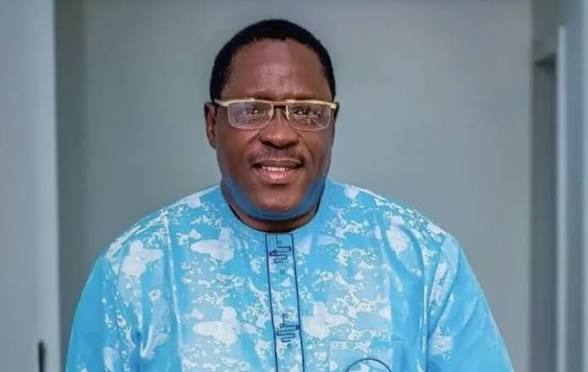
A close friend of late veteran Yoruba actor and filmmaker Taiwo Hassan, popularly known as Ogogo, has revealed how what initially appeared to be chest pain eventually led to the discovery that the actor had stage-four cancer.
Azeez “Olu Ogogo” Onifade, who said he had been friends with the actor for about 25 years, disclosed the details in an interview with City People published on Wednesday.
According to Onifade, Ogogo first complained of chest pain while in Ilaro, Ogun State, his hometown.
He said the actor was initially taken to a hospital regularly used by his family, where he received treatment and was advised to rest.
However, the pain persisted the following morning, prompting another trip to the hospital.
Onifade said the actor was subsequently taken from Ilaro to Apena Hospital in Ebute-Metta, Lagos, where doctors conducted several tests and administered injections to manage the pain.
He said Ogogo was later referred to another hospital before eventually being taken to the Lagos State University Teaching Hospital, LASUTH.
It was at LASUTH, according to Onifade, that the family and those accompanying the actor were informed that he had cancer.
The diagnosis came as a shock to those around him, particularly because the process had started with what appeared to be persistent chest pain.
Following the diagnosis, family members and close associates gathered to discuss how best to secure further treatment for the actor.
Onifade said Senator Solomon Adeola, popularly known as Yayi, suggested that Ogogo be taken to India for treatment.
However, the planned trip was delayed by the process of obtaining a visa.
By the time the visa was eventually obtained, Onifade said Ogogo’s condition had deteriorated to the point where he was considered too weak to travel by air.
Efforts were subsequently made to bring medical expertise to Nigeria.
According to Onifade, Senator Adeola arranged for a doctor from India to come to Nigeria and participate in Ogogo’s treatment.
The doctor later recommended that the actor be moved to St Nicholas Hospital on Lagos Island, where treatment commenced that same night.
Onifade said several specialists were involved in Ogogo’s treatment and that the actor initially appeared to respond to the care.
“He was eating little by little until five days before his death, when everything changed,” he said.
Ogogo, whose real name was Taiwo Hassan, died on August 23, 2026, at the age of 66, after battling stage-four cancer.
His daughters, Kira and Haleemah, had earlier disclosed that their father had been diagnosed with the disease and appealed for medical assistance as his condition deteriorated.
The actor’s illness became public shortly before his death, prompting an outpouring of support from colleagues, fans and other Nigerians.
Onifade, while recounting the final period of his friend’s life, also spoke about the late actor’s generosity and the support he had extended to people around him.
He recalled an occasion when Ogogo visited his building site in Ilaro and offered to pay the outstanding cost of roofing the house.
According to him, the actor also helped secure employment for his daughter and assisted him with the process of obtaining a Canadian visa.
Describing Ogogo as a generous and kind-hearted person, Onifade said the actor’s death remained difficult for him and those who were close to him.
He also expressed appreciation to individuals who supported Ogogo and his family during his illness, including Senator Adeola, First Lady Oluremi Tinubu, traditional rulers and colleagues in the Nigerian film industry.
Ogogo was one of the prominent figures in Yoruba-language Nollywood and spent more than four decades in the entertainment industry.
He was known for his commanding screen presence and roles portraying traditional rulers, chiefs, warriors, fathers and other authoritative characters.
His career included appearances in numerous Yoruba and mainstream Nigerian productions, including Aníkúlápó, Bank Alert, Amerah, Omo Ghetto, Agbelebu and ÌGÈ.
His death in August sparked tributes across Nigeria’s entertainment industry, with colleagues remembering him for his contribution to Yoruba theatre, film and the preservation of Yoruba cultural storytelling.
He was buried in his hometown, Ilaro, Ogun State, following his death.