
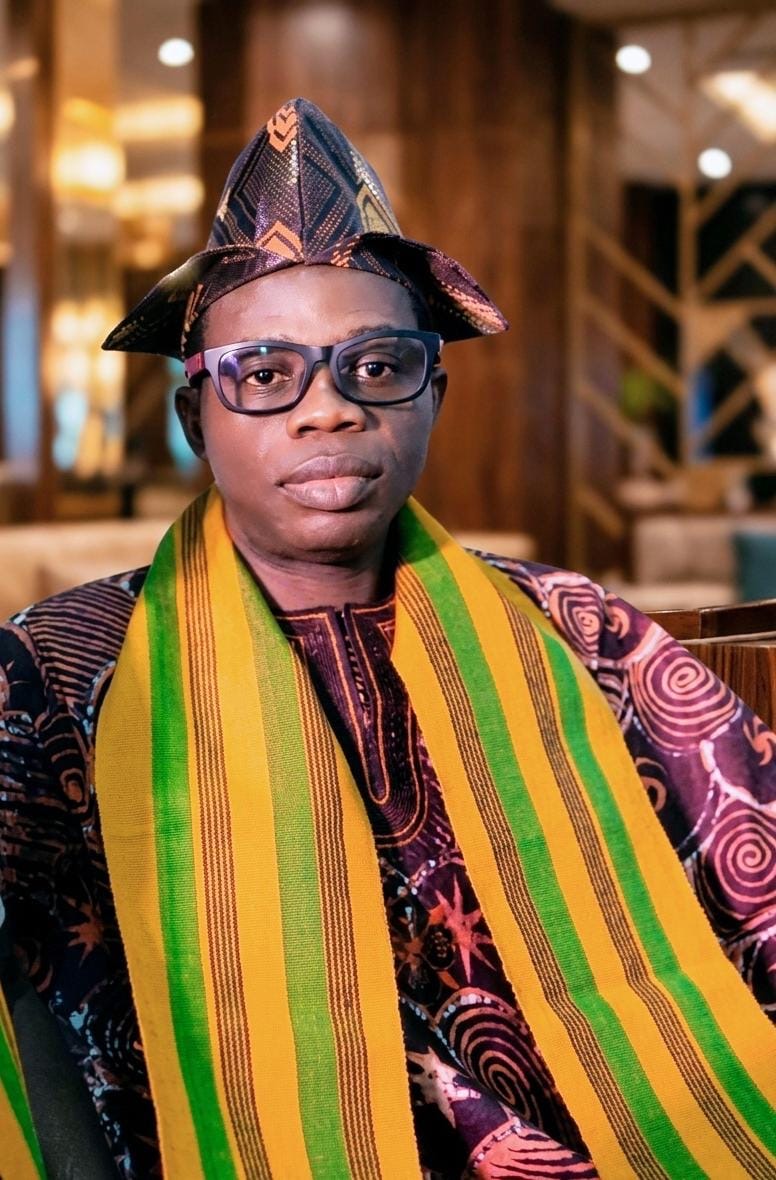
“Centuries before Nigeria’s constitution, the Oyo Empire had already built and repeatedly tested a working system for checking a king who went too far.”
By Oladipupo Ahmed
When the Bashorun of Oyo decided a king had to go, he did not raise an army. He sent a calabash.
Sometimes the gourd arrived empty. Sometimes it held the eggs of a parrot. Either way, no words were necessary. The message meant that the Oyo Mesi, the empire’s council of seven kingmakers, had deliberated and voted, and that the Alaafin’s reign was over. Custom left him one dignified exit: withdraw to his private quarters and take his own life, sparing the empire the chaos of a forced deposition or a war of succession.
It happened often enough, across the seventeenth and eighteenth centuries, that it became closer to procedure than scandal, an institution, not an aberration. That is precisely what makes it worth revisiting now, in a country still arguing over what “separation of powers” is supposed to mean. Long before Nigeria’s 1999 Constitution, long before Montesquieu’s name entered a West African classroom, the Oyo Empire had already built, through centuries of trial, bloodshed, and constitutional revision, a working mechanism for restraining a ruler who overreached. It rarely gets taught that way. When it gets taught at all, it’s usually folklore: a curious, faintly gruesome custom from “the olden days.” That undersells it badly.
Seven Men Who Could Unmake a King
The Alaafin of Oyo was never an absolute monarch, whatever his title, “owner of the palace,” might suggest. He ruled alongside, and was watched by, the Oyo Mesi: seven hereditary titleholders, the Bashorun, Agbaakin, Samu, Alapinni, Laguna, Akiniku, and Ashipa, who together functioned as electoral college, senior judiciary, and cabinet all at once. No prince could be crowned in the capital without their consent and the performance of specific installation rites. Once enthroned, an Alaafin was expected to consult them on matters of state, war, and the empire’s religious calendar.
The Bashorun led them, holding a position historians have long compared to a prime minister or chancellor, and, in the empire’s darker chapters, something closer to a rival throne. It fell to him to manage Oyo’s great annual festival of Orun, and it was through this same office that the council’s ultimate sanction, the calabash, was eventually delivered.
Checks on the Checkers
What separates the Oyo Mesi from a simple council of yes-men, and what makes the comparison to modern constitutional design more than a stretch, is that the Oyo Mesi’s own power did not go unchecked either.
A parallel body, the Ogboni, an assembly of senior titleholders bound to the worship of the earth, carried enough moral and religious authority to act as a further restraint on the Oyo Mesi itself. And the empire’s military strength was deliberately kept out of the council’s direct hands. Command of the elite Eso Ikoyi warrior corps sat with a separate officer, the Are-Ona-Kakanfo, the field marshal of Oyo’s armies, who was, by long-standing custom, forbidden from ever residing in the capital. A general with an army at his back was, quite literally, not permitted anywhere near the throne he might be tempted to threaten.
Read together, it amounts to a genuine separation of functions: ritual and civil authority in the Alaafin, deliberative and electoral authority in the Oyo Mesi, a moral and religious backstop in the Ogboni, and military authority deliberately fenced off from the capital. None of it maps neatly onto executive, legislative, and judicial branches in the Montesquieu sense. Oyo’s answer was built around ritual and lineage, not elections. But the underlying problem it was built to solve is the same one separation-of-powers theory exists to solve: how do you restrain a single ruler without resorting to civil war every time he overreaches? Oyo arrived at its own answer, on its own terms, centuries earlier.
When the System Worked
The historical record, reconstructed largely from oral tradition and compiled most extensively in Reverend Samuel Johnson’s landmark nineteenth-century history, credits the Oyo Mesi with removing multiple Alaafin across the seventeenth and eighteenth centuries for conduct that, by any standard, warranted it. Alaafin Jayin was pushed out after killing his own son. Alaafin Ayibi, remembered as cruel and arbitrary even by the standards of his predecessors, and said to have had his own in-laws killed over an offhand remark, was eventually rejected by the same council after years of erratic rule. In both cases, the mechanism worked close to how it was designed: a body of senior statesmen, not a mob and not a single rival, reached a collective judgment that a ruler had become unfit, and enforced it without plunging the empire into open war.
When the System Was Captured
But no constitutional design survives contact with a sufficiently ambitious officeholder, and Oyo produced its own case study in institutional capture: Bashorun Gaa.
Appointed around 1754, Gaa used the council’s power over royal succession to install and remove Alaafin after Alaafin, enthroning five kings across two decades and deposing four of them by the same calabash procedure meant to check royal excess, now bent toward building his own. One victim, Alaafin Labisi, was rejected before he was ever formally crowned and forced to his death after just seventeen days on the throne. For roughly twenty years, Gaa was arguably the single most powerful man in the empire, Alaafin included.
It ended only when the fifth king he crowned, Abiodun, built a coalition strong enough to turn on him directly. Gaa was captured and executed in 1774, and the Oyo Mesi’s authority, badly strained by two decades under a chief minister who had used it as a personal weapon, never fully recovered its old balance. It is a useful, uncomfortable footnote for anyone tempted to romanticize the system uncritically: a check on power is only as trustworthy as the people entrusted to operate it, then as now.
The Deposition That Broke the Empire
The mechanism’s final, most consequential use came in 1796, and this time it wasn’t the Bashorun who wielded it.
Alaafin Awole Arogangan spent his seven-year reign burning through what remained of Oyo’s authority. In 1793 he moved against Ife-protected territory in Apomu, chasing a personal vendetta and breaking Oyo’s ancient taboo against threatening the empire’s spiritual capital. Three years later, he ordered his own field marshal, the Are-Ona-Kakanfo Afonja, to attack Iwere-Ile, the fortified town of Alaafin Abiodun’s maternal lineage. Bound by oath and an old curse, Afonja refused, turned his army back on Oyo’s own capital, and sent Awole a covered, empty calabash of his own.
It was, in form, the same ancient mechanism that had removed Jayin and Ayibi. In substance, it was something new: not the Oyo Mesi’s collective judgment, but a general’s revolt dressed in constitutional language. Afonja used the leverage he’d seized to build an independent power base at Ilorin, which broke from Oyo entirely and, within decades, fell under the Sokoto Caliphate, leaving Ilorin, to this day, the one major Yoruba city governed by a Fulani emirate rather than an Oba. The same instrument that had preserved the empire’s internal balance for two centuries became, in its final invocation, one of the proximate causes of its collapse.
What Oyo Still Has to Teach Nigeria
Yorubaland is still watching its royal institutions closely, witness the current tension over the Awujale succession in Ijebu-Ode, but the obas at the centre of these disputes wield nothing like the Oyo Mesi’s old authority. Colonial-era Native Authority reforms, and later Nigeria’s own republican constitutions, stripped traditional rulers of formal governing power, leaving moral suasion and public opinion as their main remaining instruments. The chieftaincy titles of the old Oyo Mesi still exist within the modern Oyo palace structure; the teeth mostly do not.
There is a real argument to be had about whether that loss of formal power was a mistake. But there’s a separate, less comfortable point worth sitting with regardless of where one lands on that question: Nigeria did not need to import the basic idea of restraining a leader from abroad. Yorubaland had already spent three centuries working through the practical difficulty of that exact problem, building formal, deliberative machinery for removing a ruler without a coup, then watching that machinery get captured by an ambitious minister, then watching it get repurposed by an ambitious general into an instrument of the empire’s own unraveling. That is not folklore. It is a fully worked constitutional history, complete with its successes and its failures, produced independently and centuries before “separation of powers” entered anyone’s political vocabulary here.
The calabash is gone. The argument it used to settle, how far a leader can go before those he leads are entitled to say no, and who gets to make that call, is still being fought today, in courtrooms and constitutions instead of palace councils. Oyo answered it, imperfectly, four hundred years before Nigeria’s current republic tried answering it again.