
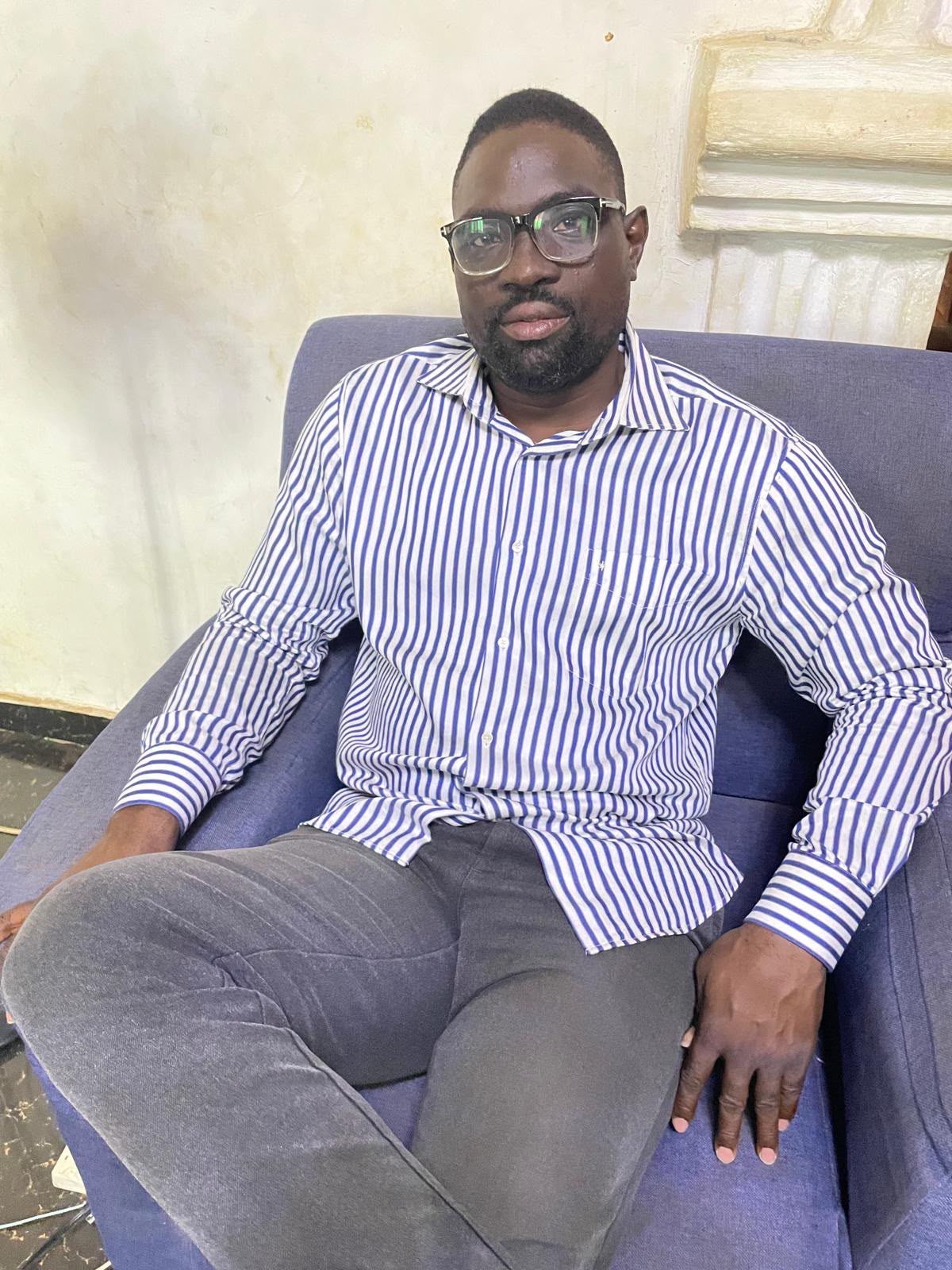
By Bolarinwa Ayoola
The history of Nigeria’s colonial and post-colonial eras cannot be written without reference to the Yoruba political gladiators who challenged colonial administration and committed themselves to reshaping Nigeria’s political journey towards independence. The Yoruba political landscape was once occupied by some of the most influential politicians Nigeria has ever produced.
Yoruba icons such as Dr. Herbert Macaulay, widely regarded as the father of Nigerian nationalism, revolutionised the country’s political space. He established newspapers for political information and agitation and founded the Nigerian National Democratic Party, Nigeria’s first political party. Mrs. Funmilayo Ransome-Kuti was another remarkable figure who courageously fought for the rights and advancement of women under a hostile colonial administration.
Yorubaland reached a political golden age under the leadership of the late sage, Chief Obafemi Awolowo, who coordinated a formidable Yoruba political movement. Having been associated with the Lagos Youth Movement, Awolowo was also instrumental in the formation of Egbe Omo Oduduwa before leading the establishment of the Action Group and becoming the first Premier of the Western Region.
It is safe to say that Chief Obafemi Awolowo was ahead of his time. He was a futuristic thinker, an exceptional planner and the intellectual centre of a political movement that brought together some of the brightest minds in Western Nigeria. Together, they left an enduring imprint on the political history of Yorubaland and Nigeria.
Awolowo was not merely a colossal politician in Yorubaland; he was a national icon and a reference point in Nigerian political history because of the scale and vision of his impact. His legacy continues to stand tall decades after the introduction of the unitary system of government in 1966 and long after his death.
The Awolowo era was accompanied by several brilliant minds, including Chief Samuel Ladoke Akintola, who succeeded Awolowo as Premier of the Western Region and continued several aspects of the development agenda initiated during the Action Group era. Others, including Professor Stephen Awokoya, Chief Bode Thomas, Chief Simeon Adebo and Alhaji D. S. Adegbenro, contributed significantly to the political and administrative development of the region.
Later generations also produced leaders whose contributions left indelible marks on Yorubaland. Chief Bola Ige, Alhaji Lateef Jakande, Chief Bisi Onabanjo and Chief Michael Adekunle Ajasin, among others, demonstrated varying degrees of commitment to public service and development.
While Awolowo and many of his contemporaries are gone, the legacies associated with that generation remain visible in political organisation, infrastructure, healthcare, human-capacity development, education, agriculture, social welfare and economic planning. Their achievements continue to challenge modern politicians who have struggled to fill the oversized shoes they left behind.
References are continually made to the policies of the Awolowo era that facilitated mass literacy across the Western Region, agricultural development, industrialisation and innovative infrastructure. The Cocoa House, the development of Western Nigeria Development Corporation, and the establishment of Western Television remain enduring reminders of a period when regional leadership demonstrated that ambitious development was possible even with limited resources.
One of the defining qualities of that era was the presence of leaders who were prepared to subordinate personal ambition to a broader developmental vision. They included professionals, scholars, lawyers, administrators and businessmen who brought expertise into public service.
Unfortunately, the current political environment presents a markedly different picture. With only a few exceptions, contemporary Yoruba politics has increasingly become dominated by personality, patronage, political survival and the pursuit of personal wealth and influence. The result is a growing disconnect between political leadership and the people.
A Yoruba adage says, “Àì ṣe dédé ará ayé ló ń múni rántí ará ọ̀run” — the shortcomings of the living make people remember the dead. The limitations of contemporary leadership have therefore made the achievements of previous generations appear even more remarkable.
It is painful that a political space once defined by futuristic planning and social development is now often dominated by political struggles over power and influence, while governance itself is sometimes reduced to the payment of salaries and the construction of roads.
Under successive administrations, the standard of education continues to face serious challenges, unemployment remains widespread, infrastructure is often inadequate, the health sector continues to struggle, human development remains insufficient and poverty remains a major concern across the region.
Yet, we frequently comfort ourselves with the argument that Yorubaland is still performing better than many other parts of Nigeria. That argument should not become an excuse for complacency.
Since the return to democratic rule in 1999, successive Yoruba state governments have, to varying degrees, struggled to demonstrate the kind of transformational vision associated with the political leadership of the Western Region in the 1950s and 1960s.
From Ogun State to Ekiti and across the other states that make up the core of Yorubaland, fundamental challenges remain in areas such as housing, poverty, unemployment, education, healthcare, transportation and social welfare.
Unlike the Awolowo era, when the Western Region took significant responsibility for shaping its economic destiny, contemporary governments have often placed considerable emphasis on attracting foreign direct investment as a pathway to development. While investment remains important, it cannot substitute for deliberate indigenous policies on industrialisation, agriculture, job creation and economic self-sufficiency.
A region cannot outsource its development strategy.
There is also a need for meaningful social welfare programmes for the elderly, persons living with disabilities, the mentally challenged and other vulnerable groups. The wellbeing of citizens must remain at the heart of governance.
I do not make these observations to spite our current political leaders. Rather, they are intended to remind them of the responsibility they voluntarily accepted when they sought public office.
The Yoruba political class must move away from narrow self-interest and return to a stronger commitment to collective development. It must embrace a political philosophy grounded in discipline, responsibility, accountability and long-term planning.
The growing disconnect between politicians and the people is partly responsible for declining public confidence in political leadership. Some politicians have increasingly relied on ethnic, religious and political sentiments to maintain support rather than allowing their performance in office to speak for them.
But the responsibility does not rest entirely with politicians.
The Yoruba people also have a responsibility to return to the culture of conscious leadership selection. We cannot continue to condemn incompetent leadership while rewarding incompetence at the ballot box.
We cannot complain about the absence of vision while electing people whose primary qualifications are their ability to mobilise money, manipulate sentiments, distribute patronage or maintain political connections.
For too long, political loyalty has been confused with competence. Political generosity has been mistaken for leadership, while access to political power has been treated as evidence of the capacity to govern.
The Yoruba electorate must begin to ask harder questions.
Who is this person? What have they achieved? What is their vision for Yorubaland? What do they understand about the economy, education, agriculture, industrialisation, security, healthcare, transportation and human development? What institution are they capable of building? What will remain after they leave office?
We must stop electing people simply because they belong to a particular political party, enjoy the endorsement of a political godfather, distribute money during elections or have mastered the manipulation of religious and emotional sentiments.
The future of Yorubaland cannot be secured through sentimental politics.
Leadership failure and electoral failure are connected. When incompetent politicians are repeatedly rewarded with political office, they learn that performance is unnecessary and that political survival depends largely on manipulation, patronage and electoral machinery.
That cycle must end.
Yoruba people must consciously select leaders who possess the competence, character, vision and courage required to govern. We must demand accountability from those we elect and refuse to celebrate political mediocrity merely because the beneficiary is one of our own.
Yoruba interests cannot be defended by placing incompetent people in positions of power.
Political renewal therefore requires two things: politicians prepared to serve and a people prepared to choose wisely. Neither can succeed without the other.
It is high time our politicians understood that the stakes are enormous. They have an obligation to develop, protect and preserve Yorubaland and to ensure that the region remains capable of determining its own political and economic destiny.
It is not too late for our politicians to retrace their steps and do right by their people.
The Awo-era dream of an economically productive and industrialised Western Region, supported by extensive agricultural policies and a drive towards self-sufficiency, remains relevant today. The methods may need to change, but the underlying principle remains sound: development must be deliberate, strategic and people-centred.
There is an urgent need to improve transportation and interconnectivity across Yorubaland, develop housing that responds to modern realities, invest in tourism, establish meaningful social welfare systems, and deepen investment in education, science, technology and research.
The task before the present generation is not merely to administer what has been inherited. It is to build upon it.
Yorubaland needs political leadership that can think beyond the next election, beyond personal wealth and beyond individual political survival. It needs leaders who can think in generations, plan in decades and build institutions that will outlive them.
The question before the present political class is therefore not whether the Awo era can be replicated exactly. It cannot, nor should it be expected to.
The real question is whether the courage, discipline, foresight, selflessness and commitment to collective development that defined the best of that era can be recovered and adapted to the realities of the 21st century.
That is the challenge before Yoruba political leadership today.
The time to answer it is now.