
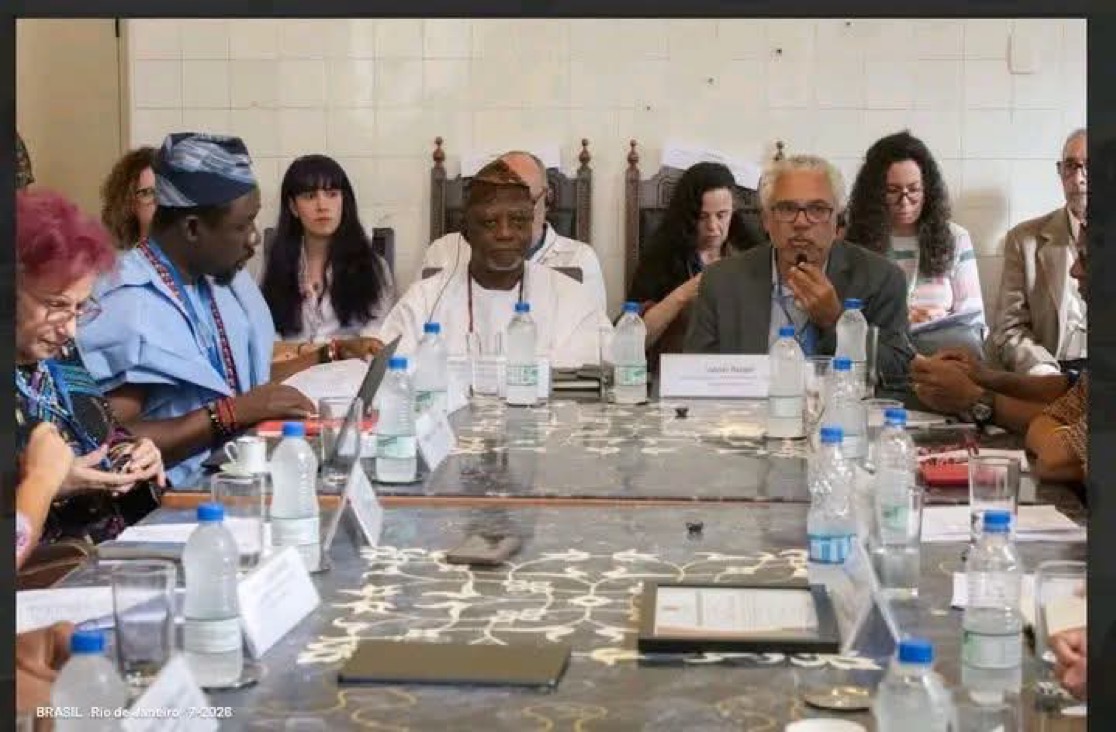
Nigeria and Brazil have deepened their cooperation following high-level discussions in Rio de Janeiro, where Yoruba traditional medicine and the establishment of Human Milk Banks were central topics.
Otunba Yera Moses Olafare, a member of the Ooni of Ife’s delegation, and Otunba Biodun Ajiboye, Executive Secretary of the National Institute for Cultural Orientation, represented Nigeria at the talks with Brazilian officials.
The dialogue highlighted the importance of Yoruba traditional medicine, a system deeply rooted in spiritual and cultural practices, where healing is a holistic process involving diagnostics, sacrifices, and the use of herbs and remedies. Yoruba traditional medicine complements modern medicine and remains relevant to the Yoruba people despite the introduction of Western science and technology .
Human Milk Banks were also a key topic. The World Health Organization recommends donor human milk as the preferred alternative when a mother’s own milk is unavailable. Human Milk Banks screen donors, collect, process, store, and allocate milk to recipients, and are crucial for newborn health. While there are over 700 such banks globally, notable gaps exist in Africa . The Brazilian and Nigerian officials discussed best practices for establishing milk banks in Nigeria, referencing guidelines from organizations like PATH, the European Milk Bank Association, and the Human Milk Banking Association of North America .
The Rio discussions form part of a broader effort by the Ooni of Ife’s delegation to build international partnerships. Other areas of collaboration include transportation reform, economic development, and cultural exchange, with recent engagements also held with officials from the State of California .