
9th May 2024
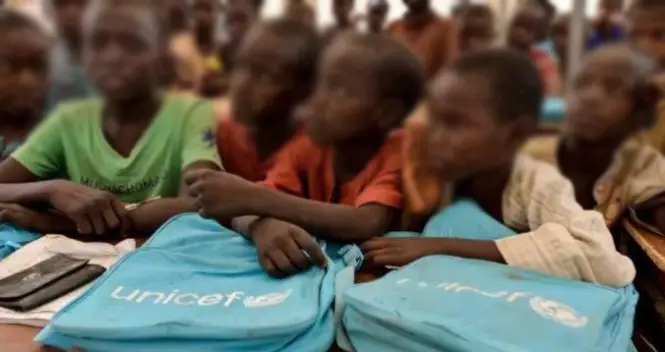
The United Nations Children’s Fund (UNICEF) has decried the increasing number of out-of-school children in Nigeria, saying it is now 18.3 million.
It noted that this alarming figure positioned Nigeria as the country with the highest number of out-of-school children globally.
At a 2-day Regional Stakeholders Engagement Meeting in Gombe on Out-of-School Children and Retention, Transition, and Completion Models in Bauchi, Gombe, and Adamawa states, Chief of Bauchi Field Office, Dr. Tushar Rane disclosed this information.
“Unfortunately, this positions Nigeria with the challenge of having the largest number of out-of-school children globally,” Rane stated.
Worried about the decline, Dr. Tushar further highlighted that only 63% of primary school-age children regularly attended school.
Expressing concern over the increasing drop-out rates across all genders at the primary level, he said only 84% of children transition to junior secondary education after completing primary school.
Tushar attributed this trend to various factors, including inadequate evidence-based policies, limited budget allocation, teacher and classroom shortages, poor infrastructure, cultural norms, health and safety concerns, and child labour.
“To address this challenge, UNICEF is collaborating with the Universal Basic Education Commission to develop the “National Framework of Action to Reduce the Number of Out-of-School Children in Nigeria” and the “Retention, Transition, and Completion Model.”
During the 2-day meeting, UNICEF said it aimed to develop models for reducing the number of out-of-school children and increasing the retention, transition, and completion of adolescents in secondary schools.
“I envisage that after this meeting, we will have clear, targeted, and state-specific strategies that will further ensure that we reduce the rate of out-of-school children and enhance retention, transition, and completion,” he added.