
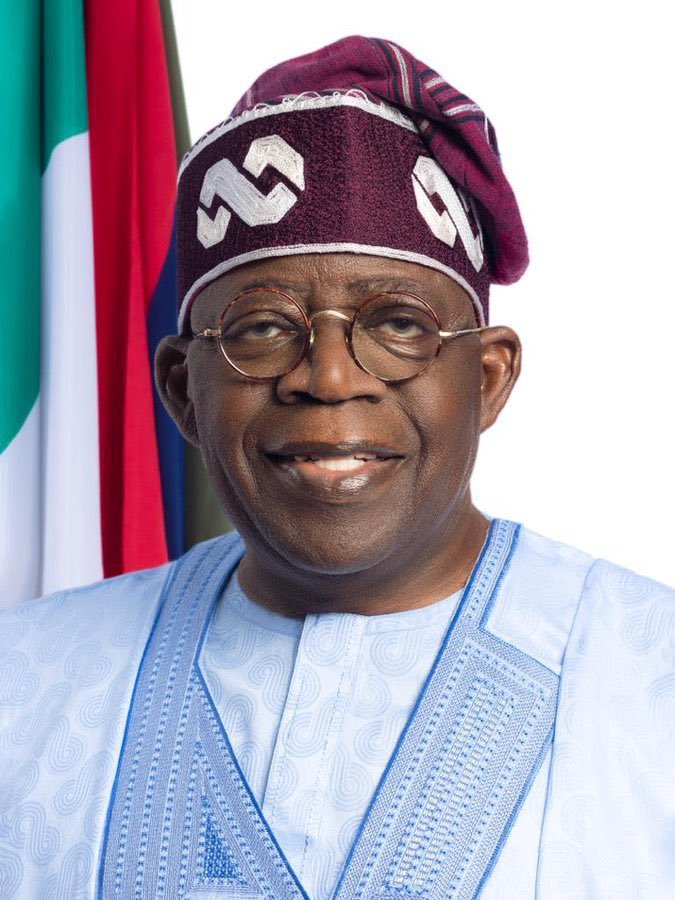
The Supreme Court, on Thursday, affirmed President Bola Tinubu of the All Progressives Congress !APC) as the valid winner of the presidential election that held in the country on February 25.
The apex court, in its lead judgement that was prepared and read by Justice Inyang Okoro, held that there was no merit in the petition that a former President and candidate of the Peoples Democratic Party (PDP), Alhaji Atiku Abubakar, filed to nullify the outcome of the election.
It held that Atiku did not prove that the Independent National Electoral Commission, INEC, did not substantially comply with provisions of the Electoral Act, in the conduct of the election.
The apex court held that section 185(1) of the Evidence Act provided that an election should not be liable to be invalidated, when alleged non compliance did not substantially affect the outcome of an election.
It held that evidence contained in the record of the appeal showed that the Appellants abandoned the duty imposed on them by the law to not only prove the alleged non compliance, but to establish that failure of INEC to transmit results of the election through its IReV portal, influenced the outcome of the presidential poll.
The Supreme Court said it had in past judgements, made it clear that there was a difference between election result collation system and the IReV portal.
“Where the IReV portal fails, it does not stop the collation which up till the last election was manually done,” the court held.
Nevertheless, it stressed that INEC’s failure to electronically transmit results of the election, denied the electorate the opportunity to follow and cross-check results that were eventually uploaded.
“Truth must be told, the non transmission of results to the IReV portal may also reduce the confidence of the voting population in the electoral process,” the Supreme Court warned.
It held that the unavailability of results on INEC’s IReV portal “for whatever reason, could not be the reason for an election to be nullified.
The apex court held that Atiku and PDP did not prove that they suffered any miscarriage of justice as a result of the dismissal of their petition by the Presidential Election Petition Court, PEPC.
It described as misconceived and misplaced, Atiku’s contention that Tinubu ought not have been declared winner of the presidential election, having failed to secure 25% votes in the Federal Capital Territory, FCT, Abuja.
The apex court affirmed the position of the PEPC that the FCT does not have a status that is more special than that of the 36 States of the federation.
It further upheld the striking out the evidence of some of the witnesses that testified for Atiku at the PEPC hearing, adding that most of the witnesses gave “inadmissible hearsay” evidence.
“The Appellants did not present any evidence to warrant the interference of the findings of the lower court,” head of the apex court panel, Justice Okoro, added.
On the issue that President Tinubu was involved in a drug related case in the USA that led to the forfeiture of $460, 000, the Supreme Court held that Tinubu raised the issue when the Respondents had already filed their process.
It held that the action denied the Respondents the right to fair hearing.
“The ruling of the lower court is unassailable and this court will not interfere,” it held.
The court held that whereas Atiku alleged that the result that was declared by INEC was not accurate, he, however, failed to put forward their perceived rightful result.
It held that the result announced by INEC was presumed as correct in the absence of “any rival or alternative result.”
“The figure before us shows that the 2nd Respondent won the highest number of votes and was duly declared winner.”
Consequently, the court, resolved all the issues that Atiku raised in his petition, against him.
“On the whole, having resolved all the issues against the Appellants, it is my view that there is no merit in this appeal and it is hereby dismissed.
“Judgement of the lower court delivered on September 6 is hereby affirmed. I shall make no order as to cost,” the Supreme Court held.
It will be recalled that INEC had on March 1, announced that Tinubu of the ruling All Progressives Congress, APC, won the presidential contest, ahead of 17 other candidates that participated in the poll.
It declared that he garnered a total of 8,794,726 votes to defeat his two major rivals, Alhaji Atiku Abubakar of the Peoples Democratic Party, PDP, who came second with a total of 6,984,520 votes, and Mr. Peter Obi of the Labour Party, who came third with a total of 6,101,533 votes.