
By Ayinde Adeleke
November 15, 2025
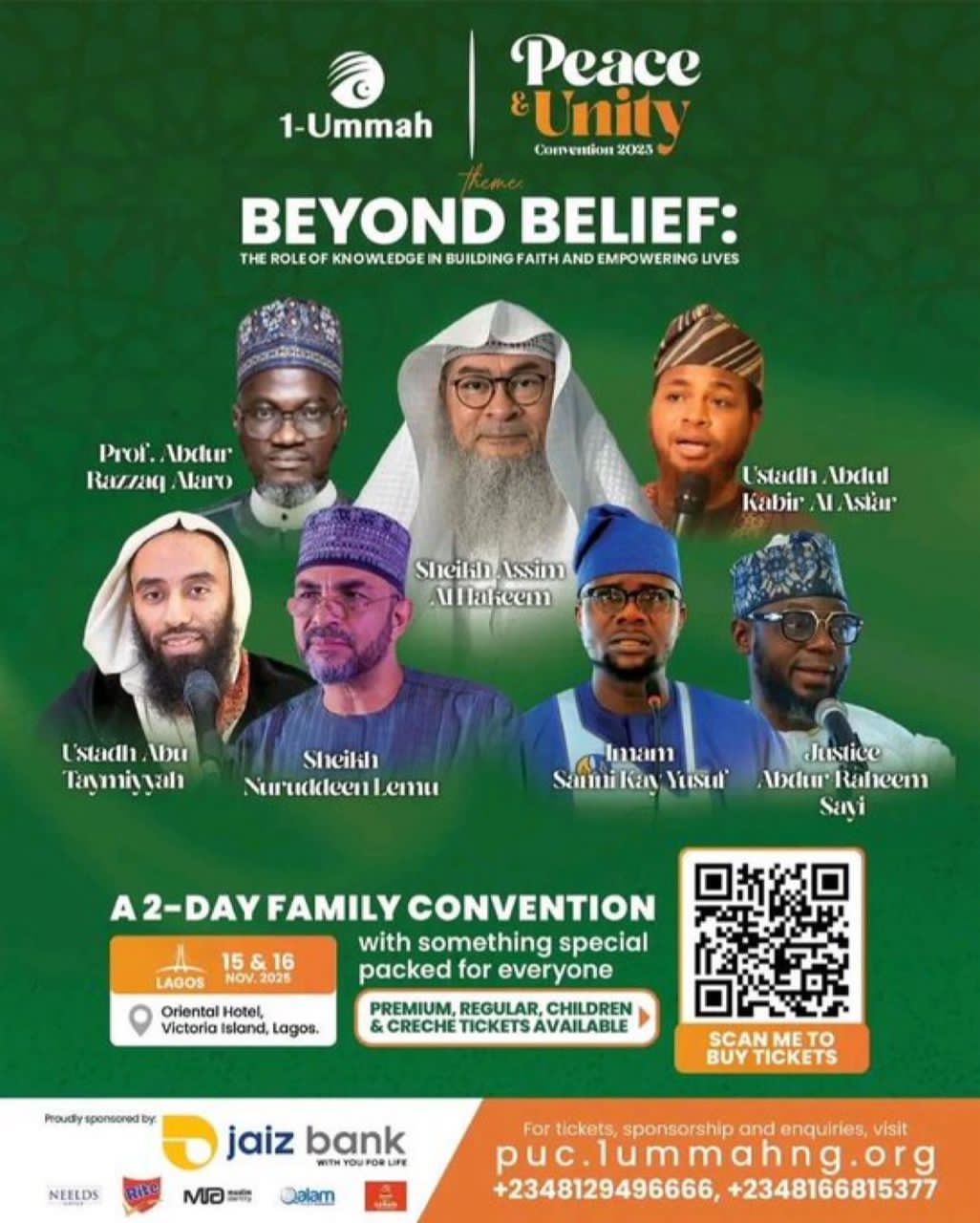
The recent claim that “when Muslims become the majority in 40 years, non-Muslims will have to convert, pay jizya or face death under Sharia rule”, alongside reports of extremist clerics being welcomed at a mosque in Lekki, raises an issue that must be addressed from a Yoruba standpoint.
Yoruba land has a long and consistent history of religious coexistence. For centuries, Christianity, Islam, and traditional beliefs have lived side by side in the same households and communities without conflict. This balance is a defining feature of Yoruba society and a major reason the region has remained stable despite Nigeria’s wider religious tensions.
Any rhetoric that promotes religious domination or imagines a future where one faith seeks to subjugate others runs contrary to the core principles of Yoruba identity. It does not reflect our history, our values, or the social order that has kept our communities cohesive.
The Yoruba worldview is conservative in the sense of order, respect, and community harmony, but it is not extremist. Yoruba land has never accepted ideologies that attempt to impose a single religious identity on everyone. Attempts to introduce such narratives, therefore, represent a direct challenge to the stability of the region.
Lekki, despite its modern and cosmopolitan character, remains part of Yoruba land. The presence of clerics promoting islamization rhetoric in such an environment should not be seen as a minor incident. It reflects a growing trend of extremist messages entering spaces that have traditionally resisted such ideas. Yoruba leaders, religious institutions, and community influencers must pay close attention and respond with clarity.
There is also a growing public perception that certain financial institutions, including Jaiz Bank, may be indirectly enabling the spread of extremist religious messaging through the individuals or groups they choose to empower or associate with. While there is no confirmed evidence directly linking the bank to extremist activity, these concerns highlight the need for greater scrutiny. In a sensitive multi-religious environment like Nigeria, financial institutions must be mindful of how their partnerships and platforms shape public trust and influence societal narratives.
This issue is not about Islam as a religion. Yoruba Muslims have historically practiced their faith peacefully and have often been the strongest defenders of interfaith harmony in the region. The concern is specifically about extremist rhetoric, rhetoric that does not align with Yoruba culture, our plural heritage, or Nigeria’s constitutional principles.
Yoruba society cannot afford to normalize such messages. The responsibility lies with religious leaders, traditional institutions, community bodies, and individual citizens to ensure that extremist teachings do not gain legitimacy or influence in our communities.
Yoruba land must remain a place where all faiths coexist without fear; where no group is positioned above another; and where extremist ideologies regardless of their source are identified early and rejected decisively.
The strength of the Yoruba nation has always been its ability to balance diversity. Preserving that balance is essential for our continued stability and for the future we intend to secure.