
By Ademola Adekusibe
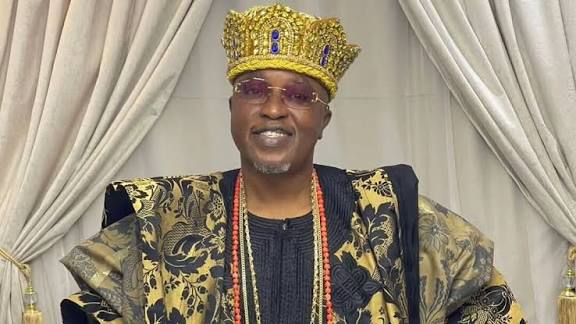
The Oluwo of Iwo, Oba Abdulrasheed Adewale Akanbi, is facing growing criticism from Yoruba cultural leaders and security observers following new statements made during his recent visit to Saudi Arabia, along with longstanding controversies surrounding his conduct as a traditional ruler.
During the visit, the Oluwo declared that the ideology of Yoruba kingship is rooted in idol worship. He said many Muslim monarchs do not agree that a king must avoid bowing to idols and claimed that his rejection of ancestral practices led several Yoruba kings to oppose him. Critics say the remarks are an open attack on the spiritual foundation of the Yoruba monarchy and an unnecessary provocation in a multireligious region.
Constitutionally, an Oba is not responsible for infrastructure or roads in Nigeria. The primary duty of a traditional ruler is to serve as the custodian of the culture, customs, and traditions of the people. Yoruba leaders argue that the Oluwo has acted in direct contradiction to this mandate. He has repeatedly denounced ancestral practices as idol worship, sought foreign Islamic support to erase them, destroyed ancient palace artifacts, flogged chiefs, and assaulted fellow Oba in Iwo since assuming the throne. Community leaders say these actions are inconsistent with Yoruba values and represent a systematic effort to dismantle the cultural identity of the kingdom.
Security analysts and observers are also raising new concerns. They note that the Oluwo’s continued alignment with foreign Islamic networks and clerics linked to radical teachings has created anxiety about his intentions. His act of seeking support from foreign Islamic countries to strengthen his opposition to Yoruba culture has been interpreted as a direct invitation to Islamist actors seeking territorial influence in Nigeria. Critics say this posture mirrors the methods used by groups attempting to establish ISWAP style authority within vulnerable regions of the country.
They argue that the pattern of behavior represents more than cultural hostility. According to them, it is a move that risks destabilizing the peaceful coexistence of Christians, Muslims, and traditional worshippers in Yorubaland. These fears are reinforced by his past association with Mufti Iwo, a known ally of Sheikh Gumi, as well as ties to a Turkish associate whose NGO activities have been linked by observers to groups advocating for Sharia law expansion within parts of the southwest.
The Oluwo has defended his actions by referencing the history of Islam in Iwo, stating that the town introduced Islam to Yorubaland in the sixteenth century and later revived it in the nineteenth century. He said he removed idols from the town using a cane with what he described as the power of Allah and insisted that his anti idol campaign is rooted in truth. He also said he faced multiple plots against his life and was isolated by fellow monarchs for rejecting ancestral practices.
He has appealed for support to rebuild the central mosque in Iwo which he described as the first mosque in Yorubaland and said the building is now in poor condition.
However, Yoruba leaders maintain that his recent statements and past conduct have placed the cultural stability of Yorubaland at risk. They argue that when a traditional ruler prioritizes external religious alliances over ancestral responsibilities the throne becomes vulnerable to ideological manipulation and the community becomes exposed to extremist influence.