
November 24, 2024
By Samuel Ogunsona
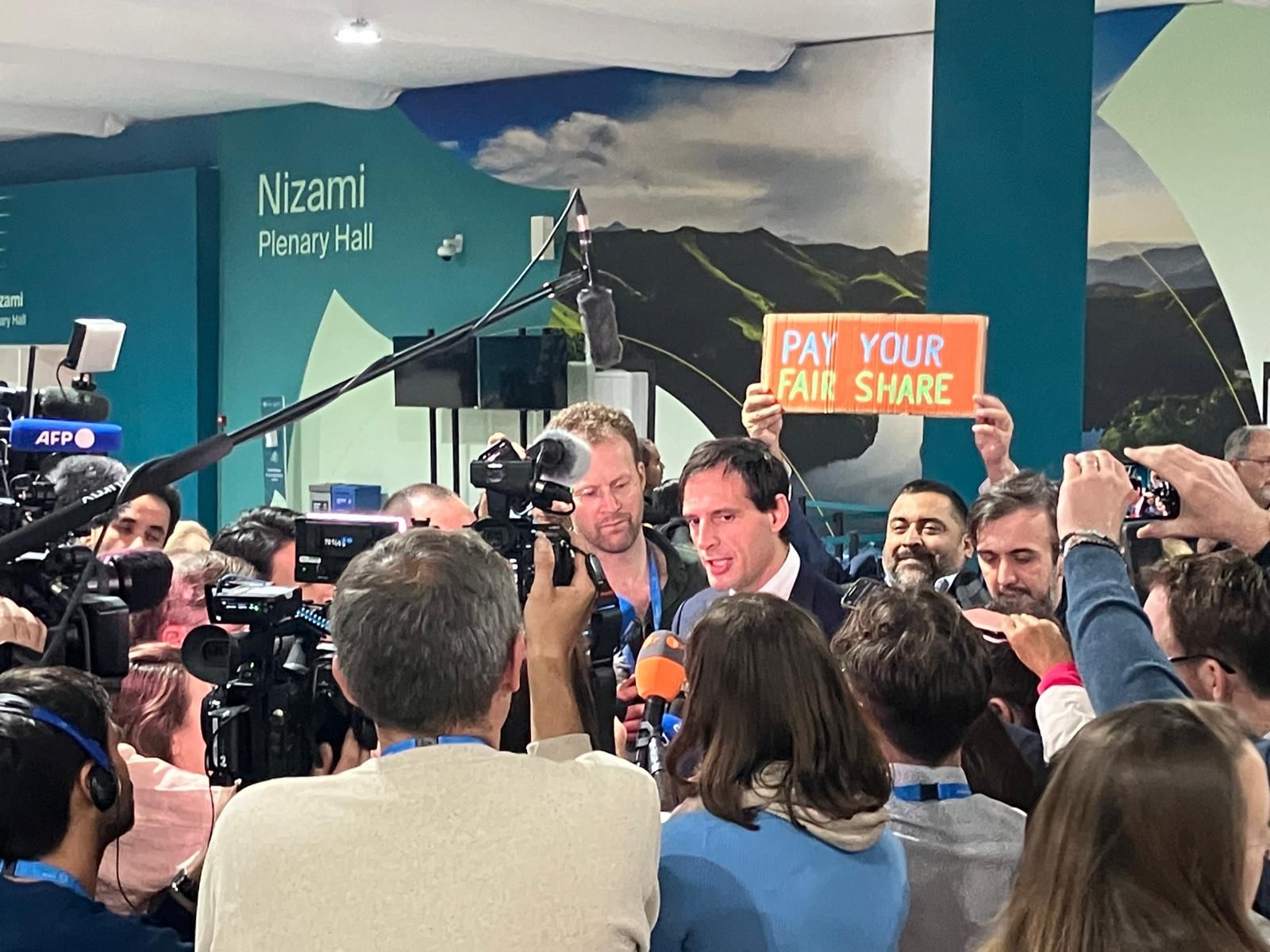
Nearly 200 countries on Sunday, (Nov 24) have approved a climate deal that raises the amount wealthy nations pay poorer countries to combat global warming to at least $300 billion a year.
The COP29 President, Mukhtar Babayev, banged the gavel at 2.39 am Azerbaijan local time.
Although, this was seen as a significant increase from the previous $100 billion commitment, it falls short of the $500 billion demanded by some developing countries.
The deal, reached after two weeks of intense negotiations at COP29 in Azerbaijan, aims to mobilize $1.3 trillion annually by 2035 to support climate actions in developing countries.
However, critics argue that the $300 billion baseline lacks enforceable commitments, specifics on regional allocations, and accountability for developed nations.
India, Nigeria, and Sierra Leone are among the countries that have slammed the deal, calling it “a paltry sum” and “an insult.”
They argue that the agreement does not address the enormity of the climate challenge and lacks goodwill from rich countries to support the world’s poorest nations.
“It’s a paltry sum,” India’s delegate (at COP29) Chandni Raina said on Sunday. This document is little more than an optical illusion. This, in our opinion, will not address the enormity of the challenge we all face,” Raina added.
Sierra Leone’s climate minister Jiwoh Abdulai said the deal showed a “lack of goodwill” from rich countries to stand by the world’s poorest as they confront rising seas and harsher droughts.
Meanwhile, Nigeria’s delegate Nkiruka Maduekwe put it more bluntly: “This is an insult.”
Also, Oscar Soria from The Common Initiative, who described the NCQG on climate finance as a “hollow echo of past failure” said the $1.3trillion figure by 2035 is a distraction from the main goal.
“The so-called New Collective Quantified Goal on climate finance is a hollow echo of past failures. The $1.3 trillion figure by 2035 is aspirational at best—a distraction dressed up as ambition.” Oscar stated.
He continued, “The true NCQG baseline of just $300 billion a year, an extension of the inadequate $100 billion goal, lacks enforceable commitments, specifics on regional allocations, and accountability for developed nations. This is not leadership; it is neglect dressed in rhetoric.” Oscar emphasized.
Aleksandar Rankovic, From The Common Initiative, described the act of important decisions being made at the conference without proper consultation or consideration of all parties involved as “bulldozing decisions”
He stated that some of these choices are being forced through without adequate discussion or regard for opposing view.
“We’ve never seen this at climate COPs, maybe only last year when the ”UAE Consensus” was adopted without the AOSIS in the room.” Aleksandar mentioned.
“Bulldozing decisions seems to be becoming a norm. Brazil will have a lot on its plate to repair trust on the road to and at COP30.“ He urged.
However, The deal and it decision has been criticized for relying on voluntary contributions and lacking a clear plan for implementation.
Climate activists, including representatives from the Africa Make Big Polluters Pay (MBPP), who demanded a scale up of $5 trillion per year in climate finance to support developing countries argued that the new deal has left vulnerable nations to navigate on vague promises while bearing the escalating costs of climate disasters.