
By Abiodun Adeleke
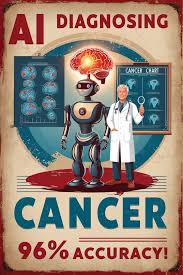
New breakthroughs in artificial intelligence for diagnosing cancers are turning out to have amazing success rates-one as high as 96% accuracy. This hope is fueled by researchers at Harvard Medical School, who created an AI system named CHIEF. This already is proving to detect and tell the prognosis of many kinds of cancers, leaving all previous technologies behind.
Important Characteristics of the CHIEF Model
Versatility: The CHIEF has been designed to cater to different types of cancers; thus, this model covers a large area within the domain of oncology in general.
Training Data: It is trained on millions of images in order to understand where cancer cells are, helping in predicting tumor genetic characteristics.
Outcome Prediction: It can also be used to determine the patient’s outcome in terms of survival rates, thereby further increasing its clinical utility.
Comparison with Other AI Models
Other AI models have also yielded promising results regarding cancer detection:
A model described at the University of Pittsburgh was able to diagnose prostate cancer at a rate of 98% accuracy.Various models, using both random forests and neural networks, report an accuracy as high as 96% on different datasets dealing with different cancer conditions. A very recent publication estimated that AI-assisted devices can raise early detection rates much higher than what is observed currently-one of the keys to successful treatment. Cancer Diagnosis: The Ramifications The integration of AI, such as CHIEF, into clinical workflows may revolutionize cancer diagnosis in the following ways:
This will enhance early detection and better treatment due to increased accuracy in identifying cancers at an early stage.
Reduce the Work for the Pathologist: AI models can automate parts of the process in such a way that pathologists may have time to pay more attention to the more complex cases.
AI is able to do this by predicting genetic mutations and patient survival rates to provide personalized medicine for each individual patient.
Conclusion: The development of AI systems like CHIEF has marked a quantum leap in cancer diagnostics-a domain where accuracy is highly desired and clinically promising to alter oncology practices.