
August 13, 2025
By Ayinde Adeleke
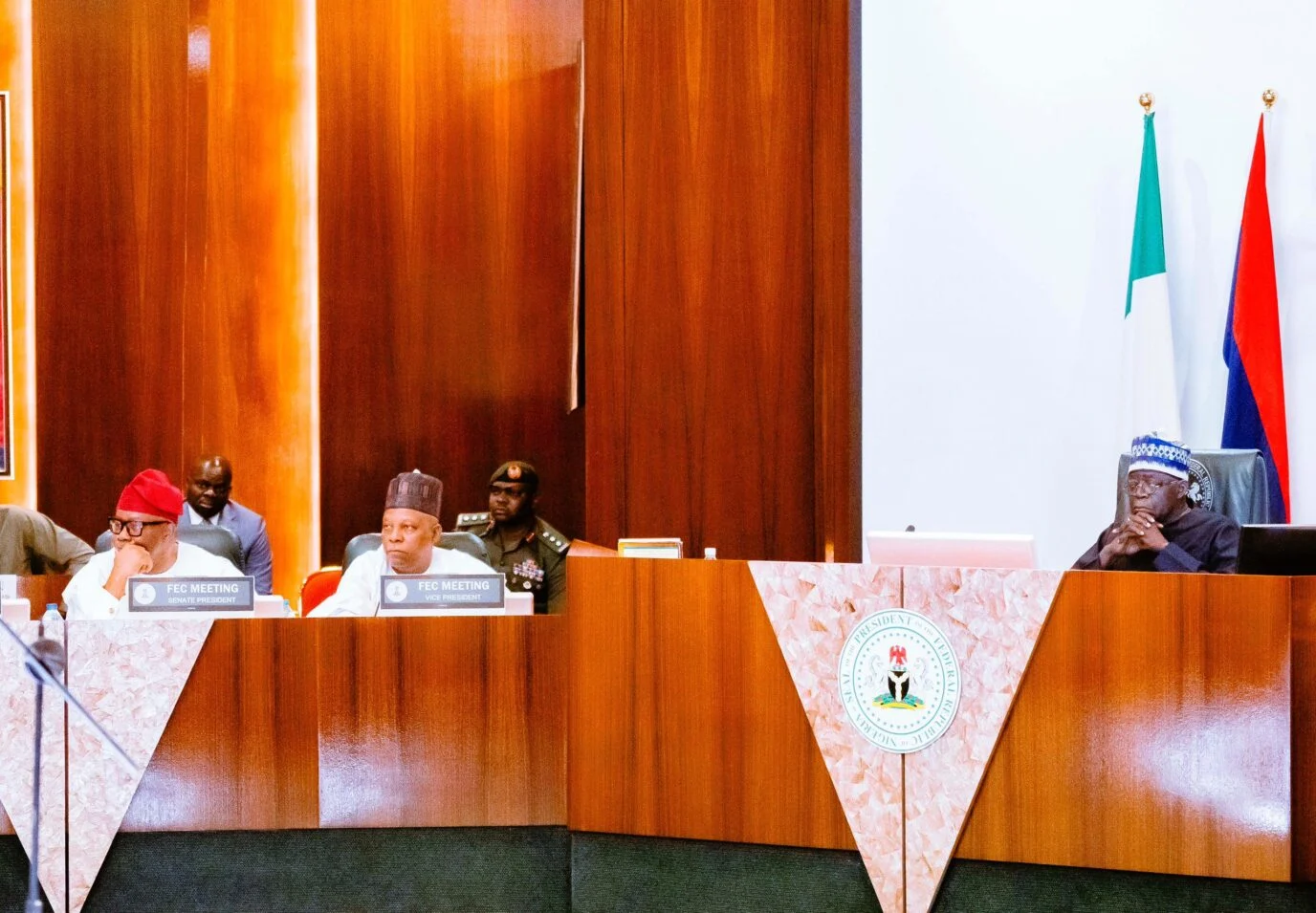
The federal executive council (FEC) meeting chaired by President Bola Tinubu on Wednesday has approved a five-year ban on the establishment of new federal tertiary educational institutions across the country.
The moratorium covers universities, polytechnics, and colleges of education.
Tunji Alausa, minister of education, explained the context and necessity of the moratorium, noting that the current challenge in Nigeria’s education sector is no longer about access to federal tertiary education but about addressing the duplication of institutions which has led to significant deterioration in both infrastructure and manpower.
“In our country, access to quality financial education is no longer an issue,” the minister said.
“What we are witnessing today is duplication of new federal tertiary institutions, a significant reduction in the current capacity of each institution, and degradation of both physical infrastructure and manpower.
“If we do not act decisively, it will lead to marked declines in educational quality and undermine the international respect that Nigerian graduates command.”
Alausa outlined the scale of Nigeria’s tertiary education landscape, noting the vast number of institutions.
He said there are 72 federal universities, 108 state universities and 159 private universities, and highlighted similar patterns within polytechnics and colleges of education.
The minister also cited allied institutions such as monotechnics, colleges of agriculture, health sciences, nursing, and innovation and enterprise institutions.
He noted that the numbers demonstrate an over-proliferation of institutions without corresponding demand or resource allocation.
Alausa said there is a critical disconnect between the number of institutions and prospective students.
“For the 2024-2026 academic sessions, about 2.1 million young Nigerians applied to our tertiary institutions,” he said.
“However, 199 universities had fewer than 99 applicants, and remarkably, 34 universities had zero candidates applying at all.
“This worrying trend repeats itself in polytechnics and colleges of education too. In fact, 295 polytechnics had fewer than 99 applicants, and 219 colleges of education suffered similar fates, with 64 colleges receiving no applicants at all.”
This, according to the minister, translates into wasted resources and inefficiencies.
He cited an example from the northern region where a federal university had fewer than 800 students but employed over 1,200 staff members.
“This is simply not sustainable,” Alausa said, stressing that many federal universities operated at suboptimal capacity while unnecessarily stretching government funding.
The moratorium on establishing new federal tertiary institutions, he indicated, is a decisive step toward correcting these inefficiencies.
The minister said the government plans to redirect resources toward upgrading the current institutions, improving both physical infrastructure and manpower, and expanding the capacity of existing universities, polytechnics, and colleges of education.
“We need to improve the quality of our education system and increase the carrying capacity of our current institutions so that Nigerian graduates can maintain and enhance the respect they enjoy globally,” he said.
Alausa thanked President Bola Tinubu for his unwavering commitment and support toward education reform, noting the president’s strong political will.
“The president fervently believes in providing every Nigerian with the highest quality of education, comparable anywhere in the world, and his dedication has been key in advancing these reforms,” he said.
NINE NEW PRIVATE UNIVERSITIES APPROVED
Alausa added that the council approved the establishment of nine new private universities, and noted that applications were longstanding and part of a backlog within the National University Commission (NUC).
“Several of these applications have been in the pipeline for over six years, with investors having already built campuses and invested billions of Naira,” he explained.
“Due to inefficiencies within the NUC, approvals were delayed. We have since introduced reforms to streamline these processes, and today’s approvals are a result of clearing this backlog.”
He detailed how the ministry undertook a rigorous review to deactivate over 350 inactive private university applications and revamped the guidelines to ensure greater efficiency and fairness.
“Today, 79 private university applications are active, and nine of these were approved this week,” he said.
“Moving forward, the moratorium also applies to new private universities, polytechnics, and colleges of education, ensuring no additional institutions are approved unless they comply with the new standards.”
Alausa stressed the necessity of the moratorium as a pragmatic step toward safeguarding Nigeria’s educational standards and sustainability.
“If we do not act now, the level of graduate unemployment will rise, and the capital index will be affected due to the growing number of graduates without sufficient life skills to contribute meaningfully to the economy,” he warned.
“This policy is vital if we want to maintain the global respect for Nigerian education and graduates.”