
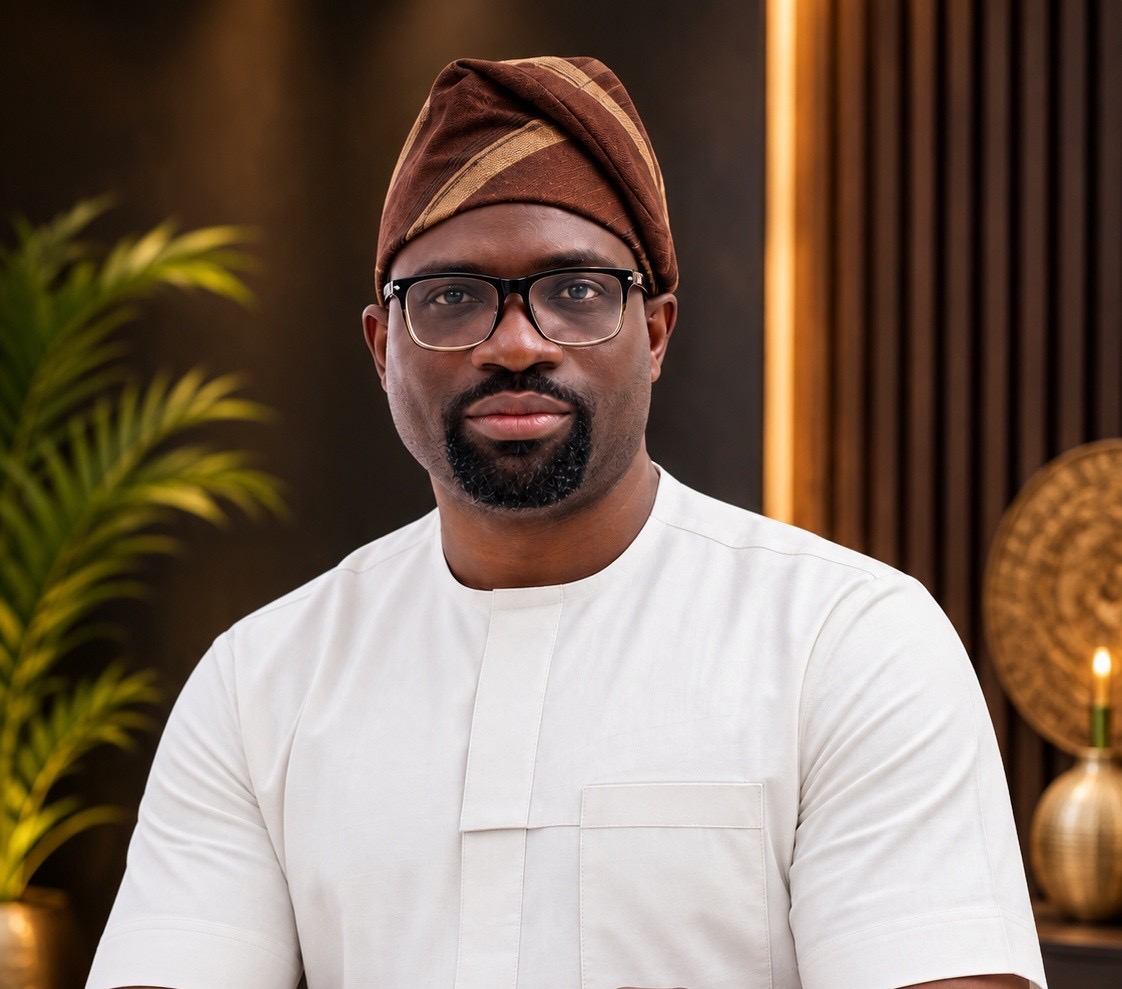
By Bọ́lárìnwá Ayọ̀ọlá
At the return of democracy to Nigeria in 1999 after years of military rule, the country was given another opportunity to rebuild itself through democratic governance. Expectations were enormous. Nigerians hoped that sustained civilian rule would gradually translate into better institutions, stronger economies and improved living conditions.
Twenty-seven years later, however, the picture remains complicated. Nigeria’s population has grown significantly, but many of the indicators used to measure human development, economic opportunity and quality of life continue to expose deep structural weaknesses. Successive democratic administrations have delivered achievements in different areas, but the broader challenge of transforming Nigeria into a more prosperous and functional society remains unresolved.
For Yorubaland, the question is even more troubling.
Across successive electoral cycles, Yoruba states have produced governors, legislators and other elected officials entrusted with the responsibility of developing their respective states. Yet there remains a growing perception that contemporary political leadership has fallen short of the ambition and developmental imagination associated with some earlier periods of Yoruba political history, particularly the era between 1954 and 1966 and the civilian period between 1979 and 1983.
One cannot help but ask: what happened to the political imagination that once produced leaders who were prepared to think beyond the immediate?
The Yoruba political giants of the pre-independence era operated in a Nigeria where educational opportunities were considerably more limited than they are today. Resources were scarce, institutions were still developing and the political environment was far less sophisticated than the one we have now. Yet, many of those leaders demonstrated an extraordinary capacity to think strategically and pursue projects that were designed to transform society over generations.
Today, Yorubaland has more educated people, more professionals, more technocrats, more entrepreneurs and greater access to information than ever before. The problem, therefore, cannot simply be a lack of capable people.
The problem is the political environment.
Nigeria’s political culture has gradually influenced the way political power is acquired, exercised and retained. Money has become an increasingly important factor in party politics and electoral contests. Political structures are often influenced by financial strength, networks and loyalty, while competence, character, capacity and developmental vision can become secondary considerations.
Yorubaland has not been insulated from this reality.
Politics has become expensive. Securing a party ticket can require enormous financial resources, while running a competitive election can demand even more. This inevitably creates an environment in which many capable individuals who may have ideas and competence are unable or unwilling to participate.
At the same time, the electorate is facing its own difficult reality.
The Yoruba people who once collectively contributed to political movements and helped finance the Action Group now live in an economy where millions struggle with food, housing, education, healthcare and other basic needs. When a voter who cannot afford dinner is offered money during an election, the temptation is obvious.
That reality should not be dismissed as simply a failure of character.
It is an indication of how economic hardship can distort democratic choices.
But the consequences are serious. The money collected on election day may solve an immediate problem, but the poor leadership that emerges from a compromised electoral process can create economic and social problems that last for years.
Religion has also become an increasingly visible factor in political choices. In a society as religiously diverse as Yorubaland, religious identity should not become a substitute for competence. The responsibility of government is to provide security, education, healthcare, infrastructure, economic opportunity and justice for everyone.
The most important question should therefore not be whether a candidate belongs to one religious group or another. It should be whether that candidate possesses the character, competence and vision required to govern.
This brings us back to the political leaders of the past.
Many of the Yoruba political giants of earlier generations understood that leadership was about building institutions and creating systems that could survive the individual who established them. They did not necessarily design every project around the political calendar.
Some projects required years, even decades, before their full benefits could be realised.
That is the difference between visionary leadership and political opportunism.
A visionary leader understands that the greatest achievement of public office is not necessarily what can be completed within one tenure. Sometimes it is what can be started within one tenure and successfully carried forward by another administration.
That principle is particularly important in Lagos.
President Bola Ahmed Tinubu’s tenure as Governor of Lagos State from 1999 to 2007 provides an example of the value of long-term planning and institutional continuity. His administration developed a long-term development framework for Lagos, providing a strategic direction that subsequent administrations could build upon.
Whether one agrees with every policy of that administration or not, the broader lesson is important: governments should be capable of thinking beyond the electoral cycle.
A governor who begins a twenty-year development programme may not be in office when the full benefits become visible. But that should not matter if the ultimate objective is public development.
Unfortunately, contemporary politics often rewards immediate visibility.
Politicians are under pressure to commission projects, make announcements and demonstrate achievements that can be presented to voters before the next election. Long-term projects can become politically unattractive because the person who starts them may not be the person who receives the applause when they are completed.
That mentality must change.
A governor should not be afraid to begin a project simply because another administration may complete it. A political leader should not be obsessed with having his or her name attached to every achievement.
The real reward of leadership should be knowing that one’s contribution has improved the lives of people who may never know who initiated it.
That was one of the strengths of the political imagination of earlier generations.
They understood that institutions, infrastructure and human capital could outlive political careers.
Yorubaland must therefore begin asking difficult questions about the kind of political culture it is creating.
Are we producing leaders capable of thinking twenty, thirty or fifty years ahead?
Are political parties selecting candidates because they are competent and visionary, or because they possess financial strength and political connections?
Are voters choosing leaders based on their capacity to govern, or are religion, party loyalty, personal relationships and immediate financial inducements increasingly determining political choices?
Are our governors building institutions that will survive them, or are they simply pursuing projects that can be completed and celebrated before the next election?
These questions matter because Yorubaland does not lack intellectual capacity.
The region has academics, professionals, entrepreneurs, technocrats, civil servants, innovators and young people capable of generating transformative ideas. What appears to be missing is a political environment capable of consistently identifying, promoting and empowering people who possess the vision, character and courage to turn those ideas into public policy.
Reinventing Yoruba political genius therefore begins with rebuilding the political culture around it.
The people must demand more from political parties. Political parties must create space for competence. Leaders must be prepared to think beyond their tenure, while voters must recognise that the decision made at the ballot box can shape the quality of life for years to come.
Yorubaland must also stop measuring political success solely by the number of roads constructed, buildings commissioned or projects inaugurated during a particular administration.
True development is much broader.
It should be measured by the strength of institutions, the quality of human capital, the opportunities created for young people, the strength of the economy, the quality of education, the effectiveness of healthcare, the security of lives and property and the capacity of the next generation to inherit a society better than the one we received.
The political giants of the past were not necessarily more intelligent than the people of today. They operated with fewer resources, fewer opportunities and often greater obstacles.
What distinguished many of them was their willingness to think beyond themselves.
That spirit must return.
Yorubaland does not need politicians who merely want to govern. It needs leaders who want to build.
The central question for our generation is therefore not simply what happened to Yoruba political genius. The greater question is whether we are prepared to rebuild the political culture that will allow that genius to emerge again.
About the Writer
Bolarinwa Ayoola is a political analyst and social commentator whose work focuses on cultural renaissance, social advancement, political development and economic prosperity in Yorubaland. He is committed to examining the issues shaping Yoruba society, advocating cultural preservation and promoting ideas that advance the collective interests and sustainable development of the Yoruba people.