
By Ademola Adekusibe
3rd December 2025
More than two decades after the cold-blooded assassination of Chief James Ajibola Ige, Nigeria’s most haunting political crime, the nation is suddenly forced to confront the dark night of December 23, 2001, once again. The trigger? A political earthquake in Osun State that has stunned observers and reopened old wounds.
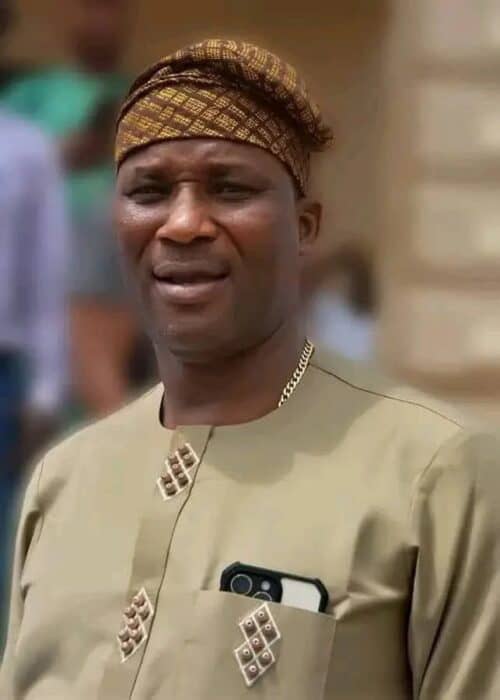
Adebayo Olugbenga Adedamola, popularly known as Fryo, has emerged as the Peoples Democratic Party (PDP) governorship candidate in Osun State. With a staggering 919 votes out of 957 delegates, Fryo crushed the sitting Governor, Senator Ademola Adeleke. But the numbers alone do not tell the story. Fryo is a man once arrested in connection with the assassination of the Attorney-General of the Federation, Chief Bola Ige, whose murder remains one of the most notorious and unresolved crimes in Nigeria’s history.
On that fateful night in 2001, armed men stormed Bola Ige’s residence in Bodija, Ibadan. His police guards, inexplicably, had “gone to eat.” Family members were bound. And Ige himself was executed, shot at close range. There was no robbery. There was no chance of survival. This was calculated, deliberate, and political murder, a message written in blood, echoing through the corridors of power.
In the weeks that followed, several suspects, including Fryo, were arrested. The nation watched in tense silence, hoping for justice. But as the investigation unfolded, legal technicalities, political interference, and institutional weaknesses ensured that no one faced meaningful punishment. Fryo, along with others implicated, walked free. And the nation returned to uneasy silence, a wound that never healed.
Now, 23 years later, Fryo’s political resurrection has blasted that silence apart. The same man once linked to the brutal murder of Nigeria’s top legal officer is back on the brink of governing a state. His victory has reignited the conversation: the question that should have been answered decades ago is now sharper, louder, and unavoidable: Who killed Bola Ige?
Fryo’s return to the political limelight is more than dramatic, it is provocative. It forces Nigerians to confront uncomfortable realities: the justice system’s failure, the intertwining of politics and crime, and the chilling reality that men once suspected of execution-style political killings can climb back into power without explanation.
This is not simply about a governorship primary. It is about history colliding with memory, about the nation being reminded that justice delayed is justice denied. The streets of Ibadan still whisper about that night, the corridors of power still carry echoes of unanswered questions, and the memory of Bola Ige’s bloodshed refuses to fade.
Fryo’s political rise poses a stark question for the country: How does a man once arrested in the nation’s most infamous political assassination emerge to claim a major party ticket with such overwhelming support? And more importantly: what does this say about the Nigerian political and judicial system that allowed it to happen?
The night Bola Ige was murdered was never just a personal tragedy, it was a wound in the soul of the nation. And now, as Fryo rises, that wound is torn open again. History refuses to forget. The question that haunted Nigeria for over two decades is now back, bolder and sharper than ever: Who killed Bola Ige?
And the nation, once again, is left with no easy answers.