
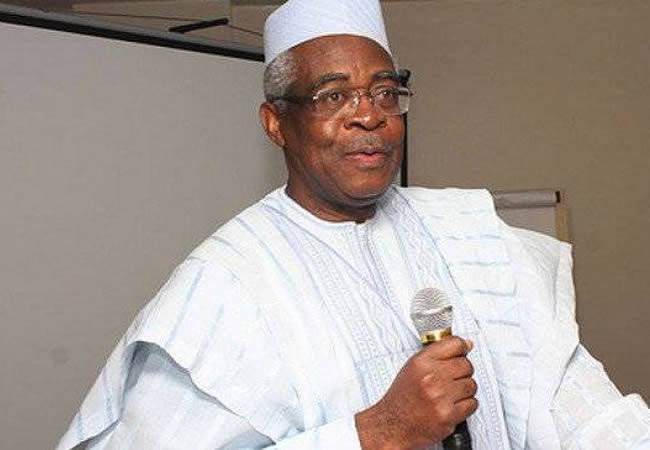
A Response to Lt. Gen. T.Y. Danjuma (Rtd)
By Bolarinwa Ayoola
25th April 2025
I recently came across an article attributed to retired Lt. Gen. T.Y. Danjuma titled “Too Late Too Little” an opinion piece richly steeped in historical references, particularly drawing parallels to events leading up to the Second World War in 1939. There’s no doubt that Nigerians can be proud of the former Chief of Army Staff for his masterful use of history to analyze our current political climate.
While the General’s message was eloquently crafted, the underlying motives are less clear. I suspect it may not have been delivered in good faith. Rather than a sincere expression of concern, it comes across as the lamentation of a frustrated elder statesman struggling to accept the shift of political power and control from Northern to Southern Nigeria. Though I share some of the General’s views, which I’ll highlight, I remain skeptical about the intent behind his address.
Firstly, I agree with Danjuma’s characterization of Yorubaland as a region where certain leaders have continuously sold out for personal gain. His assertion about “Islamofascism” and the systematic attacks on the people and economy of the Southwest and Southern Nigeria is an honest and accurate depiction of a grim reality. The insecurity engulfing the nation, and the looming threat of jihadist aggression, are real and present dangers.
Danjuma’s observations echo the long-standing concerns of conservative Yorubas of the need to replace the current crop of liberal Yoruba politicians with conservative voices, and to reorient Yoruba sons and daughters to protect our heritage and political power. He also points to the necessity of breaking ties with Islam and Islamic ideologies that, provide a platform for sympathizers and collaborators aiming to erode our cultural identity and seize political control. Any true-born Yoruba should recognize that Danjuma’s position mirrors the fears and concerns of conservative elements within the region.
However, let it be clear: Danjuma’s lamentation is not rooted in love for the Yoruba nation, Southern Nigeria, or even the unity and prosperity of Nigeria. His outcry is a product of political frustration and the discomfort that accompanies a power shift. It’s the voice of someone struggling with the reality that the opposition may not be able to unseat the incumbent President in the near future.Beneath the surface of Danjuma’s carefully constructed message lies a veiled call to action, an appeal to Nigerians to pull down President Bola Tinubu’s administration.
Barely two years into Tinubu’s tenure, Northern Nigeria has displayed visible discomfort with its diminished presence in the corridors of power. It appears they expected to wield de facto authority while Asiwaju remained a mere figurehead in Aso Rock, dancing to their tune.
But Tinubu is no puppet—and that’s the North’s dilemma.
The Northern elite have made their discontent known through anti-Tinubu rhetoric and calculated political maneuvering, aimed at preventing his return in 2027. Danjuma’s recent commentary aligns with this chorus, a chorus echoing with entitlement and the belief that power is their birthright.
Let us not forget: Muhammadu Buhari, a Northerner, ruled for eight years. During that time, Nigeria endured severe economic hardship. Yes, he can be credited with certain infrastructure improvements, but his economic policies were deeply flawed. By June 2023, Nigeria’s debt profile had skyrocketed to $172 billion, with over 90% of national income spent on debt servicing, according to a Nairemetrics report on 13th June 2023.
Under Buhari, Fulani herdsmen ravaged Southern and North Central Nigeria, destroying lives and livelihoods. His government failed to declare these groups terrorists, or take decisive action. The Southern states bled while the federal government looked the other way.
Worse still, the government invested heavily in rehabilitating and “deradicalizing” terrorists, reintegrating them into society with VIP treatment—expecting an end to terrorism in return. It’s baffling that individuals who took up arms against the nation are treated like heroes.
In 2011, the Sultan of Sokoto, Mohamed Sa’ad Abubakar, openly urged the federal government not to confront Boko Haram with force because they were Muslims fighting for Islamic rule. Similarly, figures like Sheikh Gumi have advocated paying off terrorists and bandits to restore peace.
Where were these Northern voices when Fulani herdsmen terrorized states like Plateau, Benue, Oyo, Ekiti, and Ondo? They were silent. Now, under President Tinubu, they’ve suddenly found their voices, trying to rally Southerners to bring down a man who is cleaning up the mess left behind by their own.
The reluctance of many Northern political leaders to engage in critical national conversations such as restructuring has hindered the progress of Nigeria. Their opposition to the recently proposed tax reform bill reflects a broader pattern of resistance to progressive change. This resistance, unfortunately, continues to slow down our collective development as a nation.
Meanwhile, the increasing migration of vulnerable populations from the North to the South, particularly to Yoruba-speaking regions under the guise of constitutional rights, has placed significant strain on Southern states. The burdens on infrastructure, healthcare, and security in the South are becoming increasingly difficult to manage.
Recent arrests of suspected Islamic extremist elements in Osun State underscore growing security concerns. The presence of armed groups of northerners , often disguised as cattle herders that surround our forest in rural Southern communities has led to destruction of lives, properties, and farmlands. This is a serious threat that cannot be ignored.
It is imperative for the Yoruba people, and indeed all well-meaning Nigerians, to acknowledge these realities and unite in the call for restructuring. A return to regional governance where each region administers its affairs in alignment with its unique culture, traditions, and resources will not only promote peace and justice, but also accelerate development across the country.
Our political leaders must take these matters seriously. They must act with urgency to safeguard our land and future, and to ensure Nigeria remains a peaceful, prosperous, and united nation.
Danjuma’s recent outburst is a call for Southern Nigerians to join forces with the North in removing Tinubu. The question is: will Southern Nigeria fall for it?
I urge my fellow Southerners to remain vigilant. We must not become pawns in the hands of desperate politicians clinging to a “born to rule” mentality. The future of our nation should not be determined by regional entitlement, but by unity, progress, and justice.
May Nigeria succeed.