
Olympics: Celebrating Cultural Diversity , Stands Alongside Popular Games
APRIL 30, 2024
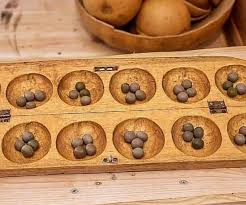
In a landmark move, the Yorùbá game, Ayò Ọlọ́pọ́n, also known as Mancala, has been embraced by Brazilian society, marking its inclusion in the prestigious Brazilian School Olympics.
This decision, not only adds a new dimension of diversity to the National School Games, but also pays homage to the rich cultural heritage of the Yoruba people.
Ayò Ọlọ́pọ́n traces its roots back to Yorùbá culture and was introduced to Brazil during the era of the trans-Atlantic slave trade.
Now, it stands proudly alongside popular table games like Olympic Checkers and Connect 4, symbolizing a celebration of tradition and cultural exchange.
The decision to incorporate Ayò Ọlọ́pọ́n into this year’s “Mind Games 2024” reflects the organizers’ commitment to embracing cultural diversity within the realm of sports and education.
By providing students with the opportunity to engage with Yoruba table games, the event aims to offer a holistic and enriching experience that blends entertainment with education.
Hosted by the Municipal Department of Education, the “Mind Games 2024” invites students from 4th and 5th grades to participate, fostering sportsmanship and strategic thinking.
Featuring a diverse array of games, including Ayo Olopon, Olympic Checkers, and Connect 4, the competition encourages individual skill development while promoting teamwork and fair play.
Schools within the municipal education network have until April 30th to register for the event, indicating their preferred games and demonstrating their commitment to promoting cultural inclusivity.
The intra-school competition is set to take place by May 31st, with standout students advancing to represent their schools in subsequent phases.
The culmination of the event will occur on June 28 at the Swift Complex for Education and Culture, where students will compete for victory amidst an atmosphere of camaraderie and mutual respect.
Fabrício Pavin Lassi, the tournament coordinator, underscores the educational significance of participation, emphasizing the invaluable skills and friendships forged through competitive play.
With invitations extended to all schools and educators provided with comprehensive guidance on rules and regulations, the Mind Games exemplify the values of inclusivity and cultural appreciation.
Beyond mere competition, the event serves as a platform for celebrating Brazil’s rich cultural tapestry through immersive gaming experiences.
Schools across Brazil are encouraged to seize this opportunity to embrace diversity, celebrate tradition, and foster community spirit through their involvement in the Brazilian School Olympics.
Ayò (pronounced “aah-yoh”) is a traditional game played by the Yorùbá people in southwestern Nigeria.
Often underestimated, this game demands significant brainpower and mathematical skill.
Ayo is typically played in a carved wooden box with twelve holes, six on each side, and contains 48 Ayo seeds, four in each hole.
It shares similarities with the Oware game, which has roots in Africa and was introduced to the Americas by slaves.
Originating from the Yoruba culture, Ayo has historical connections to the Warri tribe, who, like the Yoruba, were involved in the slave trade before its abolition.