By Ademola Adekusibe
January 2, 2025
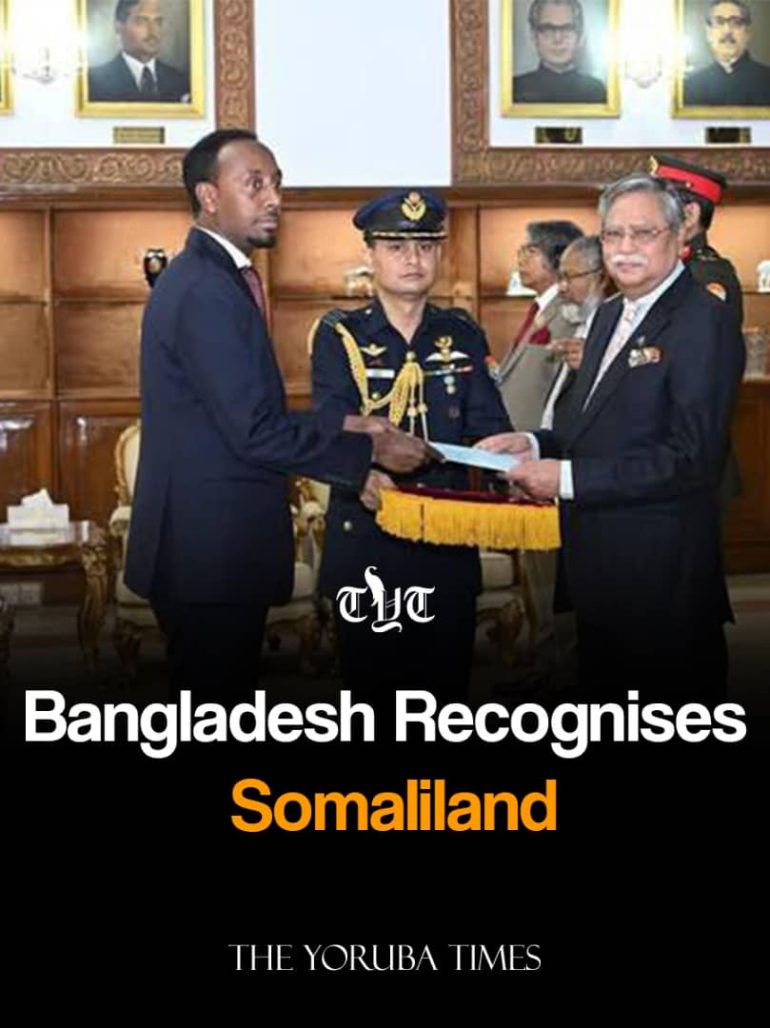
Bangladesh has taken a significant but low-key step that effectively recognises Somaliland’s separate status from Somalia, adding to a series of recent international moves that are reshaping the Horn of Africa’s diplomatic landscape.
According to checks on Bangladeshi government platforms, Somaliland is now listed separately from Somalia in official systems used for travel and work documentation. This separation has the practical effect of recognising Somaliland passports for employment and migration processes, a move widely interpreted by observers as de facto recognition of the self-declared republic.
The development follows Israel’s recent formal recognition of Somaliland, which triggered widespread celebrations in Hargeisa and sharp condemnation from Somalia’s federal government in Mogadishu. It also comes amid reports that the United Arab Emirates has begun accepting Somaliland passports on its official visa and residency platforms, while blocking or restricting Somalia-issued documents.
Somaliland declared independence from Somalia in 1991 following the collapse of the Siad Barre regime. Since then, it has operated as a self-governing entity with its own constitution, elected governments, security forces, and currency. Despite maintaining relative stability compared to the rest of Somalia, Somaliland has struggled for over three decades to gain formal international recognition.
Bangladesh’s move, though not announced publicly by Dhaka, is being viewed as another incremental step toward wider acceptance of Somaliland’s claims to statehood. Analysts note that such “administrative recognition” often precedes formal diplomatic recognition, especially in cases where governments seek to avoid immediate political backlash while adjusting to new geopolitical realities.
Somalia’s government has consistently opposed any form of recognition for Somaliland, insisting on the country’s territorial integrity and warning that international endorsements could destabilise the region. Following Israel’s recognition, Mogadishu described the decision as a threat to peace and stability in the Horn of Africa.
Supporters of Somaliland’s independence argue that decades of effective self-rule, functioning democratic institutions, and security cooperation against terrorism justify international recognition. They also point to Somaliland’s strategic location along key Red Sea and Gulf of Aden shipping routes as an added factor drawing foreign interest.
With Israel’s recognition, the UAE’s administrative acceptance of Somaliland passports, and now Bangladesh’s quiet separation of Somaliland from Somalia in official systems, momentum appears to be building for broader international engagement with Hargeisa. Whether these developments translate into widespread formal recognition remains uncertain, but they mark a notable shift after more than 30 years of diplomatic isolation for Somaliland.